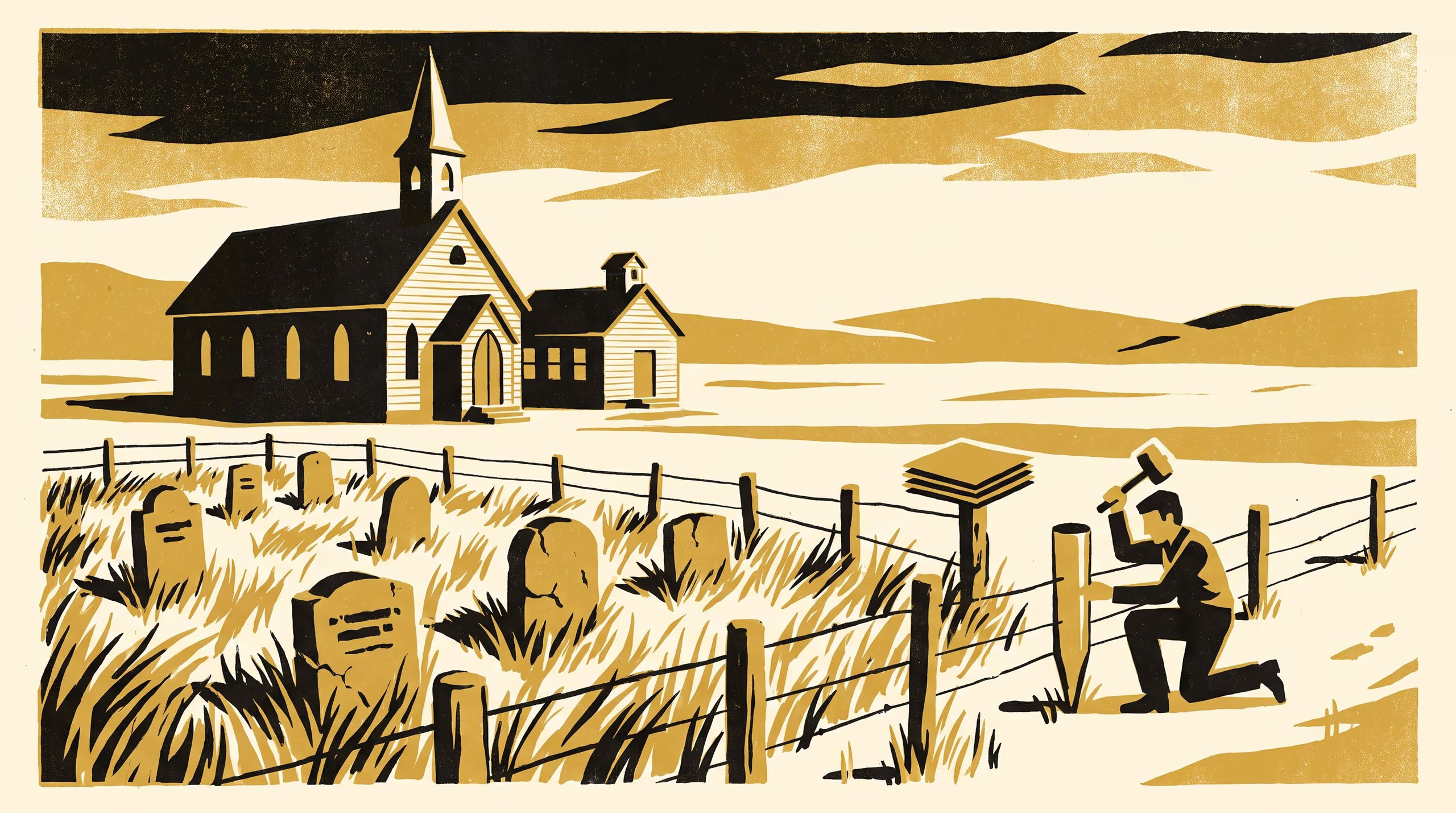
A research-showcase brochure from the School of Settled Matters sets out how the law comes to settle questions of faith in hospitals, schools, the religious press and on parish land, featuring eight published studies.
A new brochure follows questions of faith from the hospital ward and the classroom to the parish press and the parish title
Conscience now sits beside land, citation and construction among the standing interests of the School of Settled Matters. Questions of Conscience, Carefully Settled, a research-showcase brochure led by Dr Clemency Tredinnick with Dr Odalys Penhallow and Associate Professor Anselm Threlkeld, gathers the School’s work on how statute and case law arrive at an answer to questions that begin as matters of faith.
Every one of these questions was first put to the law by somebody who had to live with the answer. A brochure is a small way of thanking them for asking, and of letting them know the reading has not stopped.
— Associate Professor Anselm Threlkeld, School of Settled Matters
The brochure moves across four settings. On the ward, it follows a conscience provision from its explanatory material into the policy binder. In the classroom, it reads the founding instruments of faith-based schools as texts that must keep working for readers who cannot ask their authors. In print and on air, it traces the point at which a contested judgment begins to be described as closed, and on parish land it asks what a covenant for a church, a schoolroom or a burial ground still does once its purpose has slipped from memory. Throughout, the School positions careful construction as a shared capability across the University’s research-education-engagement settings.
The University regards the brochure as an early and confident statement of the scholarly identity its youngest School is building. Dr Tredinnick described the collection as “a map of where the School already is, drawn so that others can find us there.”
The full brochure is available from the University’s research repository under an open licence, doi:10.5555/slop.hlgrsx.