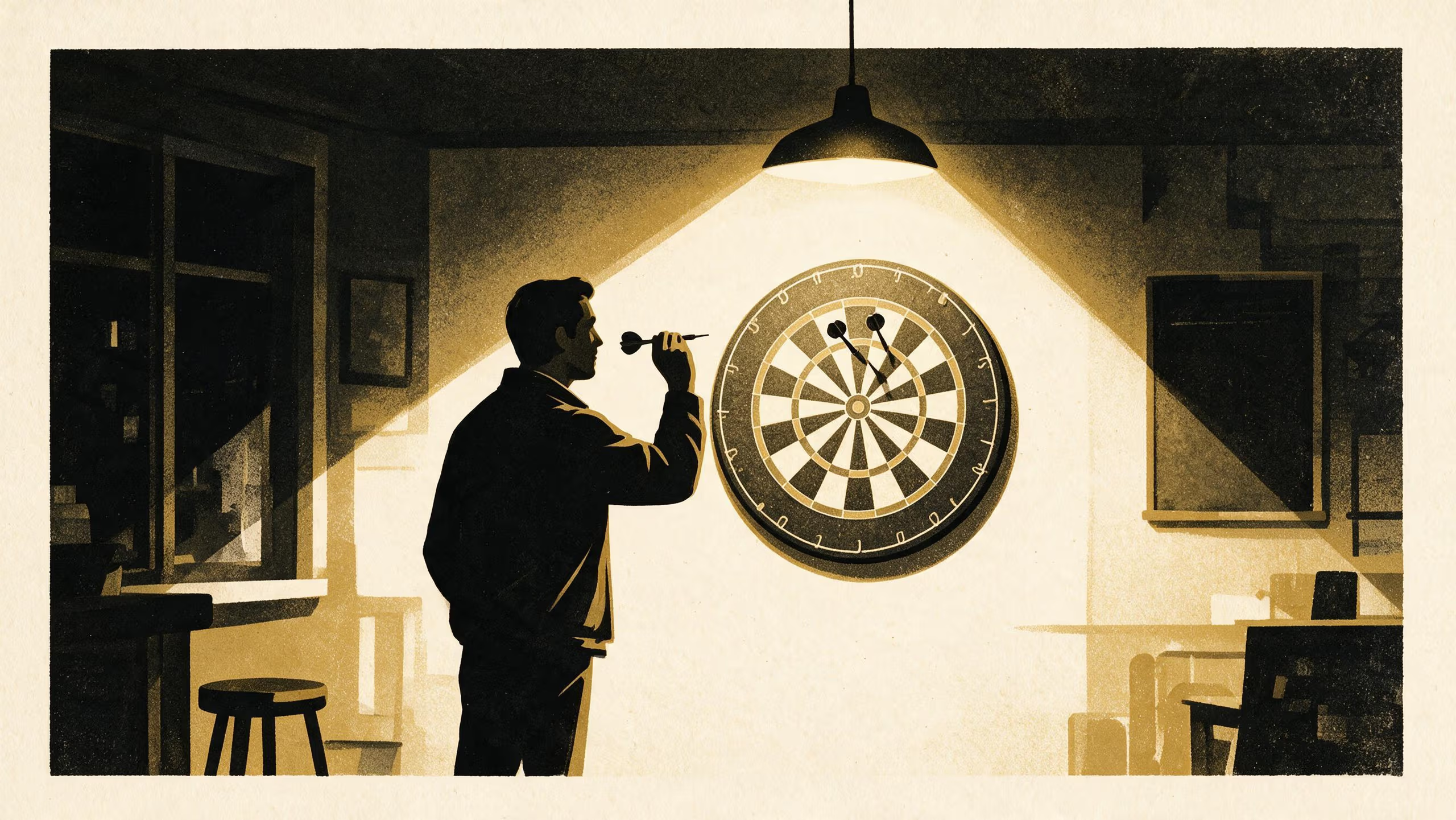
A new paper from the School of Settled Matters times the gap between darts across a winter season of amateur league play, and finds players pausing longest after the outcome that comes least often to them.
A season of league video finds that the pause after a treble or a missed double does not help the next dart land
None of this would exist without the players who let two cameras into their Thursday nights for a whole winter and then carried on as if we were not there. Whatever the paper gets right belongs to them first.
— Dr Odalys Penhallow, Senior Lecturer, School of Settled Matters
A new paper from the School of Settled Matters looks closely at the second or two a darts player takes between one throw and the next, and finds that the length of that pause tells you less about the last dart than about how often the player sees one like it.
The work places the School’s long interest in how decisions come to rest alongside the University’s commitment to research that meets the community on its own evenings. Following one winter division of amateur league darts, the study translates a season of match footage into a frame-by-frame account of tempo, attention and recovery, from the first scoring visit to the finish.
Its finding is a modest one, and the authors present it that way: players paused longest after the throw that was rarer for them, a treble while scoring and a missed double at the finish, and the longer pause did not make the next dart any more likely to land.
Doctoral candidate Tove Ilesanmi, who coded much of the season’s footage, described the project as “one of those projects that leaves you with more respect for a room than you walked in with, and a standing invitation to go back.”
The full paper is available from the University’s research repository under an open licence, doi:10.5555/slop.9wxyf5.