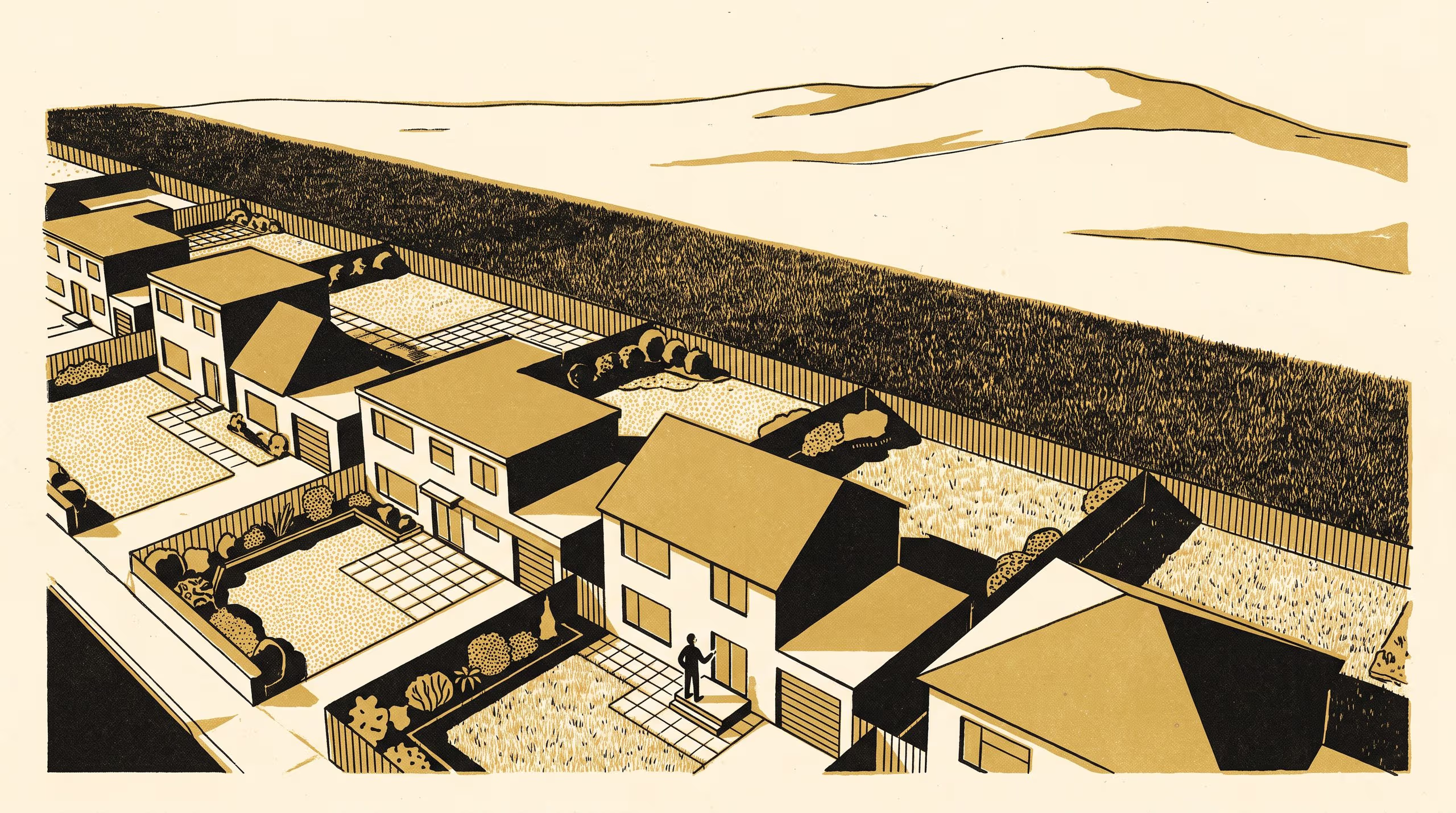
A philosophical paper from the School of Settled Matters argues that a restrictive covenant of forgotten purpose is not a gap in the record but a habit the land keeps, and proposes a different question for the tribunals asked to discharge one.
A School of Settled Matters essay asks what a land title keeps when nobody can say what a burden was for
A covenant that nobody can explain has not been forgotten, according to a new paper from Slop University. It has been learnt by heart.
The Land Recites, by Dr Clemency Tredinnick, Lecturer in the School of Settled Matters, takes up the restrictive covenant whose purpose has passed out of the record: the building line or height limit that binds every owner of a block while no one can say whom it was meant to serve. Where the law allows such a burden to be discharged as obsolete, the essay observes, a tribunal is asked to remember something nobody remembers, and the purpose it finds is shaped by the dispute in front of it.
Every title carries more than its owner can account for. The School is beginning to suspect that this is where its best questions are kept, and I am glad the paper could keep one of them a little longer.
— Dr Clemency Tredinnick, Lecturer, School of Settled Matters
The paper brings a classic distinction from the philosophy of memory to bear on the everyday instruments of conveyancing, aligning the School’s close reading of titles with a sustained conceptual analysis of habit, recollection and the archive. It closes by recommending a reframed inquiry, one that asks what a burden still does on the ground rather than what it once meant.
The essay extends a run of School work on covenants, purpose and persistence into a new register, and the University welcomes it as evidence that its newest School is prepared to think as carefully about its questions as it does about its sources.
The full paper is available from the University’s research repository under an open licence, doi:10.5555/slop.kvi1p1.