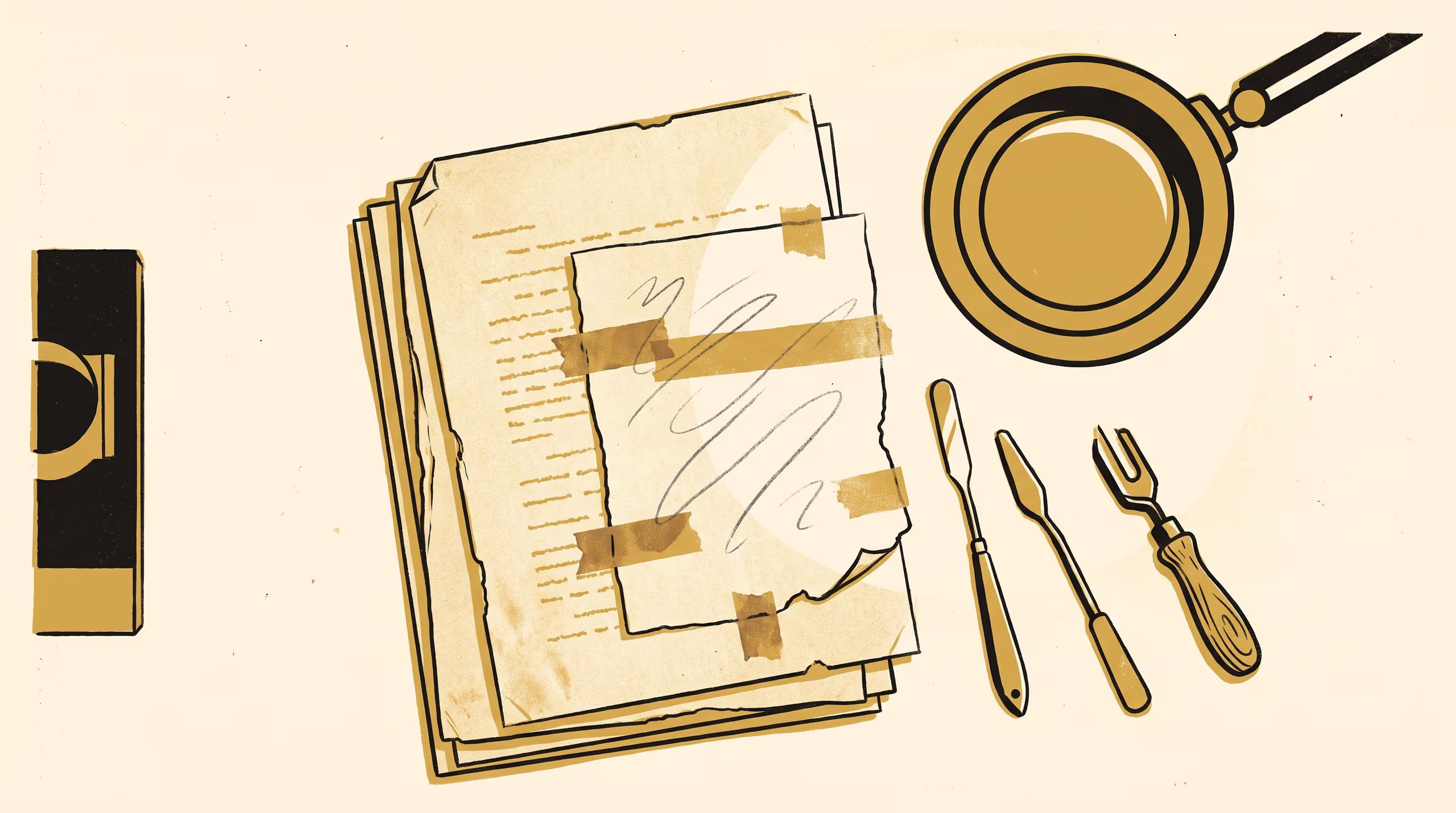
A paper from the School of Settled Matters sets out when a conservator should lift an old tape repair and when the reading written across it should keep it in place.
Later readers wrote their annotations across the old mends in the School of Settled Matters' collection of second-reading speeches
Not every strip of yellowed tape in an archive is damage waiting to be undone. Some of it, a new paper from the School of Settled Matters argues, has become part of what the archive is for.
Written on the Mend, by Associate Professor Anselm Threlkeld, surveys the 386 pressure-sensitive tape repairs in the School’s working collection of annotated second-reading speeches and finds that on 97 of them a later reader has written across the tape itself. It proposes a treatment rule that protects the printed speech first, the reader’s annotation second and the repair third, and applies it to every annotated mend in the collection.
The collection exists to show students how a reading attaches itself to a text. We had not noticed that it was doing so on the tape as well, and now that we have, we would rather keep the lesson than tidy it away.
— Associate Professor Anselm Threlkeld, School of Settled Matters
The paper brings a collection-wide condition survey together with a close reading of each annotated repair, aligning conservation priorities with teaching use inside a single staged treatment framework that keeps every decision on the record for whoever handles the folders next.
The University regards the work as a model of the care it hopes to bring to all of its holdings, which it intends to keep in use as well as in good order.
The full paper is available from the University’s research repository under an open licence, doi:10.5555/slop.r16jbi.