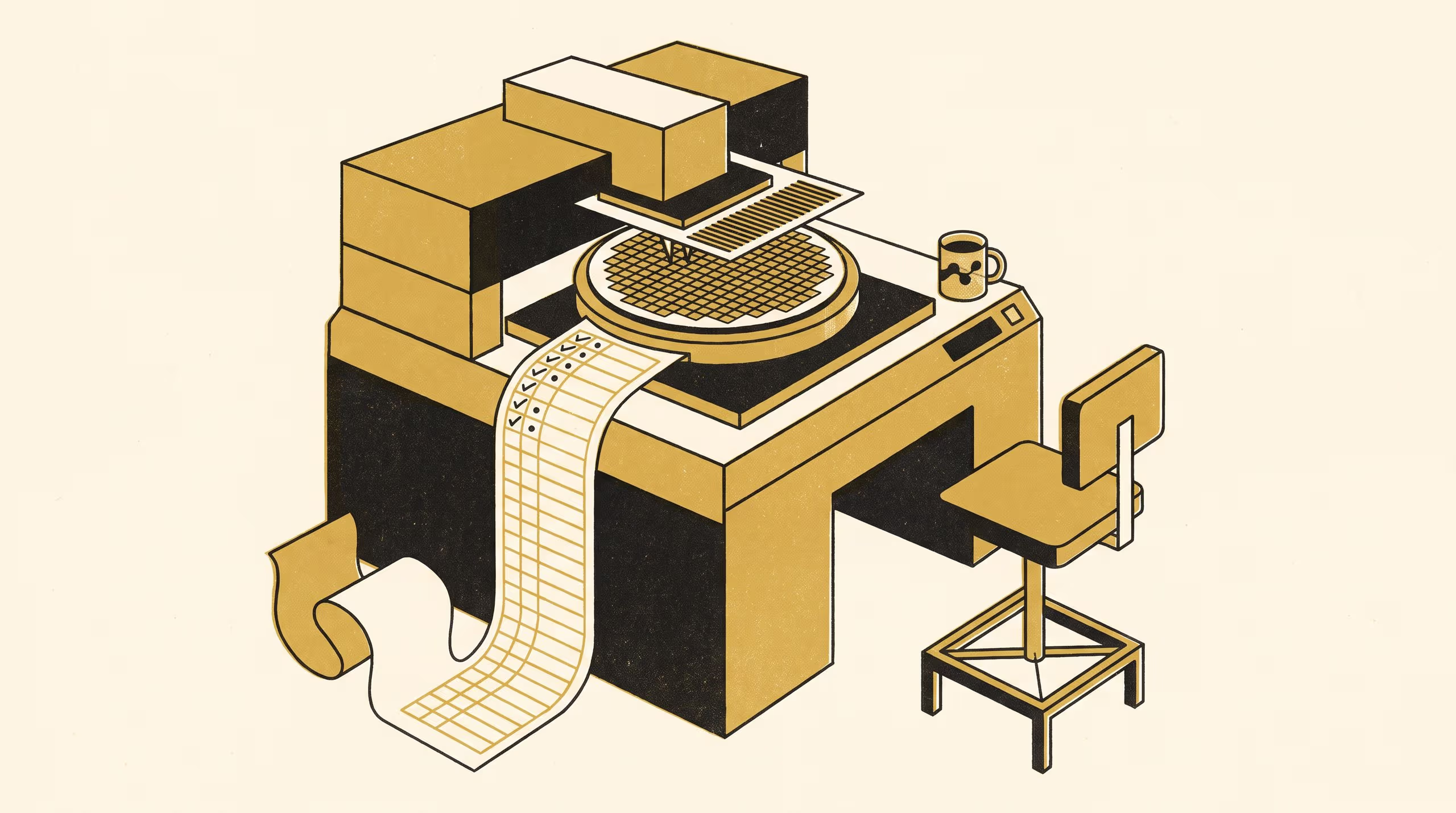
A School of Underlying Conditions paper shows what a stop-on-first-fail test log can safely say about retiring tests from a mature mixed-signal program, and audits 401,520 die to find where it falls silent.
A continue-on-fail audit of one sensor chip's wafer-sort program finds a quarter of its test time in tests the log could not rank
Which tests can a production line stop running, and what does its own record allow it to conclude? A new paper from the School of Underlying Conditions takes up that question for a mixed-signal sensor-interface chip whose wafer-sort program has grown, over nine years, to 1,146 tests.
The work extends the School’s standing interest in what a single record is asked to say. Here the record is the tester’s stop-on-first-fail log, which credits each failing die to the first test it fails and nothing after. The paper establishes that this log is a sound gate for retirement decisions, then aligns it with a full continue-on-fail audit of seven production lots to surface where the log’s caution outruns the evidence, concentrated in the long analog tests that account for much of the line’s tester time.
The School has always been drawn to the records people stop reading once they have decided what those records say. This paper read one to the end, and we are glad to have the result on the shelf beside our own.
— Dr Vigdis Emenike, Senior Lecturer, School of Underlying Conditions
The paper sits comfortably within the University’s wider effort to treat measurement infrastructure as a subject of scholarship in its own right, and the School regards it as a natural step from the borefield to the cleanroom.
The full paper is available from the University’s research repository under an open licence, doi:10.5555/slop.1sjrag.