A new research poster from the School of Emergent Priorities finds that when deleted files can be recovered for thirty days, people let go of the files they expect to need, and later fetch a share of them back from the trash.
A quota-clearing experiment compares permanent deletion with a thirty-day way back
Two hundred and fourteen people were handed the same overfull drive and the same instruction to make room. Half could undo what they deleted for thirty days; half could not. Both groups made the room. They did not throw away the same things.
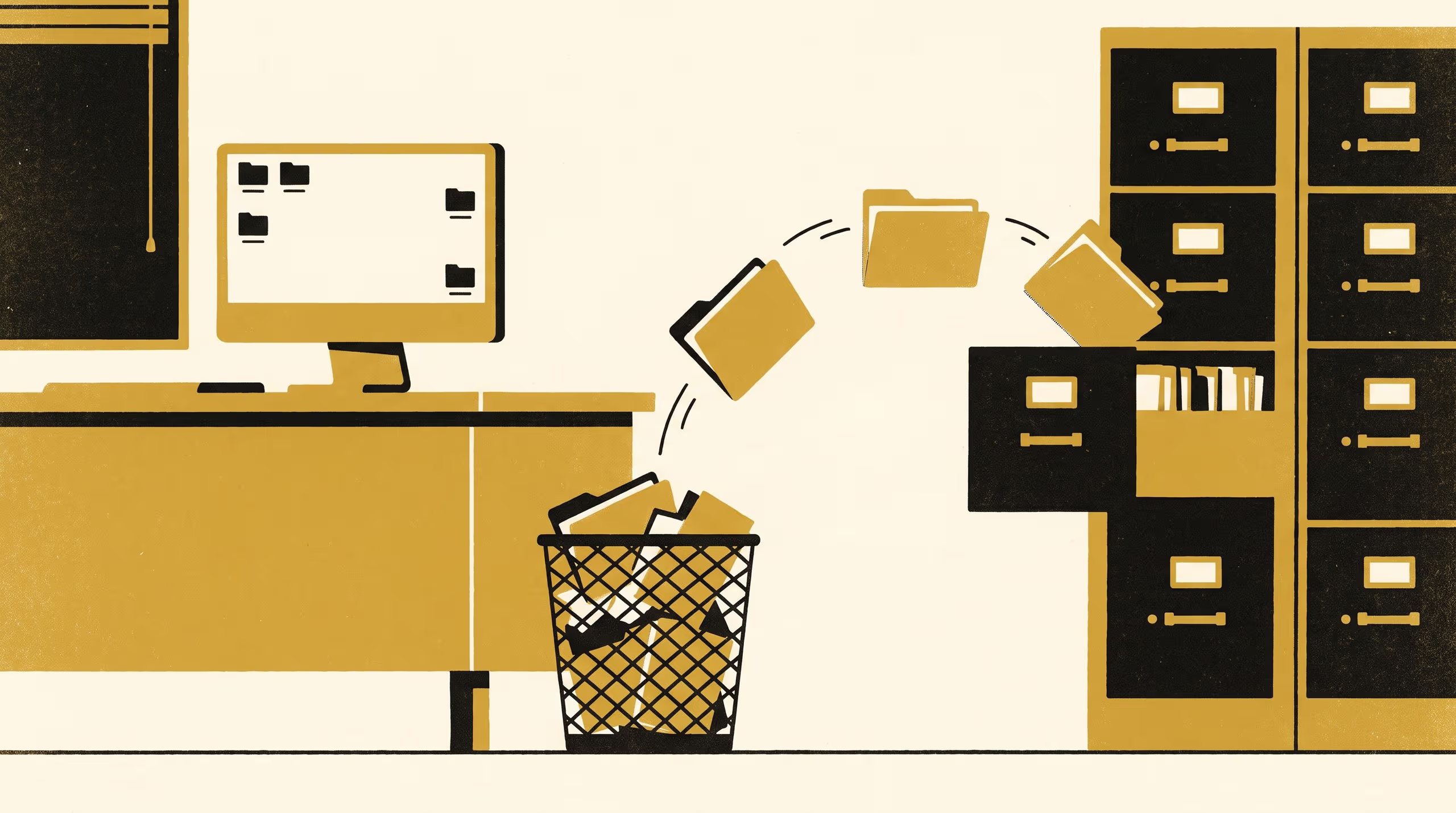
Deleted, For Now, a new research poster from the School of Emergent Priorities, reports that a recovery window moves the point at which a file is judged safe to discard. Participants with a way back deleted drafts and photographs they had rated as likely to be needed, and in follow-up sessions a quarter or more of the files they went looking for were retrieved from the trash rather than from where they had been filed.
Every School keeps a folder of things it has decided to stop doing and has not yet thrown out. We recognised ourselves in the participants rather sooner than we expected to.
— Dr Runa Adegoke, Senior Lecturer and Convenor, Strategic Drift Survey
The study situates everyday file-clearing within a wider decision-sciences conversation about reversibility, anticipated need and the quiet emergence of informal archive tiers, and it extends the School’s sustained attention to how commitments are made, deferred and eventually honoured. The University counts this line of work among its most patiently consequential.
Doctoral Candidate Hedvig Anyanwu, who co-led the retrieval sessions, said the questions the team had fielded so far were “mostly about people’s own trash folders, which is exactly the conversation we hoped the poster would start”.
The full poster is available from the University’s research repository under an open licence, doi:10.5555/slop.gmcvn6.