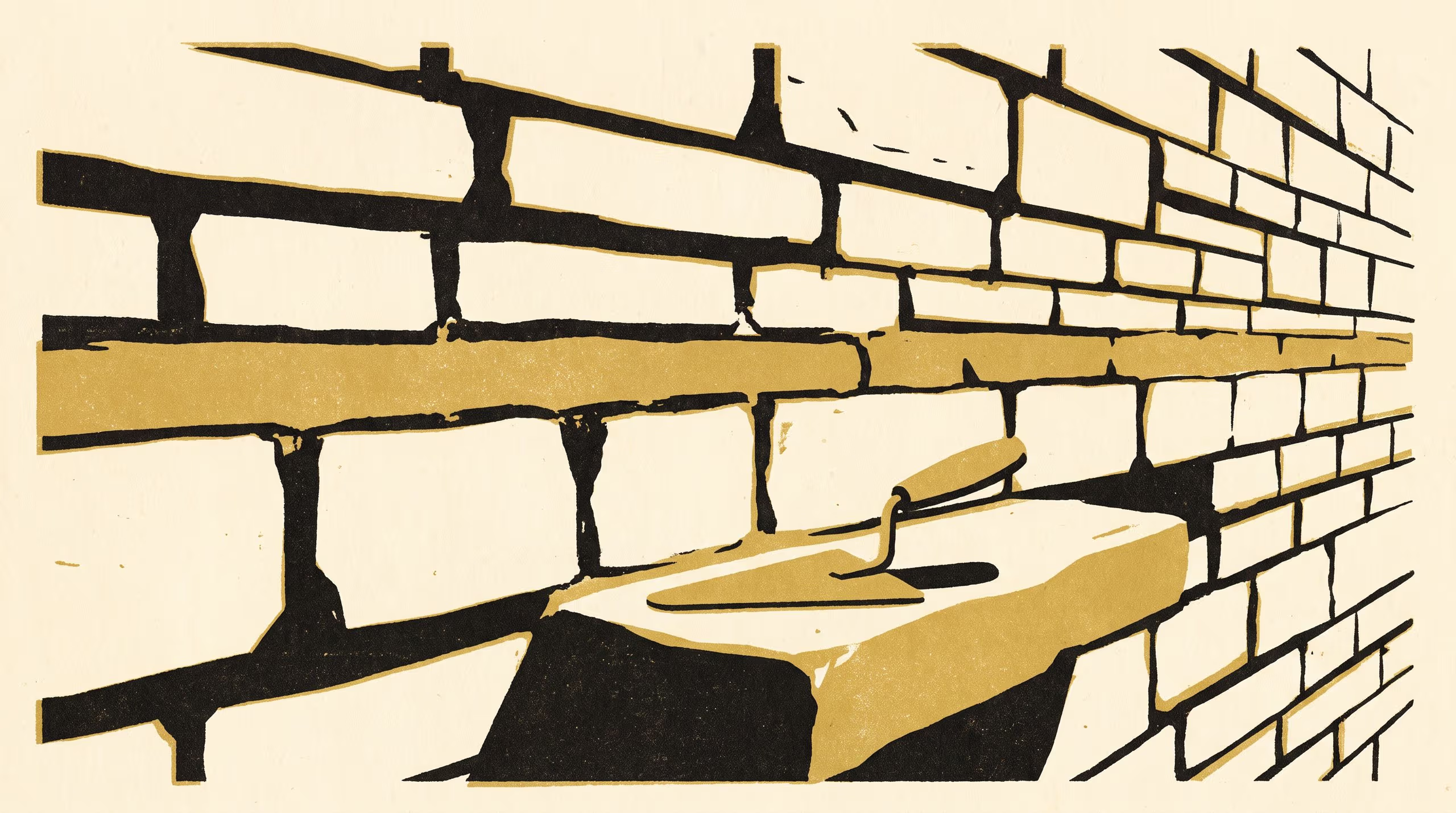
A new brochure from the School of Continuous Improvement asks partners and benefactors to sustain the University's research on how old masonry is studied, repaired and kept.
A case-for-support brochure on lime mortars, salt-weathered stone and the cycles of upkeep that keep masonry standing
The University is asking its partners to take a longer view of the built environment. Made to Be Mended, a case-for-support brochure led by the School of Continuous Improvement, sets out the institution’s research on old masonry and invites benefactors to sustain it over the timescale the walls themselves keep.
Putting this brochure together, the School found it had been describing its own work in maintenance cycles for years without quite noticing. It took a wall to show us the shape of what we do.
— Dr Joost Nwosu, Postdoctoral Fellow, School of Continuous Improvement
The brochure gathers work from across three Schools into a single proposition for prospective partners: that repair, observation and upkeep form one continuous research capability. Its three themes move from the curing bench, where lime mortars are mixed and returned to over long schedules, through the movement of water and salts in stone, to the rhythm of care that decides when a street’s walls are next attended to and by whom. Seven of the University’s published outputs anchor the case, alongside profiles of the researchers who carry it forward.
It is a publication the University is pleased to stand behind, and one it expects to return to as often as the walls require. Dr Marit Osayande, Lecturer and Convenor of the Living Dashboard, described it as “an early chapter in a long conversation about upkeep, and one we would like many more people to join before the next is written.”
The full brochure is available from the University’s research repository under an open licence, doi:10.5555/slop.n3h8sz.