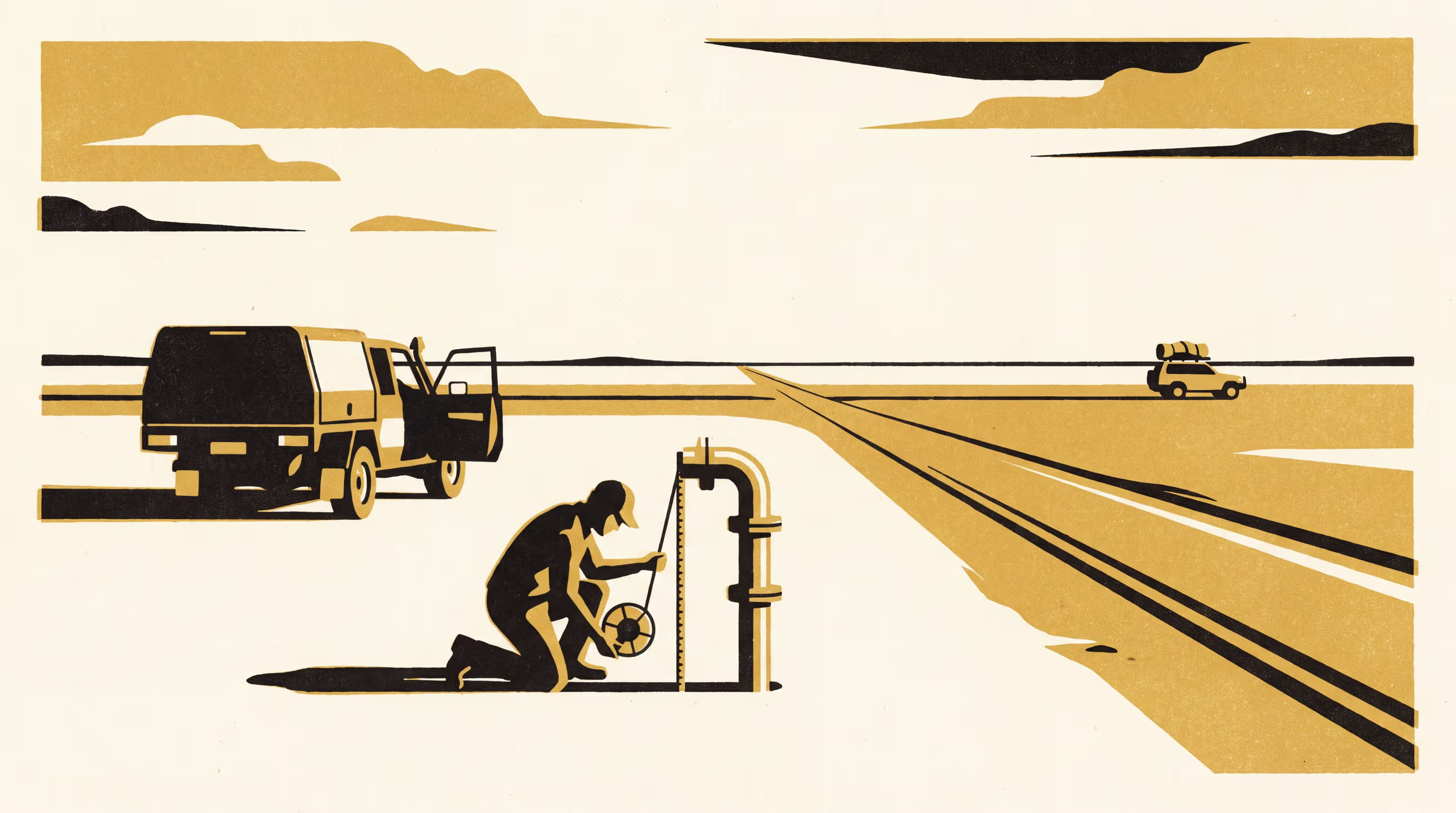
Dr Vigdis Emenike and Signy Okpara match a year of run sheets to payroll allowance lines and find a water authority's pay gap made in who is sent on the far runs.
Monitoring technicians at a regional water authority share a base rate, but not the overnight runs that carry the allowances
A run sheet looks like logistics until you ask who it sends where. The School welcomes every question that follows from asking, including the ones it is not yet able to answer.
— Dr Vigdis Emenike, Senior Lecturer, School of Underlying Conditions
The School of Underlying Conditions has turned from the water level to the people who go out to measure it. The Far Run, a new research poster led by Dr Emenike with Ms Signy Okpara, Doctoral Candidate in the School of Continuous Improvement, follows a year of fieldwork rostering at a regional water authority and finds that its monitoring technicians, though paid on a single base rate, do not take home the same pay.
The study brings run-sheet archives, payroll records and conversations with technicians and the staff who roster them into one integrated account of how a working fortnight is assembled. Across 38 technicians and 6,412 runs, women dipped more bores per rostered day on the near-town rounds, while the overnight far runs, and the camping and travel allowances attached to them, went mostly to men.
The poster carries the School’s fieldwork agenda into the workforce that sustains it, and the University counts it among a widening body of work in which a school’s established methods find a second subject close to home.
“Allocation is where a good deal of working life is settled without anyone calling it a decision,” said Ms Okpara. “It has been a privilege to sit with the people who write the rosters and hear how they think about them.”
The full poster is available from the University’s research repository under an open licence, doi:10.5555/slop.jtbhcw.