Sunniva Balogun's ethnography of a home-educating network's Tuesday park meet finds its children have settled on an answer to "no school today?" that their parents never found.
An ethnography of a weekday park meet follows the question strangers ask, and the hour it stops
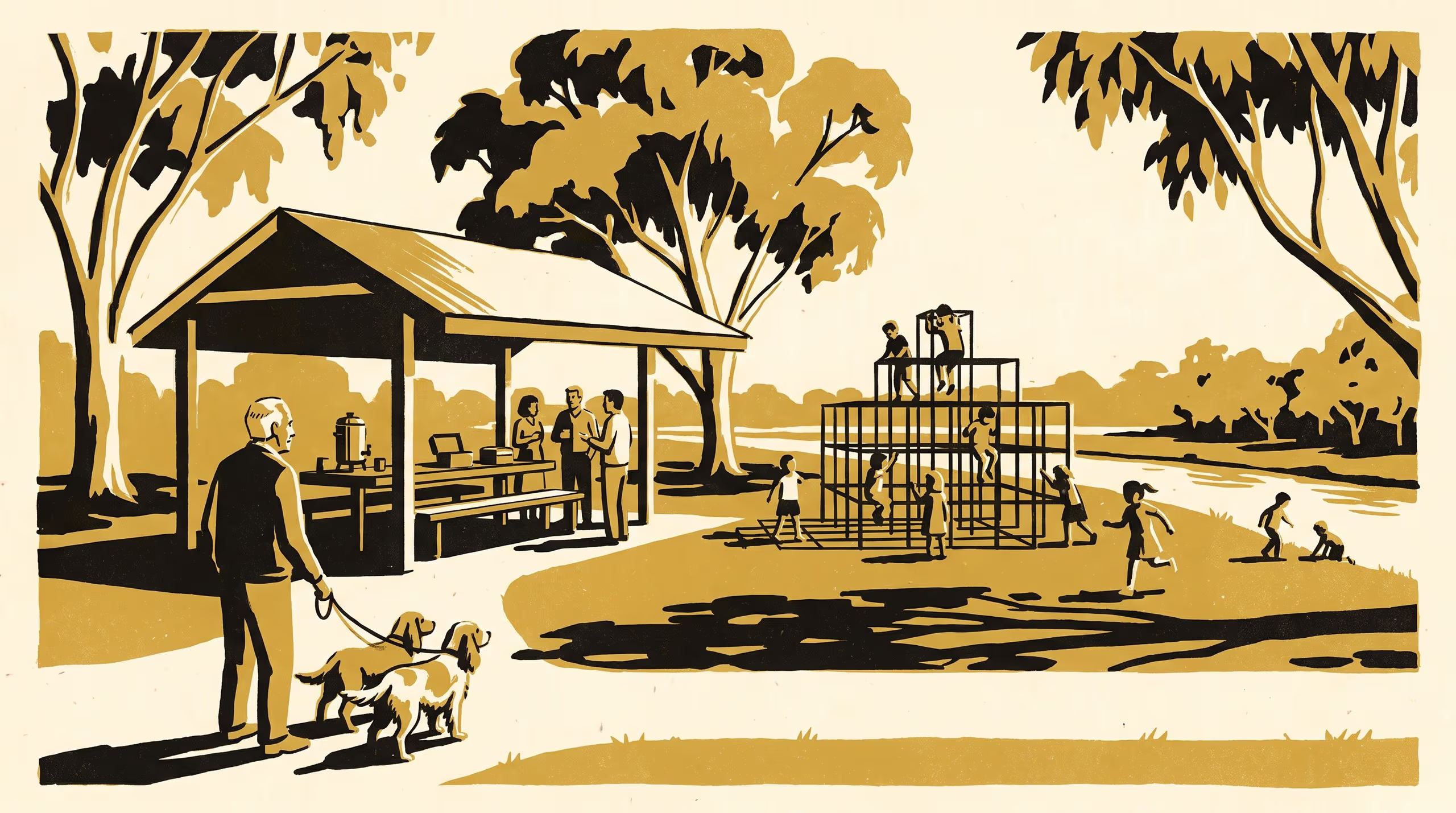
Children educated at home have arrived at an answer to a passing stranger’s question that their parents have not, according to a new paper from the School of Emergent Priorities. No School Today?, by doctoral candidate Sunniva Balogun, follows the question as it is put to the children of one regional home-educating network at its weekly meet in a riverside park, and listens closely to what comes back.
Across twenty-nine Tuesday mornings, Ms Balogun joined the network at its long table, first to put its shared crate of books in order and then as a regular. Her paper situates these small, friendly exchanges within a wider conversation about public time, childhood and the shared rhythms that underpin community life, and traces how a single answer, passed from older children to younger ones, came to anchor the meet’s dealings with the people who pass through it.
I went along to sort a box of books and came home having noticed the clock for the first time in years. I suspect all of us answer for our day in ways we have never had to hear ourselves say, and I would like to keep listening.
— Sunniva Balogun, Doctoral Candidate, School of Emergent Priorities
Professor Verity Marris, Director of the Trajectory Analytics Group and one of Ms Balogun’s supervisors, welcomed the paper as “patient, generous work of exactly the kind the School hopes its doctoral community will be known for.”
The paper adds to a widening seam of the School’s research into the everyday settings where families and institutions meet, and the University counts it among the quieter strengths of its doctoral programme.
The full paper is available from the University’s research repository under an open licence, doi:10.5555/slop.yve5zn.