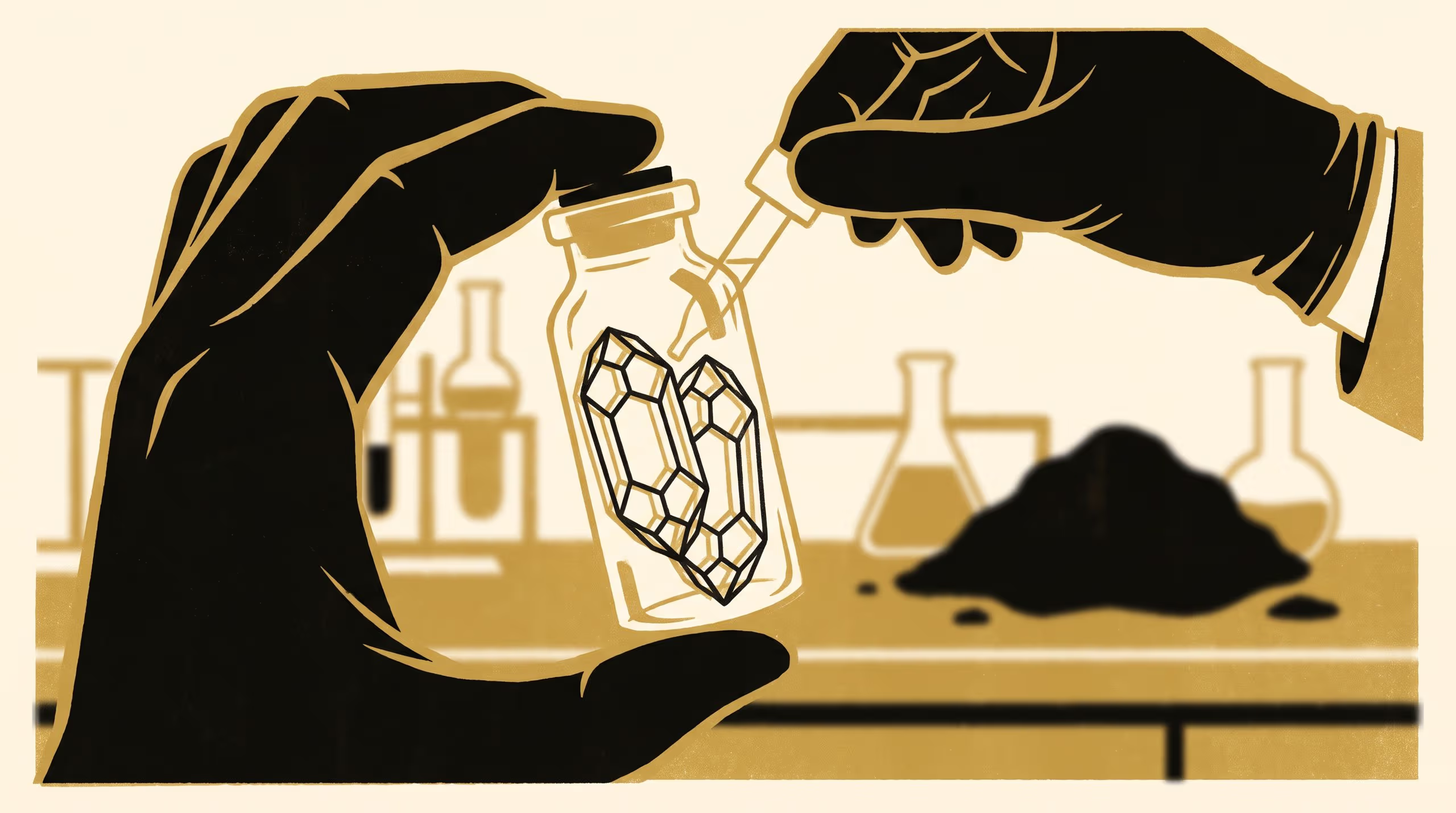
The University's Strategic Plan 2026-2031 stakes its distinctiveness in carbon-cage chemistry on the minority fraction of the soot that the rest of the field sets aside.
The 2026-2031 plan leaves the abundant sixty-atom cage to others and builds a separation, custody and teaching capability around the scarce cages left in the extract
Slop University has set out where it will stand in carbon-cage chemistry for the next five years, and, just as deliberately, where it will not. Its Strategic Plan 2026-2031, The Tail of the Soot, directs the University’s effort away from the most abundant cage in the field and toward the larger, rarer cages that remain once that cage has been taken off.
A plan is a set of sentences an institution agrees to be held to. We spent a long time on these ones, and I think the University will find them comfortable to be held to for some years.
— Dr Anneke Tolan, Senior Research Fellow and Deputy Convenor, Futures in Committee
The Plan aligns all three schools behind a single programme led from the School of Underlying Conditions. It positions separation as a research capability in its own right, consolidates the University’s scarce material into one custodial archive with a provenance standard to match, and extends the programme’s reach through Open Day, the Masters curricula and a Capability Sprint for staff. Progress will be reported through the Living Dashboard and reviewed each year by Futures in Committee.
In choosing the remainder over the centre, the Plan gives the University a position in the field that is distinctly its own, and a programme whose ambitions are matched to the institution’s temperament.
Dr Vigdis Emenike, Senior Lecturer in the School of Underlying Conditions, said the School was “very glad to have the rest of the University standing with us at the far end of the column, and keen to show colleagues what is still there.”
The full Strategic Plan is available from the University’s research repository under an open licence, doi:10.5555/slop.lbxm3z.