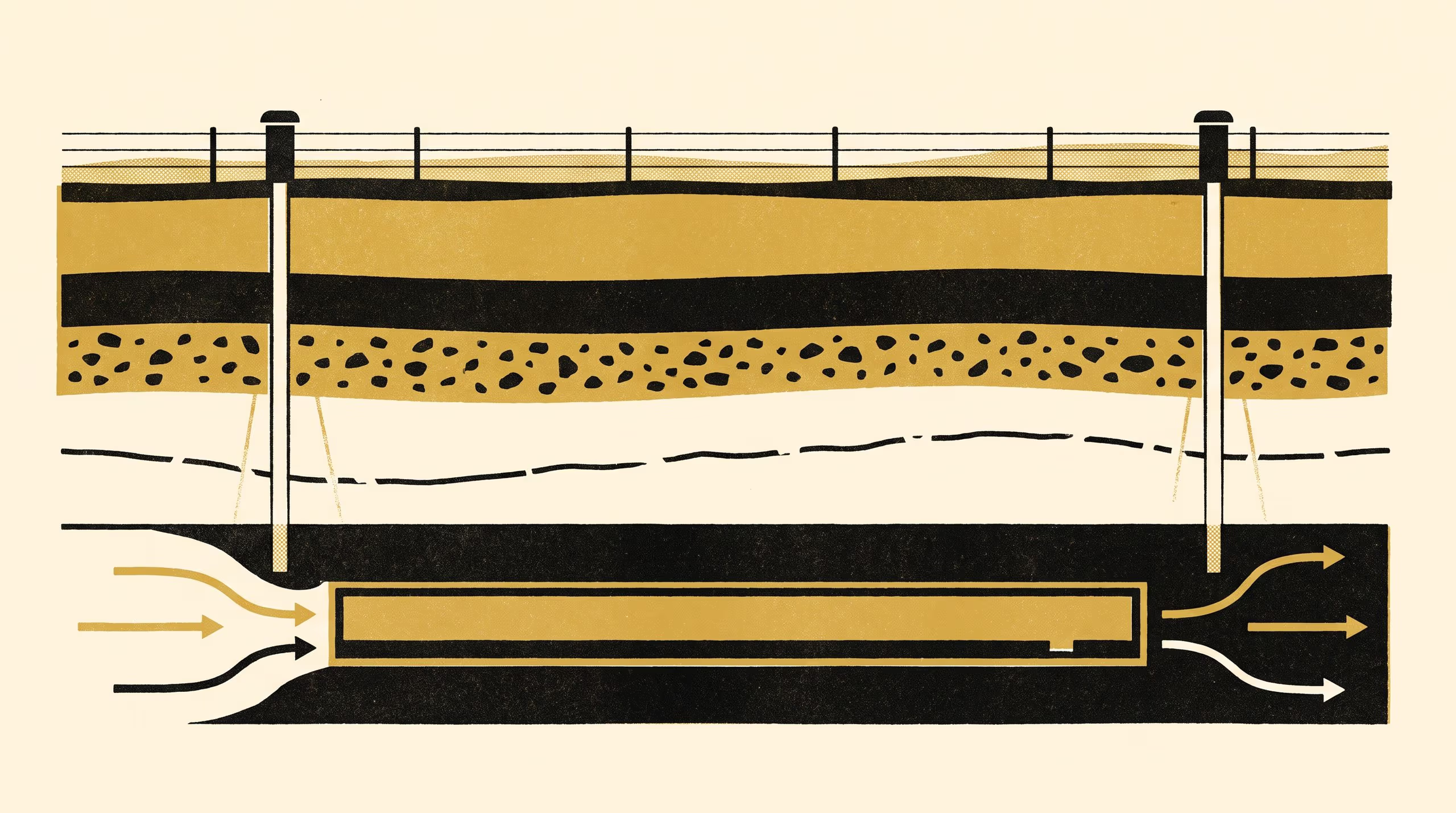
Dr Vigdis Emenike and colleagues bring the philosophy of dispositions to a titania barrier below the water table, and find the two disciplines that make and site such barriers reading the same word in different ways.
Chemists and hydrogeologists part ways over a treatment barrier that will never see the light
Two hundred and fourteen synthetic chemists and hydrogeologists were each handed one short account of a buried treatment barrier and asked a single question of it, in a new research poster from the School of Underlying Conditions: is a surface that no light will ever reach still a photocatalyst?
The poster, by Dr Vigdis Emenike, Dr Brynjar Obiora and Dr Anouk Mensah, brings a long philosophical conversation about capabilities held in reserve into contact with the working judgement of the people who make and install these materials. Chemists largely kept the name for a barrier that had never been lit (84%). Hydrogeologists were evenly divided (49%), and both groups set the name aside once the surface itself had changed.
Most of what this School studies has never been lit and never will be. We have always been comfortable describing it anyway, and this work gives us a better account of why that comfort might be earned.
— Dr Vigdis Emenike, Senior Lecturer, School of Underlying Conditions
The University regards the poster as a welcome instance of its earth sciences lending their patience to a neighbouring field, and of a question about materials being carried all the way down to where the materials are actually put.
“A word can keep its place in a sentence long after anyone checks what it is doing there,” said Dr Anouk Mensah, Postdoctoral Fellow in the School of Emergent Priorities. “This is a first, small check, and the School intends to keep making them.”
The full poster is available from the University’s research repository under an open licence, doi:10.5555/slop.mhljfa.