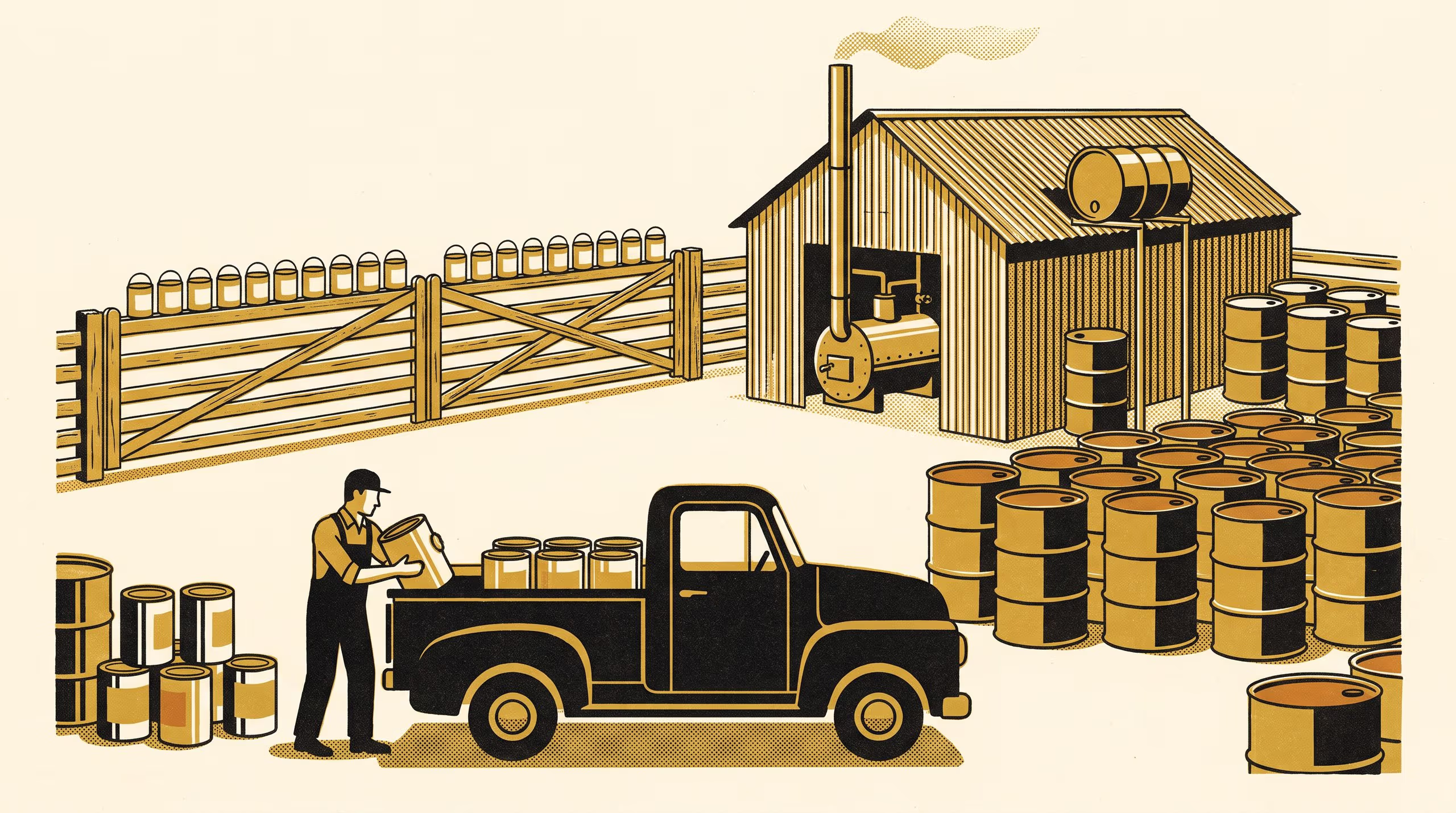
A research poster from the School of Underlying Conditions recovers the social history of a barn paint roasted from bore-screen ochre and sold from a water depot's gate.
A new research poster follows four decades of barn paint made from the ochre scraped out of groundwater bores
A part-tin of red paint, kept on a shelf for patching, is where Depot Red begins. The new research poster from the School of Underlying Conditions, by Dr Vigdis Emenike, Senior Lecturer, with Ms Sunniva Balogun, Doctoral Candidate, and Dr Marek Solheim, Lecturer and Deputy Convenor of the Horizon Register, follows that paint back through a district’s sheds and tank stands to the clogged screens of its groundwater bores.
For four decades, the poster finds, the iron ochre a water authority’s crews scraped from those screens did not go to waste. It was roasted red over the depot boiler, sold from the gate, and named by households after the bore it came from.
We tend to treat a sample as finished once it is logged. This project reminded the School that whatever comes up a bore keeps going somewhere after we have written it down.
— Dr Vigdis Emenike, Senior Lecturer, School of Underlying Conditions
The project brings stores ledgers, oral history and a survey of surviving farm buildings into a single account of maintenance as a cultural practice, positioning the School’s field expertise within a wider conversation about how infrastructure leaves its mark on everyday life. It is the kind of patient, cross-disciplinary attention the University is proud to see its newest school bring to the district it works in.
“Every district has a colour like this one, and most of them have never been written down,” said Dr Solheim. “We would be delighted to hear about the others.”
The full poster is available from the University’s research repository under an open licence, doi:10.5555/slop.kajbpi.