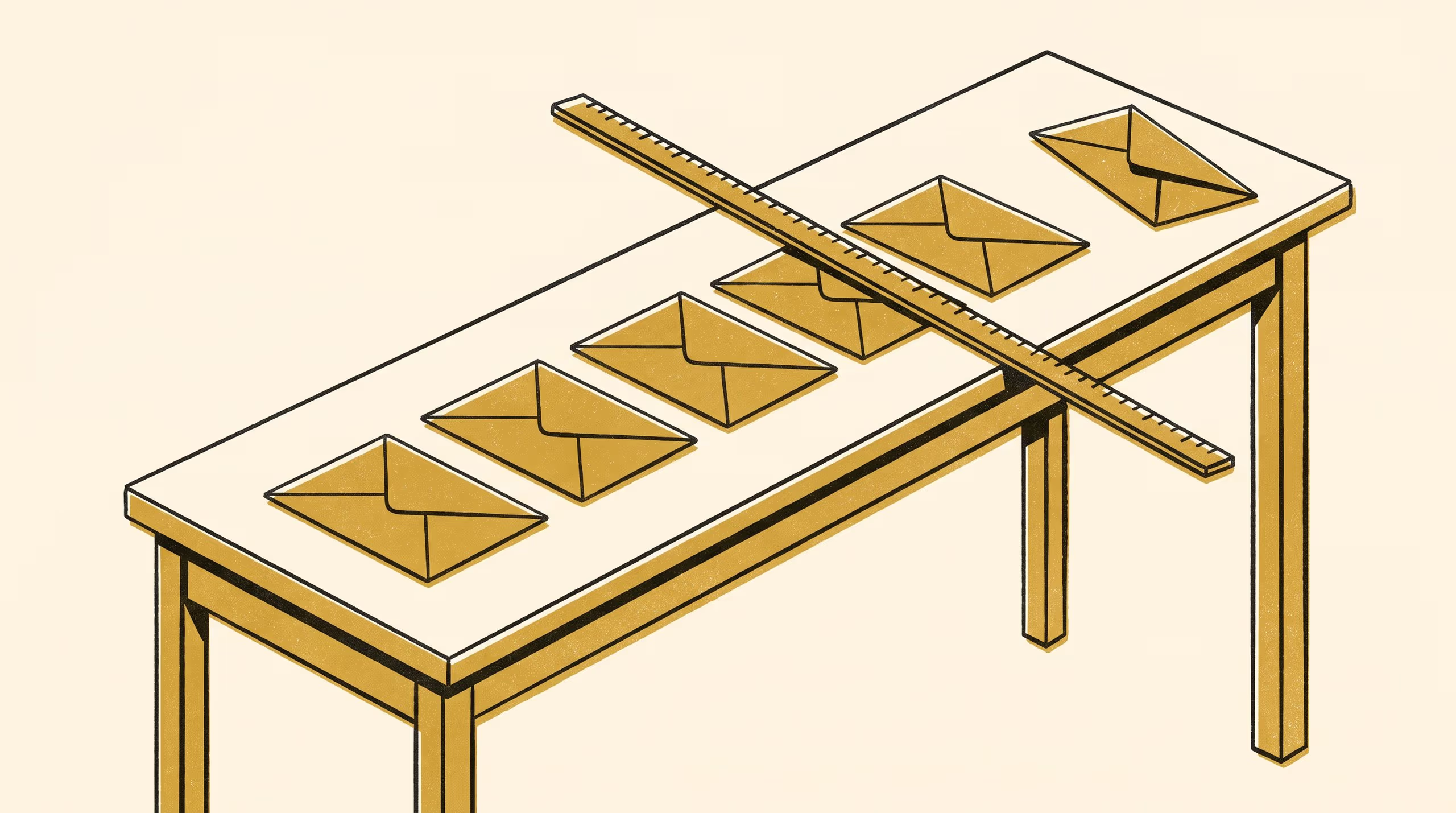
A new paper replays a public works agency's tender evaluations and finds that, in roughly one tender in seven, a bid that could not win changed which bid the evaluation tool recommended
Six years of logged tender evaluations, replayed one withdrawn bid at a time, show the recommended winner turning on bids that never stood a chance
Six years of tender evaluations, replayed one withdrawn bid at a time, sit at the heart of a new paper from the School of Continuous Improvement. The Bid That Could Not Win: Spoiler Alternatives and Top-Rank Reversal in a TOPSIS Tender-Evaluation Tool, by Eivind Onwuka and Dr Solveig Adeyemi, asks how often a bid with no prospect of success still shapes which competitor a decision support tool puts forward.
The answer, across 306 tenders, is 45 times.
The School has spent a long while asking who gets a say in a decision. It is humbling to find that the list includes the people who have already lost, and we will be carrying that thought into a good many of our own meetings.
— Dr Solveig Adeyemi, Lecturer, School of Continuous Improvement
The paper situates multi-criteria decision support within the wider evaluation-to-award continuum, bringing a leave-one-out replay methodology, a structured profile of the bids that exert influence and an anchored comparison method to bear on the everyday practice of procurement panels. It closes by proposing that stability be reported alongside every recommendation, a modest change the authors frame as an invitation rather than a prescription.
The publication adds a further strand to the University’s sustained attention to how institutions arrive at a choice and how they come to stand behind it.
“None of this would have been possible without the panels whose careful records we were able to replay,” said Mr Eivind Onwuka, Doctoral Candidate in the School of Continuous Improvement. “Every evaluation we revisited was done properly, and we hope the paper reads as a tribute to that.”
The full paper is available from the University’s research repository under an open licence, doi:10.5555/slop.r9fqt1.