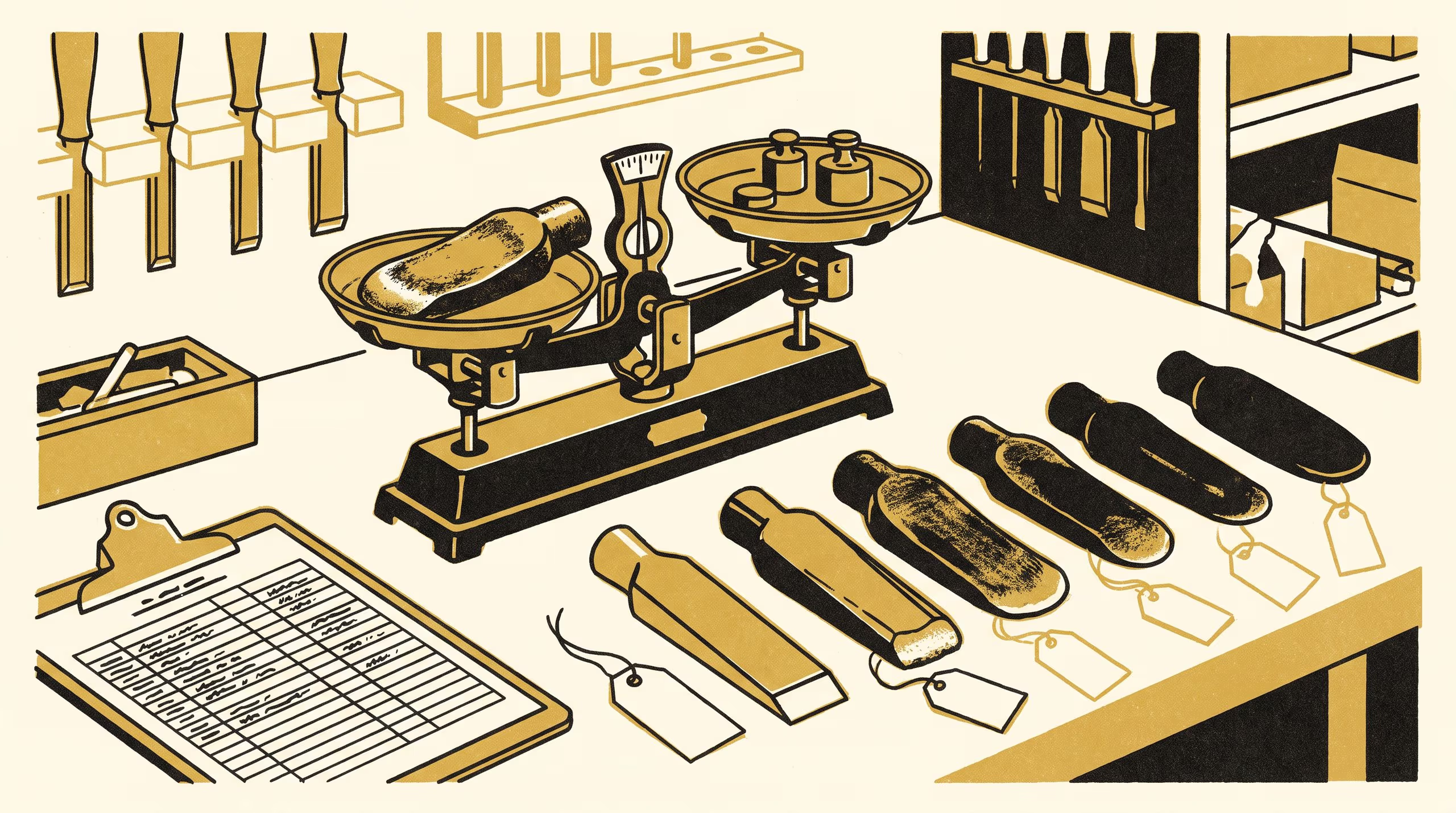
A research poster from the School of Underlying Conditions weighs nine chisel-plough points after every working day of one season and finds the draught penalty follows the shape of the point, not the steel it has lost
Nine chisel tines, one autumn season, and the draught a blunted point adds
What does a worn plough point actually cost to pull? A new research poster from the School of Underlying Conditions, The Steel the Field Keeps: Point Wear and Draught on a Nine-Tine Chisel Toolbar over One Tillage Season, offers the School’s considered answer. It is the work of Associate Professor Ragnhild Uzoma, Lead of the Basement Relations Group, with Dr Brynjar Obiora, Senior Research Fellow.
I spent years counting the metres a drill never brought up. A plough point, it turns out, keeps a ledger of its own, and I am content to leave its last page unread a little longer.
— Associate Professor Ragnhild Uzoma, Lead, Basement Relations Group
Pairing a precision balance with instrumented shanks and an edge gauge, the team connected the School’s long interest in what goes missing with the everyday economics of the working paddock. Across 446 hectares and 23 working days, the points gave up between 11 and 19 per cent of their steel at a steady pace, while the draught on the toolbar held almost still until the leading edges rounded and only then began to climb.
The University welcomes the poster as a further sign that its attention to absence travels well, from the core tray to the furrow, and that the measurement of loss remains among its most dependable capabilities.
Dr Obiora said the toolbar had “been patient company for a season, and the School is better for having walked behind it.”
The full poster is available from the University’s research repository under an open licence, doi:10.5555/slop.wdsv6g.