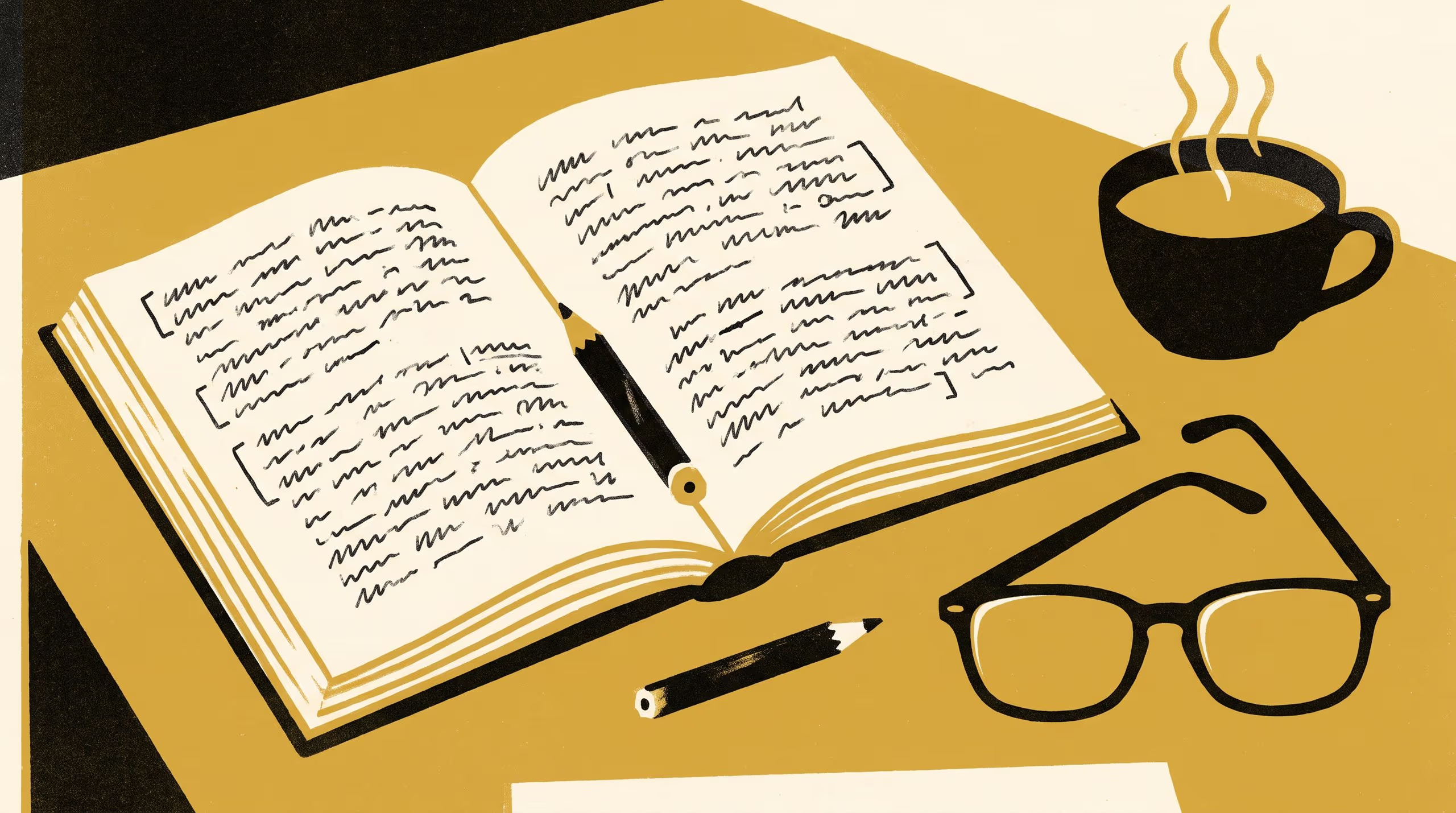
A paper from the School of Continuous Improvement follows the pencil notes an unknown reader left in a second-hand copy of a novel about pity, from first objection to a closing note in which the reader turns the objection on themselves
An unsigned second-hand paperback carries a complete argument about pity in its margins, and a change of mind on its last blank page
The paper published today by the School of Continuous Improvement has one source, and it cost less than the pencil it was written in. The Heart’s Impatience, in Pencil: A Reader’s Schopenhauer in the Margins of a Second-Hand Copy of Stefan Zweig’s Beware of Pity is the work of Dr Mirela Hanke, Postdoctoral Fellow and Deputy Convenor, Living Dashboard, and concerns a single paperback that reached her in a carton of mixed fiction from a charity shop.
The copy carries 203 notes in one unidentified hand. The paper reports that the reader spent most of the book insisting, with reference to Schopenhauer, that the weaker of the novel’s two kinds of pity was not pity at all; that the notes grew shorter and crosser as the novel’s narrator went on; that eleven pages were skipped and the skip recorded; and that a final note on the rear endpaper concludes the reader had been guilty, for some two hundred pages, of the fault they were marking.
I did not expect to be kept company by someone I will never be able to thank. Whoever they were, they finished the book, and I have tried to extend them the same courtesy.
— Dr Mirela Hanke, Postdoctoral Fellow and Deputy Convenor, Living Dashboard
The study brings close reading and the history of the book into contact with moral philosophy, treating a reader’s annotations as a sustained piece of reasoning carried out alongside a narrative. The University counts it among the quieter satisfactions of a broad institution that a school known for other things can give a season to one book and one stranger.
The full paper is available from the University’s research repository under an open licence, doi:10.5555/slop.c8yjrt.