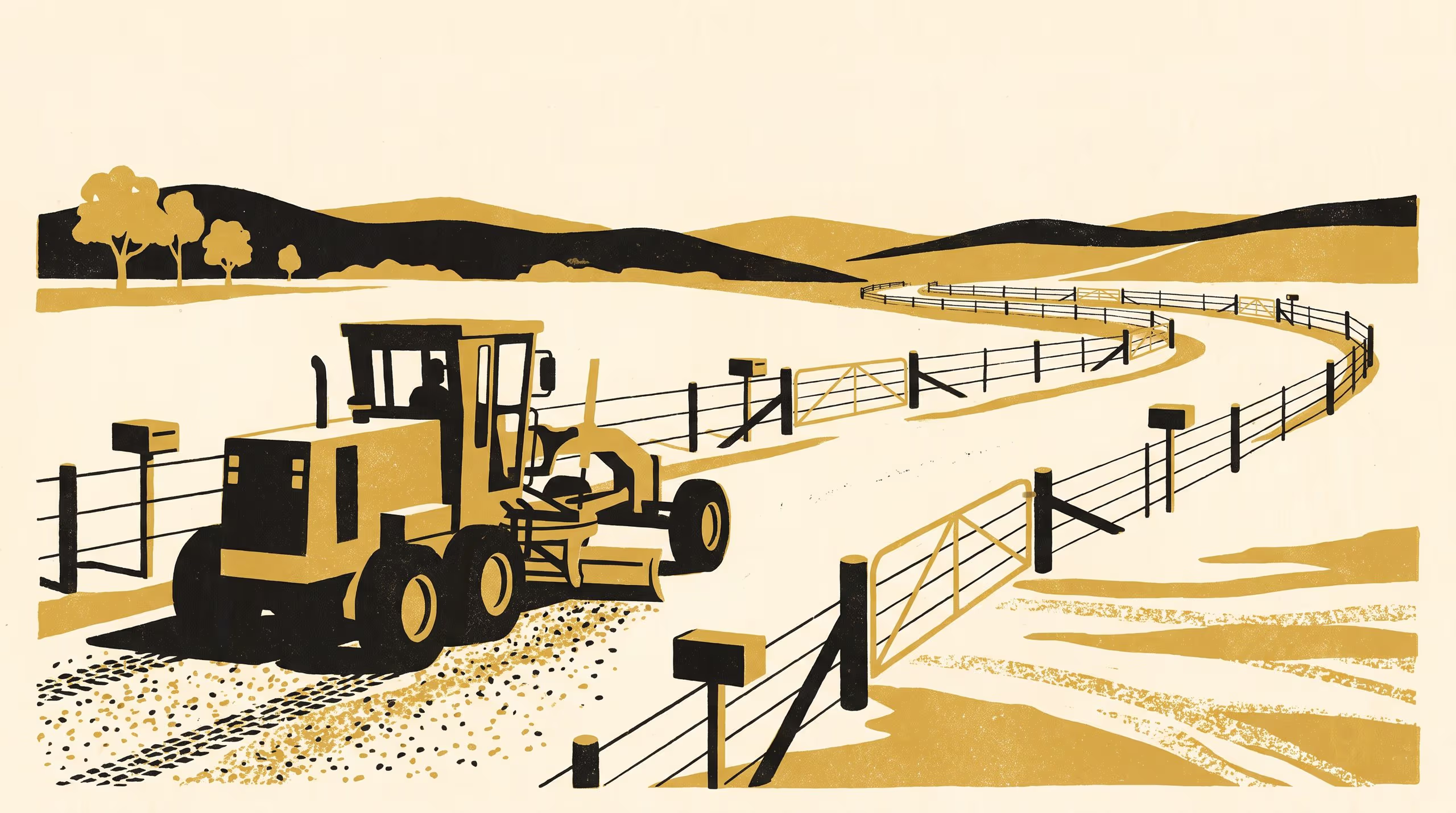
A research poster from the School of Continuous Improvement treats the grading bill of a private gravel road as a cooperative game and tests three ways of splitting it.
Seven households on a private gravel road pay the same levy, and a doctoral candidate works out what each stretch of it is costing whom
A private gravel road with seven gates on it costs what it costs to grade as far as the last one. Who should pay for which part of that is the subject of One Road, Seven Gates: The equal grading levy on a private gravel road as an airport game, a research poster by Mr Eskil Nwabueze, Doctoral Candidate in the School of Continuous Improvement, with Dr Joost Nwosu, Postdoctoral Fellow, and Dr Solveig Adeyemi, Lecturer.
The road was there before the poster and will want grading after it. We have not been asked to settle anything, and have taken some care not to.
— Mr Eskil Nwabueze, Doctoral Candidate, School of Continuous Improvement
The poster aligns cooperative game theory, cost allocation and one road association’s minute books around a single yearly bill. It sets the association’s equal levy beside two alternatives from the decision sciences and asks, of each, whether any group of neighbours could do better by leaving the rest to it. On the poster’s figures the household at the first gate pays $15 a year more than its own stretch would cost alone, and the last 1,070 metres of road serve a single gate. In nineteen years of minutes, nobody has proposed doing anything about either.
It is the sort of arithmetic the University likes to see carried to the cent and then left where the people concerned can find it. Dr Nwosu said the work had left the School “better acquainted with the word ‘fair’, and in no hurry to use it”.
The full poster is available from the University’s research repository under an open licence, doi:10.5555/slop.aii2jq.