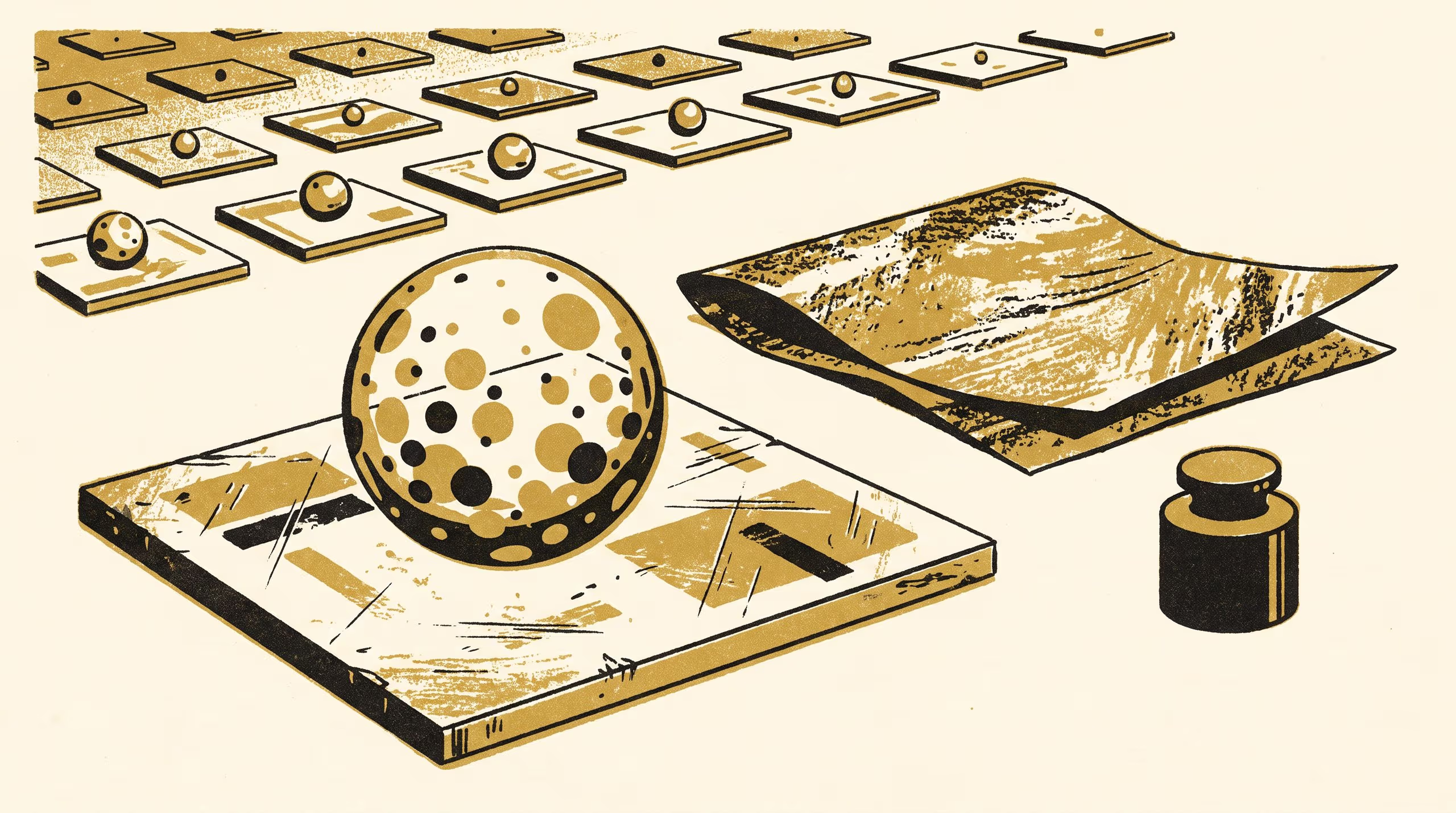
A research poster from the School of Underlying Conditions tests whether a machine-learning method for abandoning unpromising runs early can shorten the abrasion testing of water-repellent coatings.
A stopping schedule borrowed from machine learning is tried on eighty-one water-repellent coatings and one abrasion rig
Of eighty-one water-repellent coatings put to the sandpaper at Slop University, the one that lasted longest was among the first that a faster schedule would have set aside. That is the central result of The Sandpaper Budget: Successive halving for abrasion-durability screening of water-repellent coatings, a research poster by Dr Brynjar Obiora, Senior Research Fellow in the School of Underlying Conditions, with Ms Signy Okpara, Doctoral Candidate, and Dr Joost Nwosu, Postdoctoral Fellow, both of the School of Continuous Improvement.
We borrowed a habit from colleagues who train machines, and we should like to return it in good condition. Whether we have is for them to say.
— Dr Brynjar Obiora, Senior Research Fellow, School of Underlying Conditions
The poster carries a staged elimination approach out of machine learning and into a materials-testing routine, aligning a schedule that retires weaker candidates at each stage with a full-length reference run on the same rig. The shorter schedule used 4.5 per cent of the abrasion strokes and arrived at the third-best coating of the eighty-one; a more patient variant, which keeps every candidate through the opening stages, recovered the best in 71 per cent of its replays.
The University counts the careful borrowing of a neighbouring discipline’s methods among its quieter strengths, and notes that the loan in this case was tested before it was relied upon. Ms Okpara said the team had “come away with a clearer sense of how the early part of a trial relates to the rest of it, which is a thing one hopes to know about most undertakings”.
The full poster is available from the University’s research repository under an open licence, doi:10.5555/slop.v6ksyd.