A paper from the School of Continuous Improvement reads a single stair balustrade joint by joint and asks what the doctrine of truth to materials is being truthful to.
A reading of one painted steel stair balustrade, its 212 ground joints and the ninety minutes a day in which 31 of them show
A steel handrail that was specified to show no sign of having been welded shows it anyway, for about an hour and a half on a clear afternoon. That observation is the starting point of Ground Flush: Truth to Materials and the Weld a Finish Schedule Asks Us Not to See, a paper by Mr Eskil Nwabueze, Doctoral Candidate in the School of Continuous Improvement, published today.
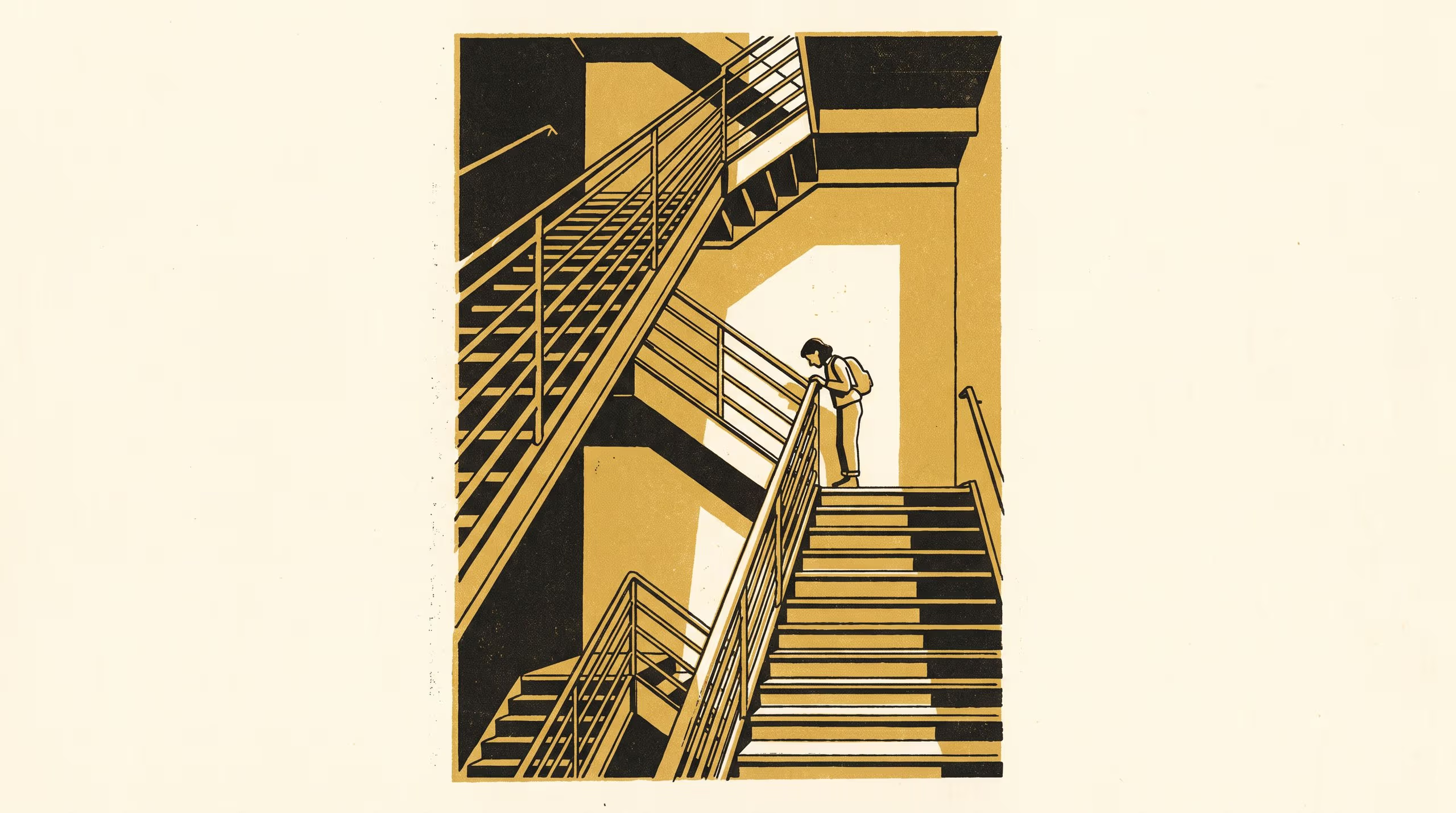
The paper is a work of building criticism conducted at the scale of a joint. It attends to the main stair of an ordinary four-storey teaching building, where 212 welds between baluster and rail were ground level and painted over, and to a service flight behind a door where fourteen more were left as they were laid. Across nine visits the author aligns the wording of a finish schedule, the practice of the workshop and the passage of the sun, and brings the three into a shared account of what a finished surface retains.
The stair has been climbed for years by people who had somewhere to be. I was fortunate, on those afternoons, to have nowhere, and I am grateful to everyone who went round me.
— Mr Eskil Nwabueze, Doctoral Candidate, School of Continuous Improvement
The paper stops short of advising anyone how a handrail should be finished. It proposes that a surface be asked what was last done to it, and what that was done to. The University regards the capacity to look twice at its own fittings as part of the settled character of its research culture, and is pleased to see a candidate exercise it this early in a candidature.
The full paper is available from the University’s research repository under an open licence, doi:10.5555/slop.gkfrwo.