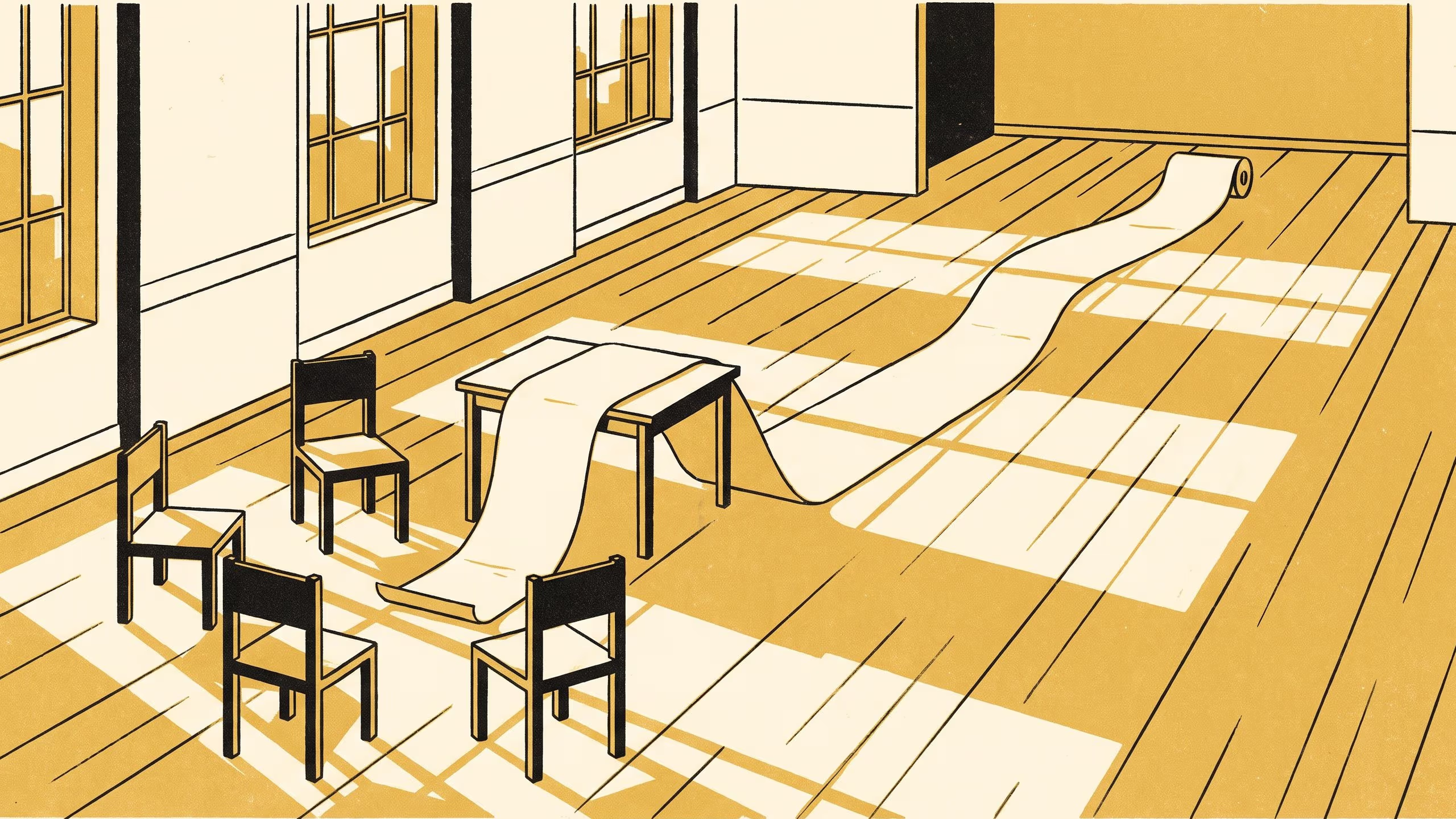
A display campaign from the School of Continuous Improvement presents rare-condition research as a matter of small cohorts and long attention.
A new display advertisement features Dr Marit Osayande and the University's rare-condition research
Screens across the University’s campuses will this season carry four words and a woman reading. Small Cohorts. Long Attention. is the newest display campaign from the School of Continuous Improvement, and its face is Dr Marit Osayande, Lecturer and Convenor, Living Dashboard.
The advertisement speaks for the University’s rare-condition research, Williams syndrome among it, where a study may gather only a handful of families and a single question can outlast several funding cycles. The campaign’s position is that neither fact is a shortcoming. It aligns the University’s research posture with the tempo of the people who take part, and it frames staying as a capability in its own right.
People sometimes ask when a study like this is finished. I have come to think that is a question for the people in it, and that our part is to still be in the room when they answer.
— Dr Marit Osayande, Lecturer and Convenor, Living Dashboard
The image places Dr Osayande at a table in a hall set with five chairs, a paper record running from her hands to the edge of the frame. It was composed to mobilise the School’s sustained-engagement settings into a single picture, and to underpin an invitation: passers-by are directed to the University’s people pages, and to three published studies named in the small print.
The University regards the campaign as a fair account of how it would like to be found, which is to say still there.
The full poster is available from the University’s research repository under an open licence, doi:10.5555/slop.351iw0.