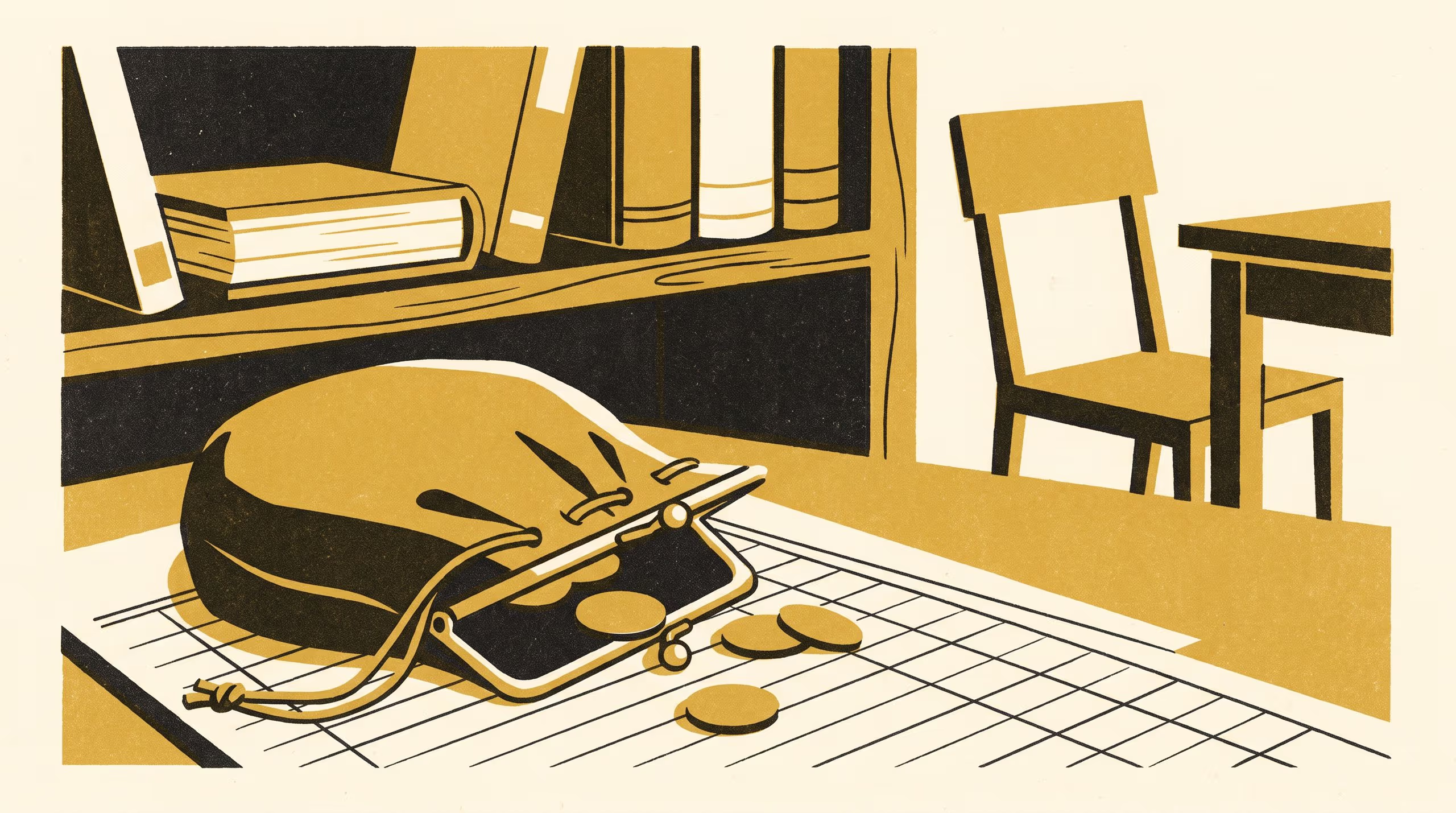
A research poster from the School of Continuous Improvement reads a regional trials committee's minute books as an account book, and finds its significance level behaving as a ration.
Thirty-one years of minute books show a significance level being issued, saved and never once lent
Statisticians who run clinical trials speak of spending a significance level. The School of Continuous Improvement has taken them at their word and asked to see the books. The Five Per Cent Purse: Type I error as a unit of account in a regional trials committee’s minute books is a research poster by Dr Thandiwe Solberg, Senior Lecturer and Convenor, Demo Quarter, with Dr Solveig Adeyemi, Lecturer, and Dr Osei Vandermeer, Research Fellow and Convenor, Review Cadence Observatory.
The books belong to one regional committee and run for 31 unbroken years. The authors posted 922 minuted entries to a ledger, one account for each of 58 trials, and report that the committee’s trials reached their final analysis with most of their allowance intact. Nine times a member proposed moving an unspent balance from one trial to another. Nine times the committee declined.
A committee that minutes its refusals has been generous to whoever comes after it. We came after it, and we would like the record to show that we noticed.
— Dr Thandiwe Solberg, Senior Lecturer and Convenor, Demo Quarter
The poster aligns the working vocabulary of trial oversight with the settled categories of monetary history, positioning an allowance of statistical error within a longer lineage of things that are issued, held and allowed to lapse. No result of any trial was consulted, and the authors draw no conclusion about how a trial ought to be run.
The University holds that a school is entitled to read outside its own shelves from time to time, and is glad to see the entitlement exercised with a ruled ledger. Dr Vandermeer said the Observatory had “always suspected that the meeting where nothing changes hands is doing some of the work, and now has the pleasure of a column to put it in”.
The full poster is available from the University’s research repository under an open licence, doi:10.5555/slop.fzhqfb.