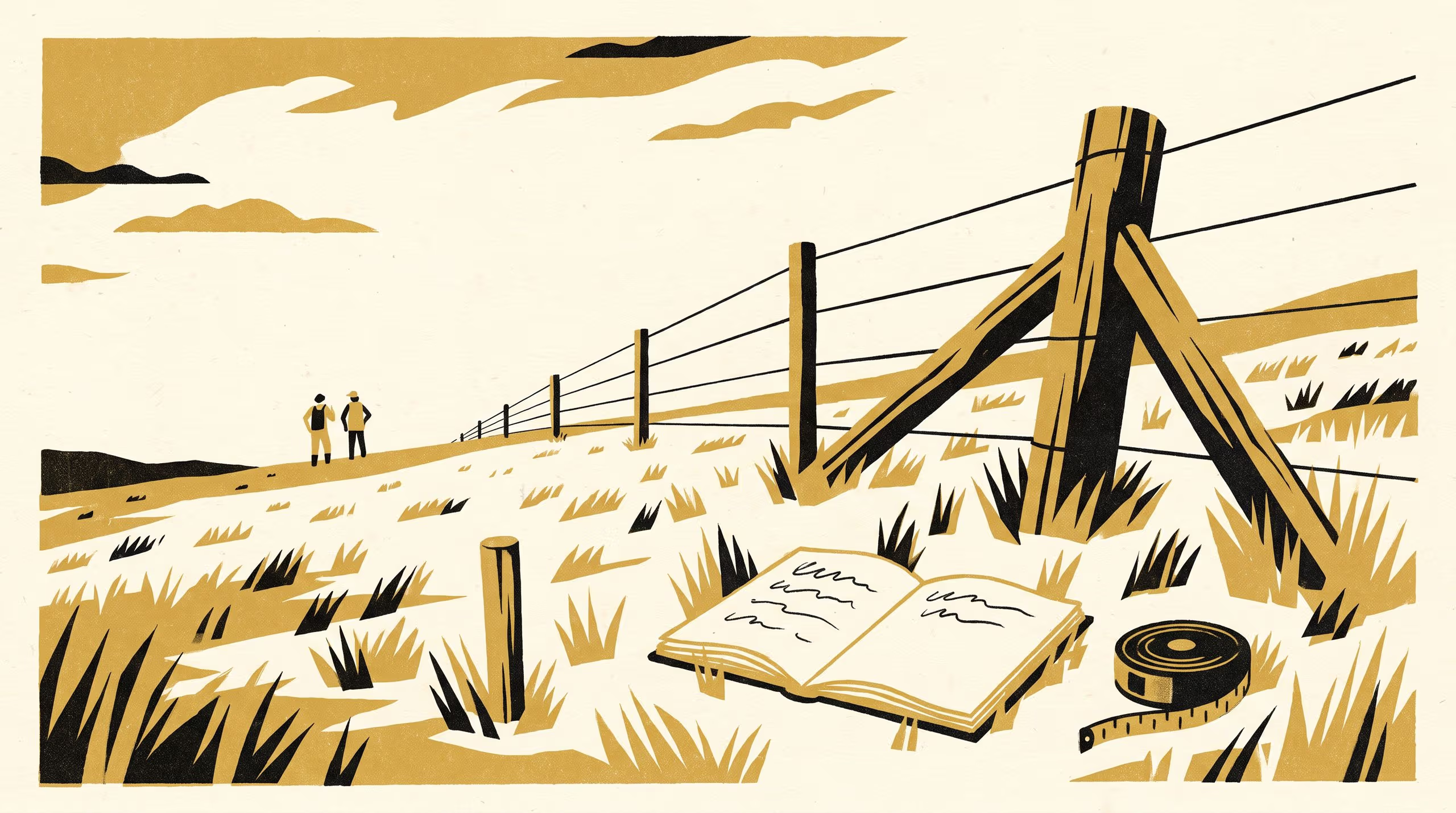
A paper from the School of Underlying Conditions measures how far field teams land from the original sampling points of a soil monitoring network, and what that distance contributes to the change the network reports.
Steel pins buried at 48 points of an upland soil network let three researchers measure how closely a returning field team finds its mark
A length of steel bar, driven flush with the ground and mentioned in no manual, is where the newest paper from the School of Underlying Conditions begins. Standing Where the First Surveyor Stood: Relocation Error and Apparent Change in a Resurveyed Soil Monitoring Network is the work of Dr Brynjar Obiora, Senior Research Fellow, and Dr Vigdis Emenike, Senior Lecturer, both of the School, with Dr Dagny Okafor, Lecturer and Convenor, Evaluation of Evaluation, in the School of Continuous Improvement.
There are twenty-four points in that catchment which were marked for the first time this year. Somebody will go looking for them long after the three of us have stopped, and I should like them to find us about where we said we were.
— Dr Brynjar Obiora, Senior Research Fellow, School of Underlying Conditions
The paper mobilises field practice, trial design and laboratory capability around a single act of return. Four teams were asked to find 48 points of an upland network from the original notebooks, from recorded coordinates, or from both, and the paper reports how near they came: a median of 3.6 metres from the notes, and 1.3 metres with both to hand. It then follows that distance through to the soil itself, and to the change the network had reported across eleven years.
Returning to its own ground, and reporting plainly on the distance, is a discipline the University is glad to see practised at the level of a single paddock. Dr Okafor said the collaboration “started as a question about a gatepost and stayed one for a good deal longer than any of us had budgeted for”.
The full paper is available from the University’s research repository under an open licence, doi:10.5555/slop.n1enot.