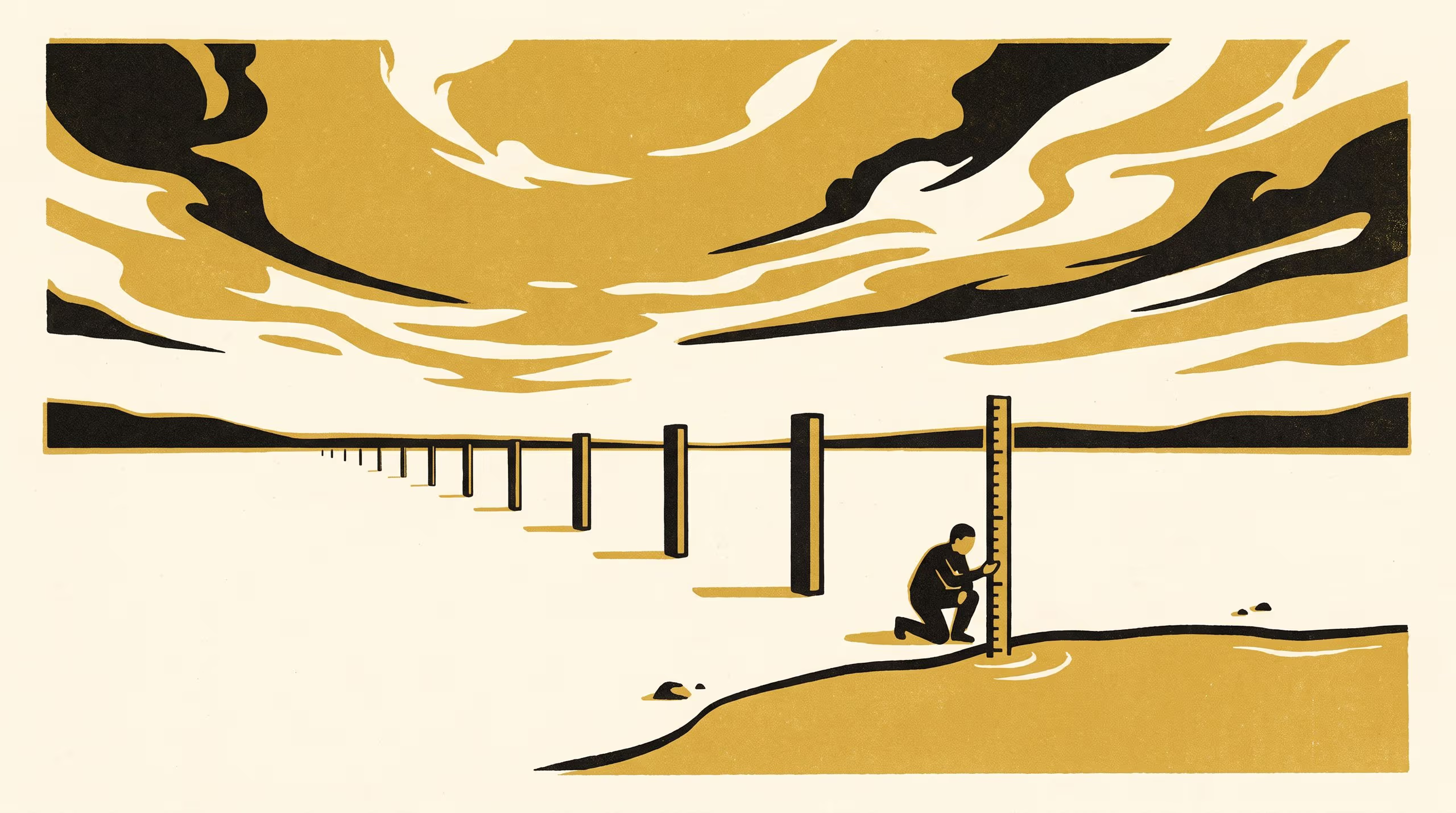
A new Slop University research showcase gathers seven published studies around what recovers after a financial crisis and what merely refills.
Three schools read the aftermath of a financial crisis as a matter of drawdown and recharge
What happens after the part of a financial crisis that everyone remembers? The question sits behind Slow Recharge: Research for the long aftermath, a research showcase published by Slop University and led by Dr Vigdis Emenike, Senior Lecturer in the School of Underlying Conditions, with Dr Osei Vandermeer, Research Fellow and Convenor, Review Cadence Observatory, and Dr Anouk Mensah, Postdoctoral Fellow in the School of Emergent Priorities.
The bores I learned on were read every month by people who never saw a result written up. If this showcase has a manner, it is theirs, and I would like them to have the credit for it.
— Dr Vigdis Emenike, Senior Lecturer, School of Underlying Conditions
The showcase carries a distinction from groundwater practice across the recovery-and-continuity space: between a level that has returned and a system that has. It anchors that distinction in each school in turn, moving from supplies that are drawn down and rested, through the reviews and signatures a hard season leaves in place, to the things that are pressed back into shape and keep a record of it. Seven published studies are presented by title and identifier, among them a two-season water balance on fourteen stock dams and a drawer of 52 teaspoons.
The University counts the publication among the plainer statements of what it is for. Dr Vandermeer said the Observatory had been glad of the company. “We expect still to be looking at this when it has stopped being topical,” he said, “which is about when our kind of work begins.”
The full showcase is available from the University’s research repository under an open licence, doi:10.5555/slop.g49glv.