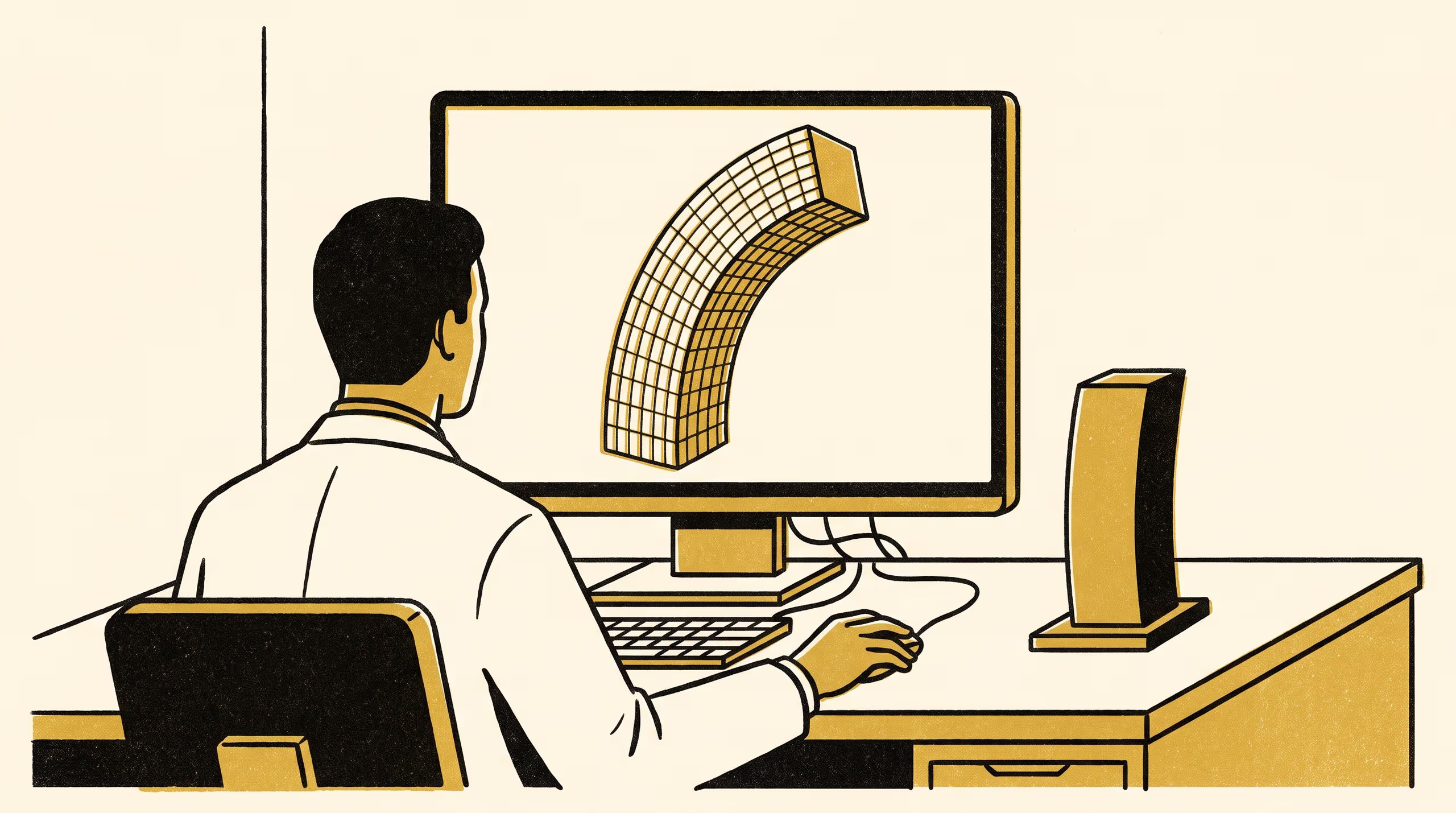
A paper led by the School of Emergent Priorities observes structural engineers reviewing earthquake analyses of tall buildings and records how they set the factor by which the displayed movement is exaggerated.
A contextual inquiry in four design offices asks how the exaggeration in a tall building's on-screen sway comes to be set
For fourteen weeks a doctoral candidate from the School of Emergent Priorities sat beside structural engineers and wrote down a single number each time one of them changed it. The number is the factor by which a tall building’s computed movement in an earthquake is enlarged so that it can be seen on a screen, and the record is now a paper: Turn It Up Until It Moves: How Structural Engineers Set the Deformation Scale Factor When Reviewing Tall-Building Seismic Analyses, by Sunniva Balogun, Doctoral Candidate, Dr Vigdis Emenike, Senior Lecturer in the School of Underlying Conditions, and Dr Lindiwe Achterberg, Lecturer.
I was made very welcome in four offices and followed rather less of the engineering than my hosts were kind enough to assume. The paper is what I was able to carry out with me, and I am glad it was thought worth the chair.
— Sunniva Balogun, Doctoral Candidate, School of Emergent Priorities
Across 61 working sessions and 23 engineers, the paper connects an everyday display setting to the wider practice of professional looking. It reports that the factor is set by eye and to suit the company, that experienced reviewers push it to extremes in order to find what a gentler picture conceals, and that of 212 figures in the offices’ issued reports, 31 say what factor they were drawn at.
The University counts the paper among the returns on its standing interest in what its researchers notice while they are meant to be attending to something else. Dr Emenike said the collaboration had shown that the two schools “keep their curiosity in much the same drawer”.
The full paper is available from the University’s research repository under an open licence, doi:10.5555/slop.8ci3bm.