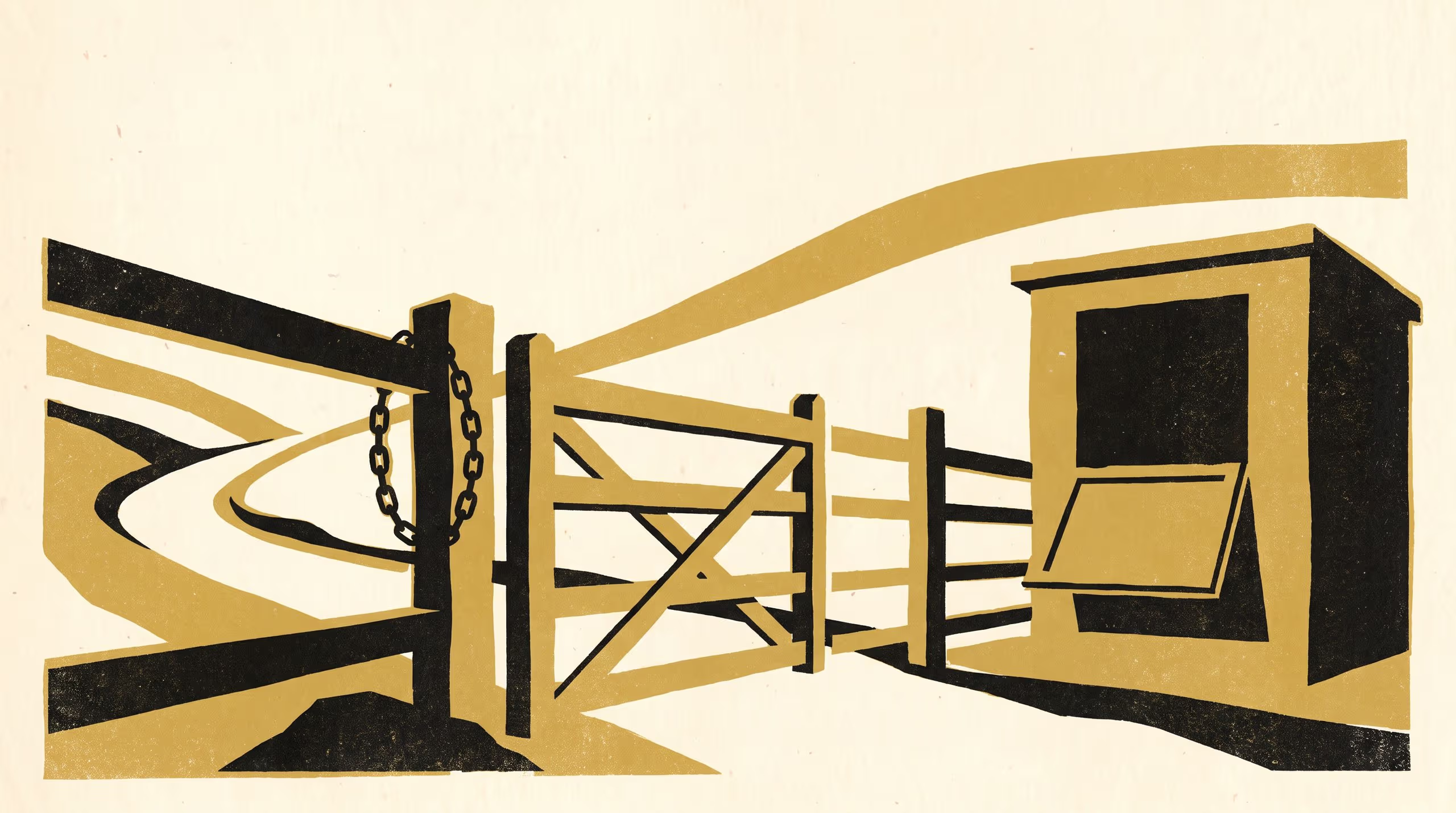
A research poster from the School of Underlying Conditions traces where walkers to one mountain physiology station begin to write of themselves as being at altitude, and finds the answer is a gate.
A reading of 21 hut logbooks finds a mountain station's threshold settled where its equipment was handed out, some way below the contour on its own rule sheet
The rule on the wall names a contour, and the people walking up to it have, for a good many years, been writing down a gate. That is the finding of Above the Second Gate: How one station’s logbooks moved the start of “high altitude” from a contour to a gate, a research poster by Dr Brynjar Obiora, Senior Research Fellow, Dr Vigdis Emenike, Senior Lecturer, and Mr Eivind Onwuka, Doctoral Candidate.
We are a school of people who look down. It has done us no harm to spend a season looking at a hillside from the side, and I think the hillside was civil about it.
— Dr Vigdis Emenike, Senior Lecturer, School of Underlying Conditions
The poster brings archival reading, interview and the School’s surveying capability to bear on a single phrase. Across 1,146 entries in 21 logbooks kept at one mountain physiology station, the authors record the place at which each party first describes itself as “at altitude”. In the early books that place wanders over a long stretch of track. In the later ones it gathers at the second stock gate, where a store shed stands and the station’s kit is issued, and 83 per cent of entries in the last six books begin there or within a marker of it. The station’s rule sheets, through every revision, do not mention the gate.
That a school founded on rock, soil and groundwater should give a poster to a word in a visitors’ book is, the University considers, a sign of a discipline settled enough to travel. The authors make no claim about ascent or health; the poster concerns how a line comes to be somewhere.
The full poster is available from the University’s research repository under an open licence, doi:10.5555/slop.2i115r.