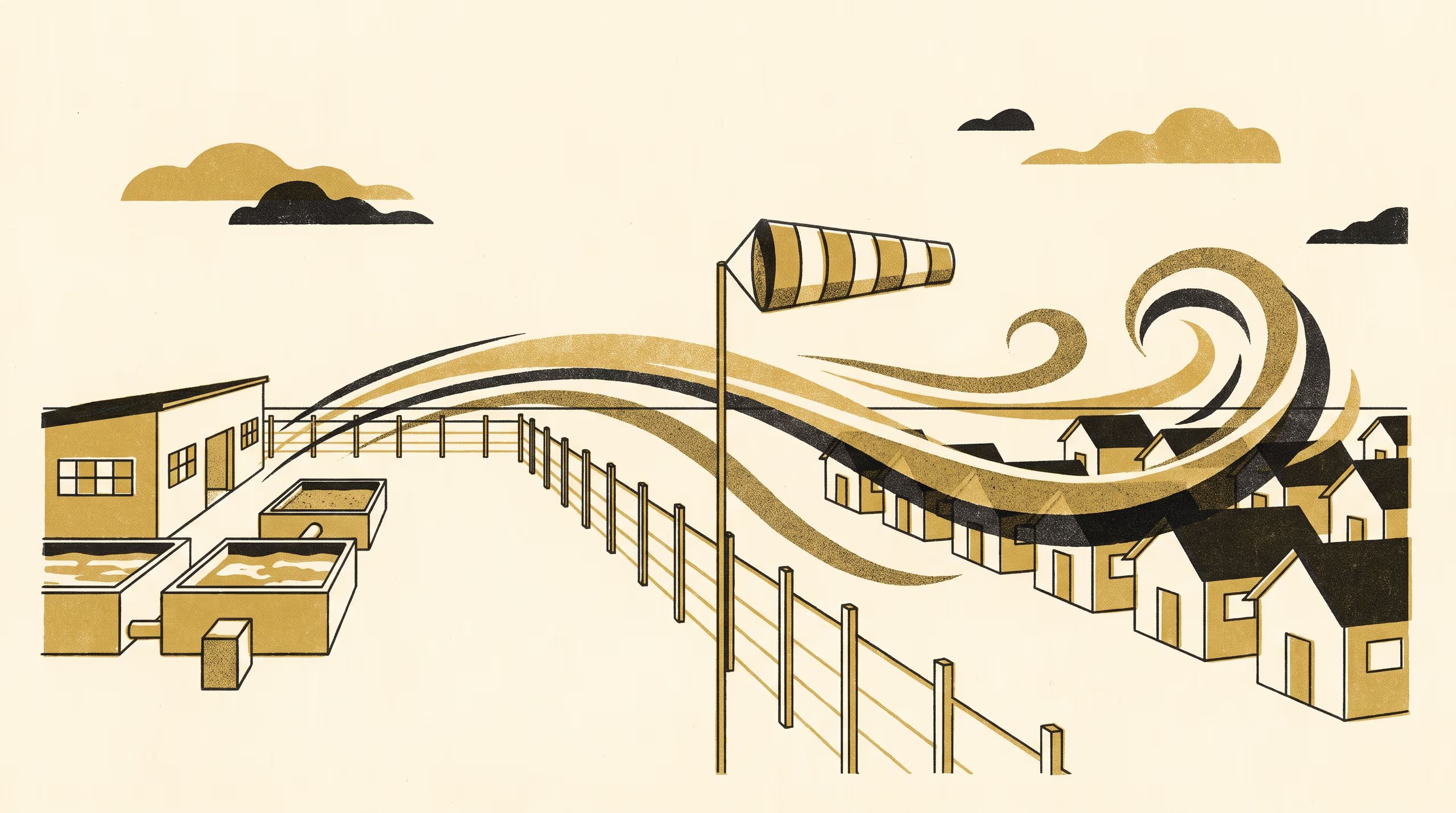
The School of Continuous Improvement's Impact Report 2021–2026 reflects on five years spent as a guest in odour and emission control, working on the records around the plant.
A retrospective on the diaries, review calendars and assessor panels that stand between an odour and its abatement
An impact report is the document in which a school says what its work came to, and the School of Continuous Improvement has used its latest to say so about a subject it did not set out to study. Impact Report 2021–2026 gathers five years of the School’s engagement with odour and emission control, a field it entered as a visitor and, on the report’s own account, has not left.
The report was prepared by Mr Eskil Nwabueze, Doctoral Candidate, with Dr Solveig Adeyemi, Lecturer, and Dr Mirela Hanke, Postdoctoral Fellow and Deputy Convenor, Living Dashboard, and opens with an extended reflection from the Director of the School.
A school finds out what it is for by being somewhere it is not expert. We were not expert at the fence, and I think the five years show what was left of us once that was plain.
— Mr Eskil Nwabueze, Doctoral Candidate, School of Continuous Improvement
Across three strands, the report traces a record-to-review-to-plant pathway: the weekly diary a household keeps beside a works, the calendar on which a filter bed is looked at again, and the sitting at which a panel of assessors is asked what it can detect. In each, the School’s contribution anchors the settings around the abatement equipment and leaves the equipment to its engineers, aligning existing instruments with the people who rely on them.
The University regards a school’s readiness to describe itself as a guest as a mature form of capability, and commends the report to those who host one. Dr Adeyemi said the period had been “mostly spent in anterooms, which is where a great deal of any field is kept”.
The full report is available from the University’s research repository under an open licence, doi:10.5555/slop.tt4tei.