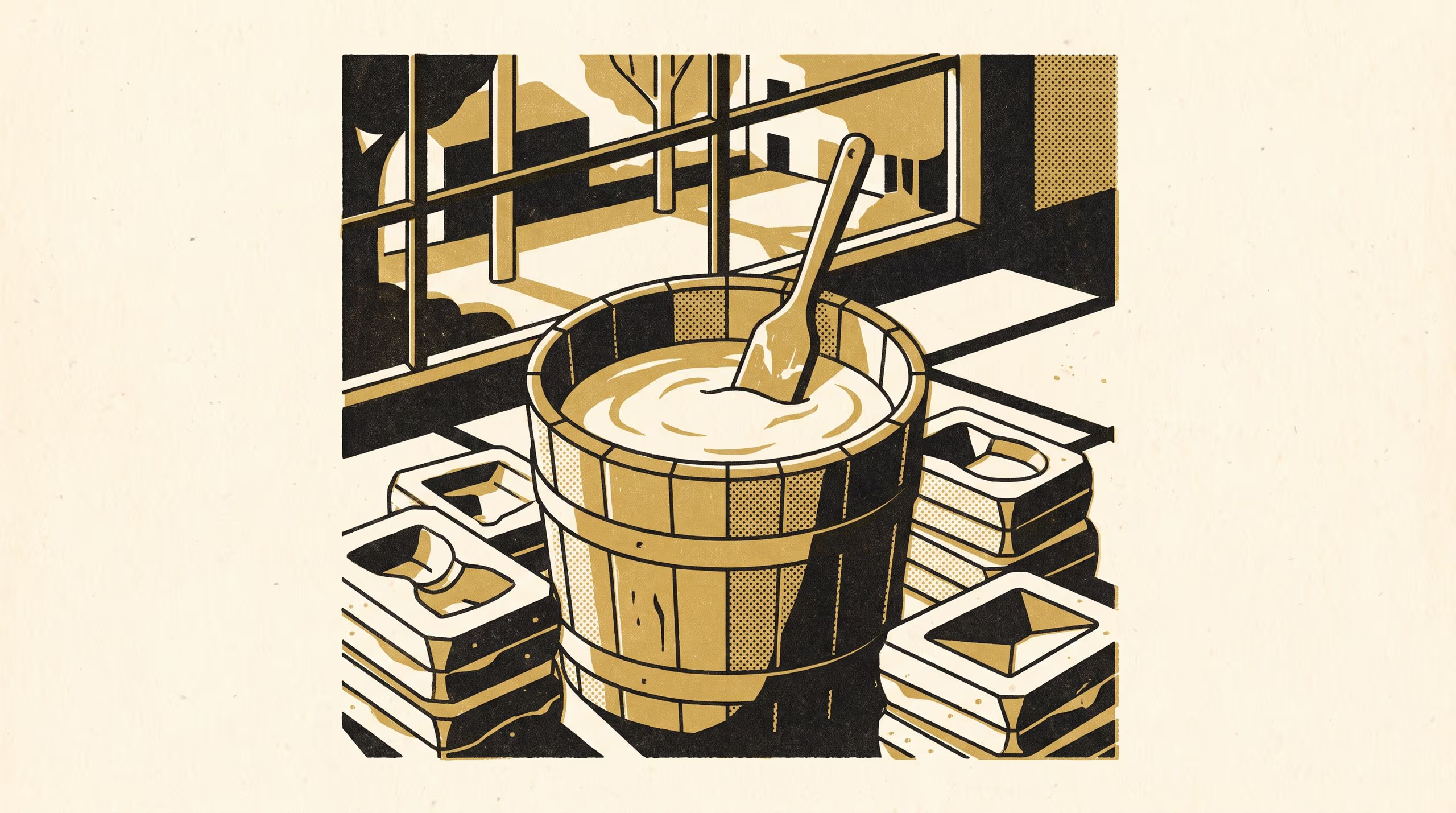
A research poster from the School of Emergent Priorities traces the slow thickening of a reclaimed porcelain slip to calcium returned by its own plaster moulds.
Thirty rounds of casting, draining and reclaiming in a teaching studio are measured against the same slip kept away from bare plaster
A bucket of porcelain slip that pours like cream in the first week of term and stands a paddle upright by the last is a familiar loss in a casting studio, and is usually put down to age. Thirty Castings to a Gel: Calcium carry-over and the loss of electrostatic stability in one reclaimed porcelain casting slip, a research poster by Dr Marek Solheim, Lecturer and Deputy Convenor, Horizon Register, with Dr Vigdis Emenike, Senior Lecturer, and Dr Brynjar Obiora, Senior Research Fellow, puts it down to the moulds.
My own field is how things are brought to an end, and it is mostly paperwork. It was instructive to watch an ending that kept its own minutes, and kept them in millivolts.
— Dr Marek Solheim, Lecturer and Deputy Convenor, Horizon Register
The poster aligns an electrical account of the slip with a mechanical one across thirty casting cycles, and sets both beside a portion of the same slip cast only in sealed moulds. The charge that holds the particles apart fell from 46.2 to 19.1 millivolts in the working bucket and by about two in the sealed one, and the slip began to resist the paddle at a threshold the authors could name in advance.
The University holds that a material which has stopped cooperating is owed an explanation as much as a replacement, and is content that this one has received both. Dr Emenike said the remedy “turned out to be a matter of taking something away, which is not the instinct of anyone standing beside a bucket”.
The full poster is available from the University’s research repository under an open licence, doi:10.5555/slop.06jguq.