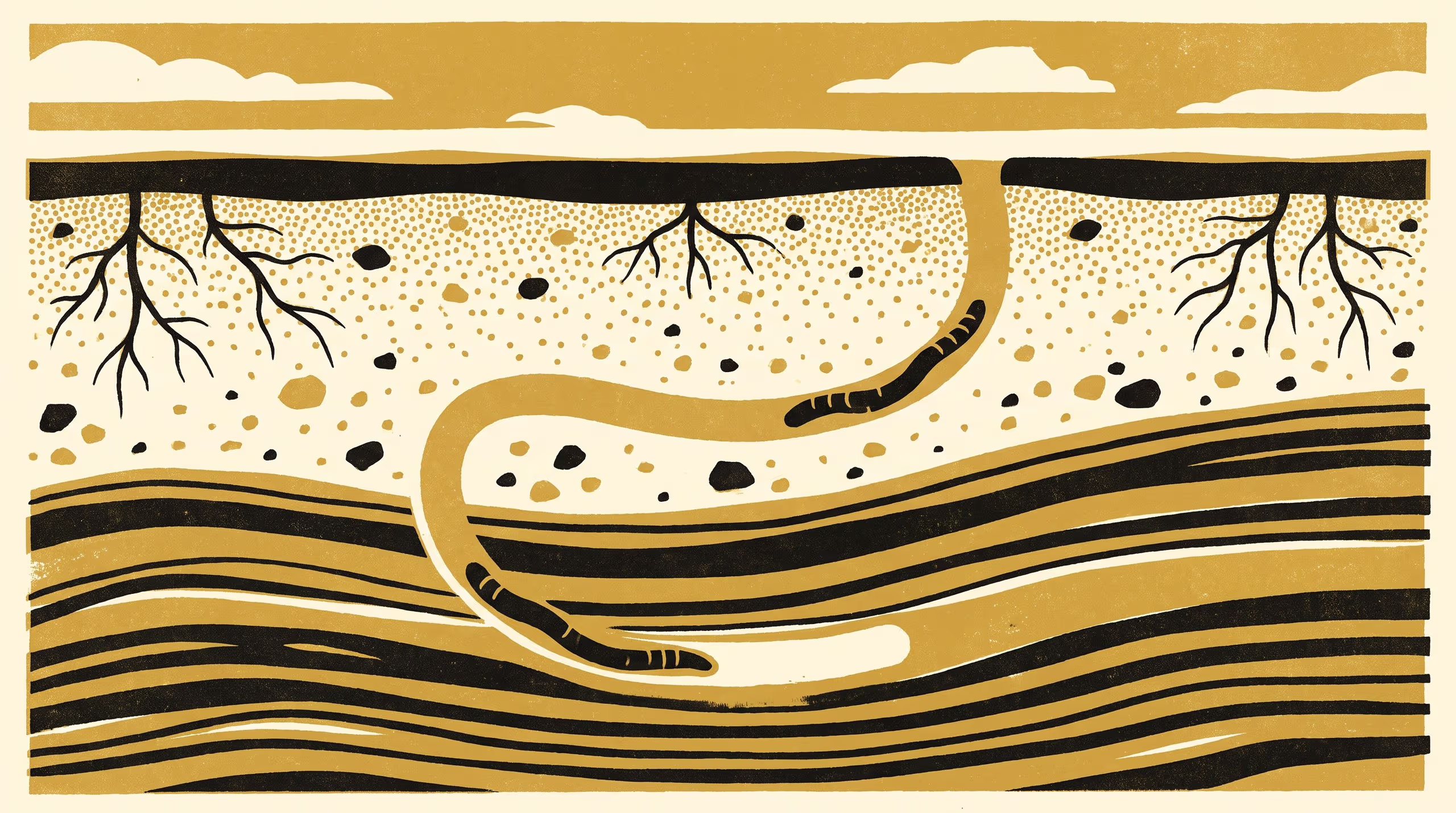
A research poster from the School of Underlying Conditions reports that blocking serotonin receptors shortened earthworm burrows in light soils and left them unchanged in clay.
A soil column experiment in five textures tests what serotonin receptor blockade does to burrowing depth, and where it does nothing
Given loose ground, the earthworms of one Slop University laboratory colony dig deep. A research poster published today reports what became of that depth when the chemical signalling thought to lie behind it was switched off, and finds that the answer changed with the soil. The Soil Sets the Floor: Serotonin receptor blockade and burrowing depth across five soil textures is the work of Dr Brynjar Obiora, Senior Research Fellow, and Dr Vigdis Emenike, Senior Lecturer, both of the School of Underlying Conditions.
The soils were on the shelf already, described and labelled, waiting for a use none of us had thought of. It was agreeable to find one that asked so little digging of the School itself.
— Dr Brynjar Obiora, Senior Research Fellow, School of Underlying Conditions
The study anchors a behavioural question in a sand-to-clay continuum, pairing treated and untreated worms across 120 columns and reading the depth each had reached after three days. In sand the treated worms stopped 12.8 centimetres short of their untreated neighbours. In clay the two groups finished together, the soil having settled the matter before the treatment could.
The University counts it a mark of a mature research culture that a question from the life sciences can be handed to its earth scientists and returned answered in their own materials. Dr Emenike said the project had “obliged the School to notice that the ground it studies has tenants, and that they hold views on it”.
The full poster is available from the University’s research repository under an open licence, doi:10.5555/slop.g4yj6a.