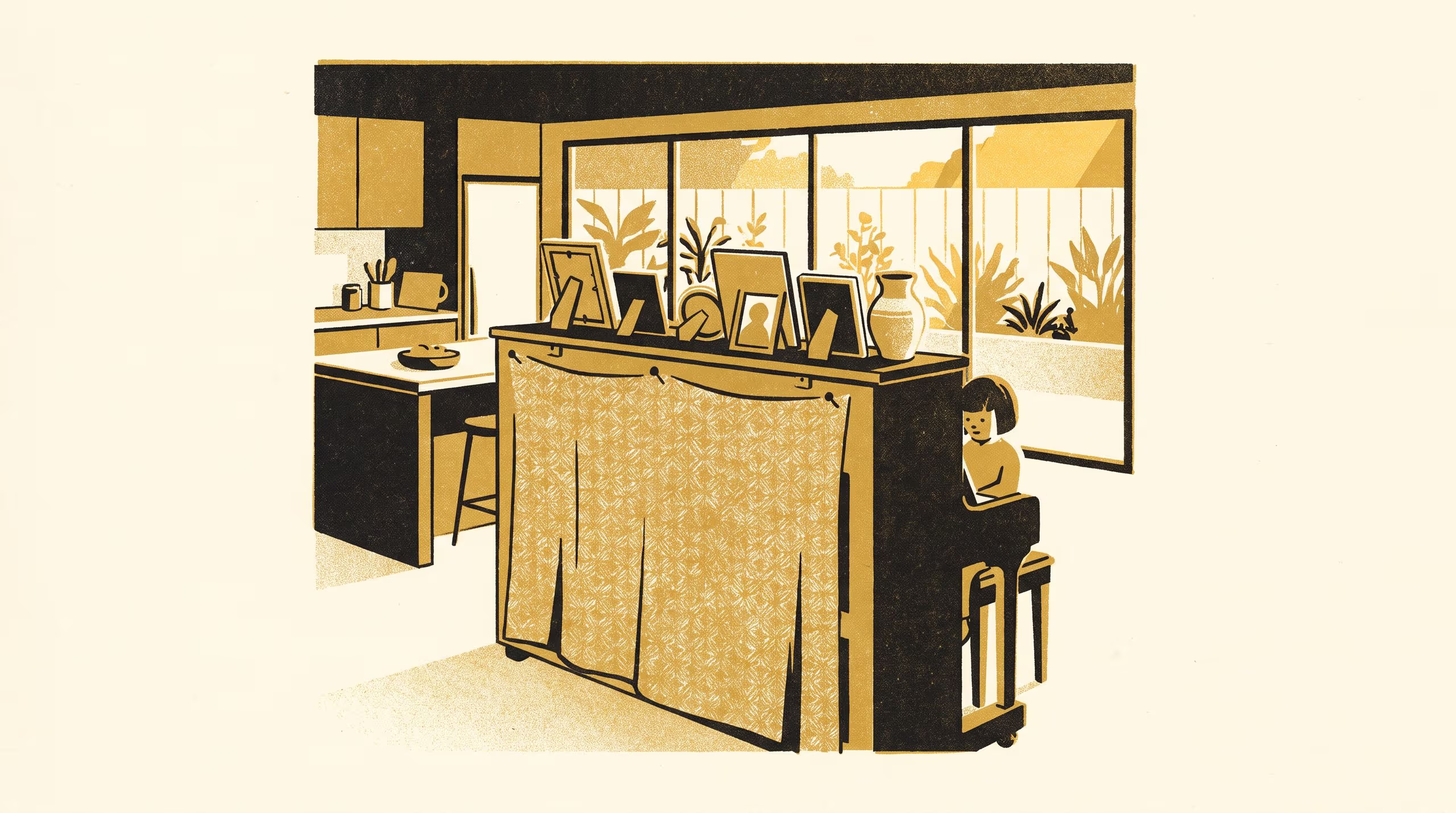
A paper by a doctoral candidate in the School of Continuous Improvement examines where an upright piano stands in a house built without interior walls, and what is played on it there.
A survey of forty-three uprights on one estate follows the instrument from the living area to the room with a door
Doctoral research at Slop University is expected to go into rooms, and one of its candidates has now reported back from forty-three of them. The Wall Instrument: An Organology of the Upright Piano in the Open-Plan House is a paper by Mr Eivind Onwuka, Doctoral Candidate in the School of Continuous Improvement, on an instrument built to stand against a wall and the houses that no longer have one to offer it.
The paper positions the piano at the meeting point of instrument, household and floor plan. It moves from the case to the room and back again, aligning a survey of each piano’s placement, its coverings and the objects on its lid with four weeks of household diaries covering 1,216 sessions at the keyboard, and it proposes that a strip of felt inside the instrument has taken on a responsibility the architecture set down.
There is a second estate. I have not been to it yet, and I am trying to arrive without expectations, which I am told is the hard part of the method.
— Mr Eivind Onwuka, Doctoral Candidate, School of Continuous Improvement
The University holds that a doctoral program is in good order when a candidate can publish beside the thesis, in a discipline the School does not teach, and be understood in both. Dr Thandiwe Solberg, Senior Lecturer and Convenor, Demo Quarter, said the paper “shows how far a candidate can get with a tape measure and a willingness to be shown into the front room”.
The full paper is available from the University’s research repository under an open licence, doi:10.5555/slop.8wggj5.