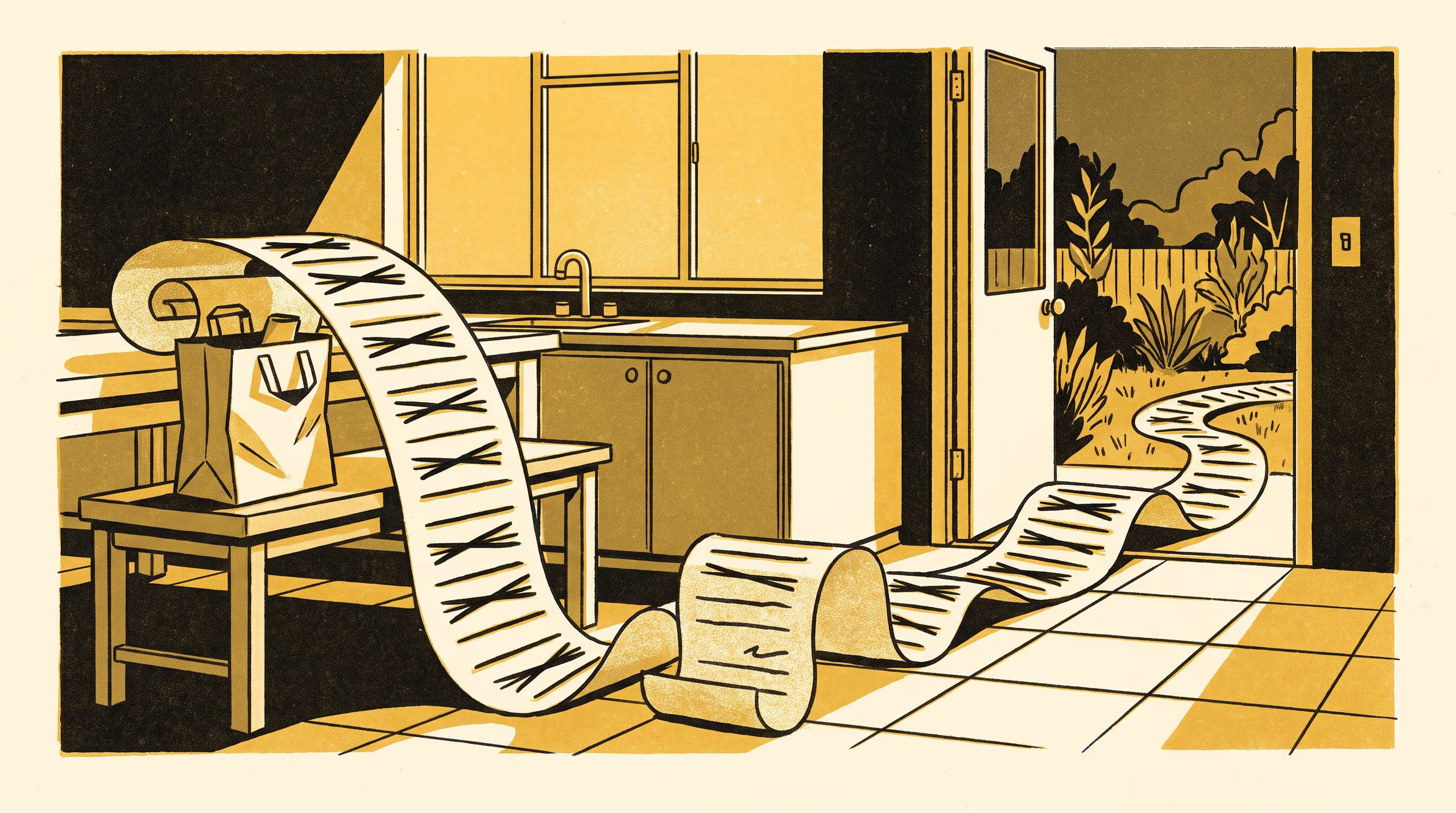
A School of Continuous Improvement brochure introduces STRIKE, a teaching case on one household's shared grocery list, and the University adopts the household's practice as the Strike Retention Rule for its own lists.
A School of Continuous Improvement teaching case follows one household's shared grocery list for a year, and the University adopts its practice for its own lists
STRIKE is the name one household gave to the way it keeps its grocery list, and the University has taken the name, and the practice, for its own lists. The School of Continuous Improvement introduces the teaching case today in a new research-showcase brochure for prospective students, partners and the curious.
The list is the only record the kitchen keeps of itself, and the case asks students to leave it as the household left it.
— Dr Renke Sabel, Senior Lecturer and Convenor, Indicator Commons
The case follows four people who share one list on their phones, up to the moment its keeper decides to stop deleting what has been struck. A teaching note sets four questions for the seminar table and supplies no answers, which Ingeborg Nwachukwu, Lecturer and Convenor, Capability Sprints, says is what participants come to value: “Nobody in the room has yet asked for the questions to be answered for them, and I take that as a good sign for the questions.”
On the strength of the case, every roster, requisition list, run sheet and shared task list the University keeps will hold each struck line in place, with no archive and no tidy, and the Indicator Commons will keep the register of those lists. Exceptions rest with the Office of the Vice-Chancellor, and none is in view.
The brochure gathers seven published studies on the lists and counts of everyday digital life alongside the case. The University is pleased to hold its own lists to the standard of the household that taught it.
The full brochure is available from the University’s research repository under an open licence, doi:10.5555/slop.u05tcd.