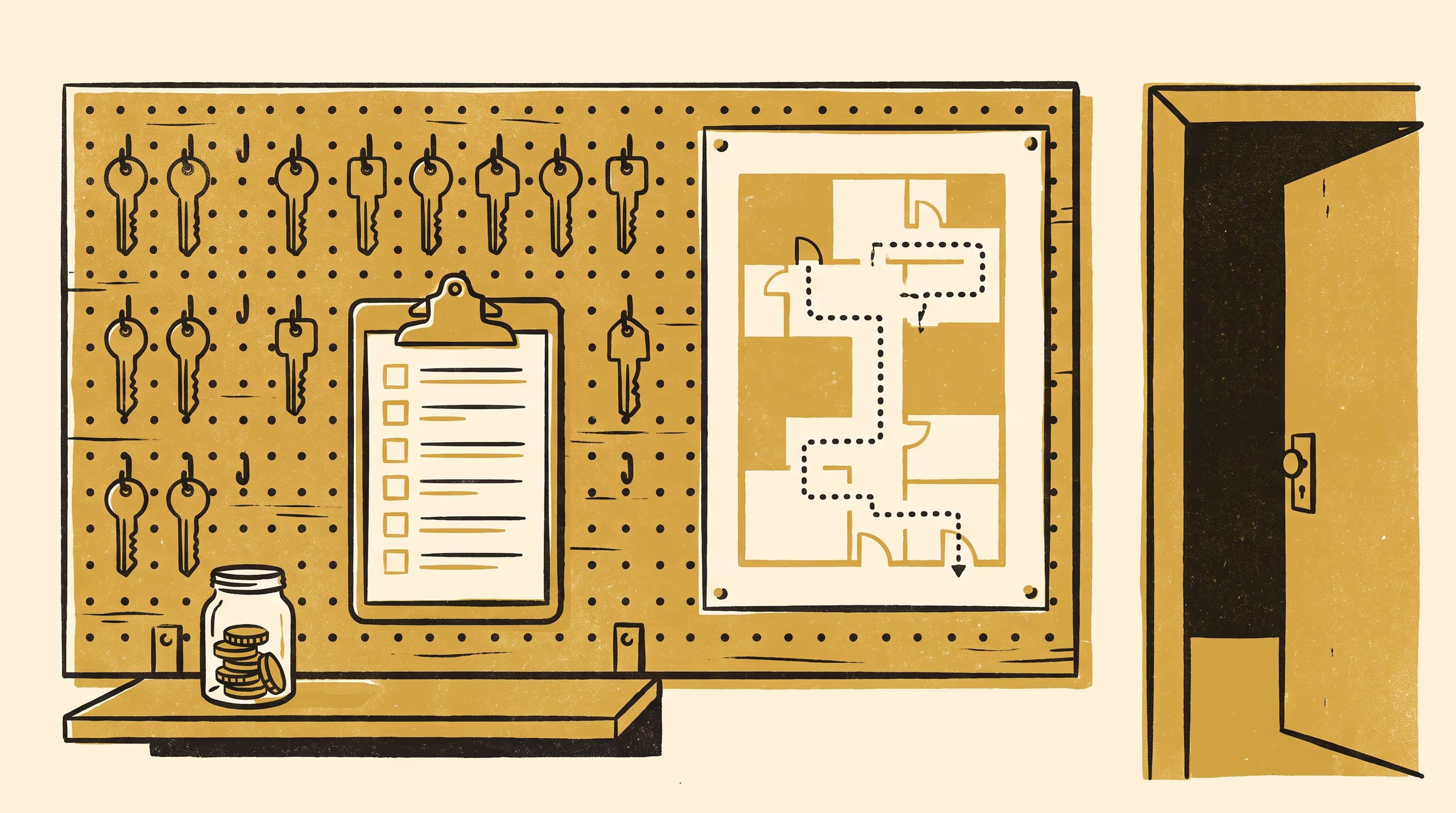
A School of Continuous Improvement poster replicates an earlier last-out finding at 24 shire-council community halls, and the University adopts a Closing Bond for the teams on its open-plan floors.
A School of Continuous Improvement poster sets 312 hall closings beside an earlier finding that did not hold, and the University adopts a Closing Bond for its open-plan floors
The School of Continuous Improvement has spent a season at the door of a shire’s community halls, putting one question to each person who locked up. “The Hall Hire Bond as Closing Walk”, a research poster released today, reports 312 closings across 24 halls and a median of 94% of enclosed rooms named by the hirer, a long way from the third an earlier study of open-plan floors had recorded.
A figure that does not travel has at least told us where it lives, and we are glad to have been told. The halls were patient with us at the end of their evenings.
— Dr Joost Nwosu, Postdoctoral Fellow, School of Continuous Improvement
The work places the earlier finding in a new setting and lets the setting speak, bringing the School’s evaluation-ecosystem agenda to the close of the working day. The University has taken the hall’s own condition as its guide. From the next teaching period each team on the open-plan floors will lodge a Closing Bond with Facilities, released on a closing sheet countersigned by the caretaker.
The University is pleased to borrow, for its own floors, a courtesy that the shire’s halls have long extended to their hirers. Dr Solveig Adeyemi, Lecturer in the School, said the teams on the floors “have always kept closing habits of their own, and the bond gives those habits a place on the form.”
Dr Iben Chikere, Lecturer, who took part in the original study, joined the replication as a co-author.
The full poster is available from the University’s research repository under an open licence, doi:10.5555/slop.r7ohti.