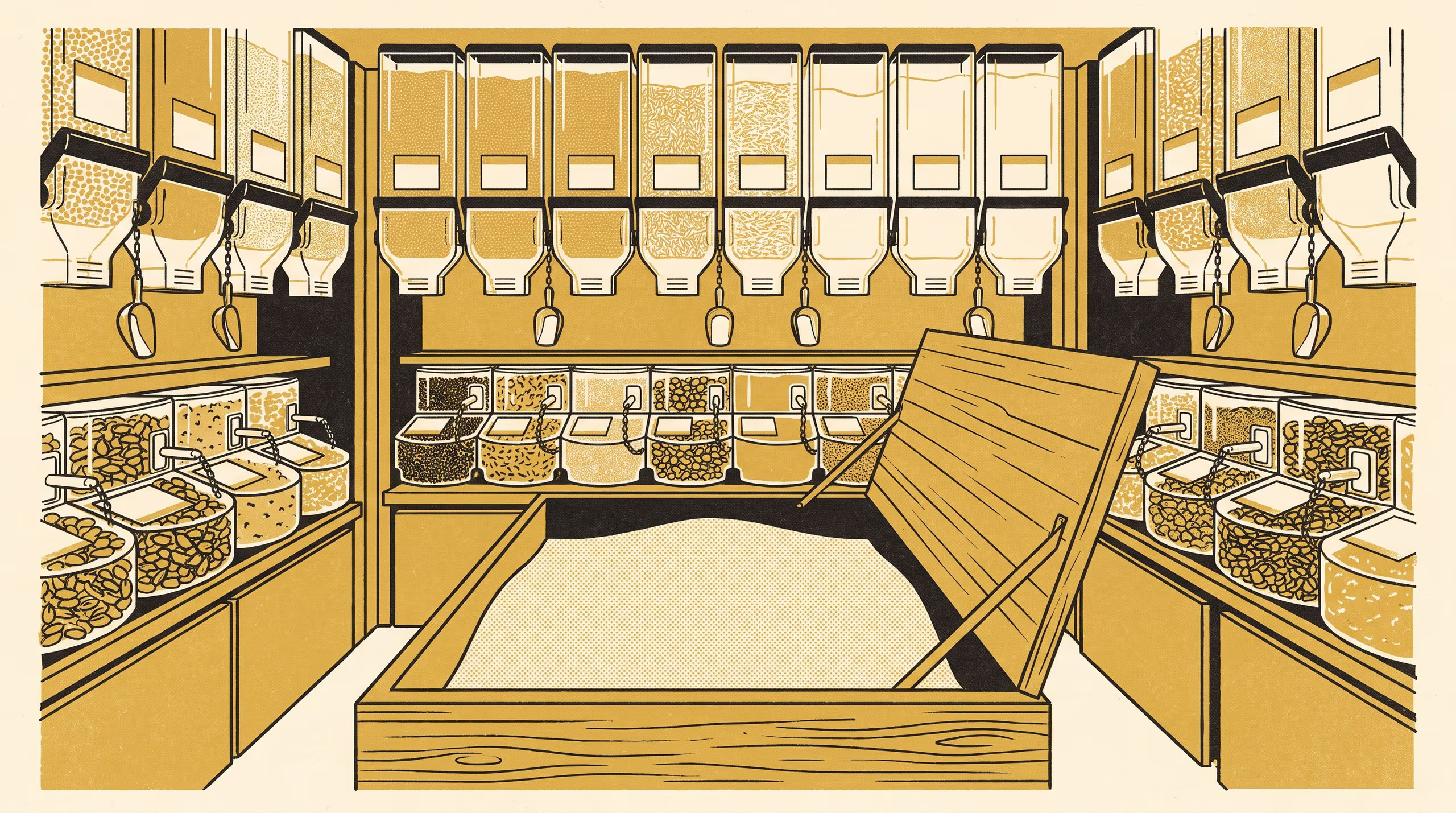
A School of Continuous Improvement paper scores independent bulk-foods stores on how they refill a scoop bin, and the University adopts the fourth level for its own canisters.
A School of Continuous Improvement paper ranks 52 bulk-foods stores on five levels of bin turnover and finds the fifth adds nothing to the fourth
The bottom layer of a scoop bin is somewhere the University has begun to take an interest. “Notes on the Bottom of the Bin”, a paper from the School of Continuous Improvement published today, scores 52 independent bulk-foods stores on five named levels of bin turnover, and the University’s own canisters will now be refilled to the fourth.
Most of what a shop does well happens out of sight, and the bottom of a bin is about as far out of sight as it gets.
— Dr Ingeborg Nwachukwu, Lecturer and Convenor, Capability Sprints
The paper, written with Dr Joost Nwosu and Dr Solveig Adeyemi, arranges the everyday habits of refilling along a ladder, from the bin that is only ever topped up to the bin that is washed and dated, and follows a small marker through each store’s stock to see how long a lentil, an oat or a spoonful of flour waits to be reached. Dr Adeyemi called the ladder “a short staircase with a landing at the fourth step”.
From the next teaching period, every tea, sugar, coffee and oat canister in a University building will be emptied to its base before it is refilled, and a second member of staff will countersign the sighting before the new stock is opened. The rule applies however full a canister is. Washing and dating, which the paper describes as the fifth level, are not required of any canister.
The University is glad to hold its own shelves to a standard that 43 of the 52 stores in the study did not meet.
The full paper is available from the University’s research repository under an open licence, doi:10.5555/slop.4jdj1t.