A new Slop University paper scores allotment sites on how they chain, sign out and book their shared wheelbarrows, and describes the fleet allowance the University has tied to the level each site reaches.
A paper from the School of Emergent Priorities scores 31 allotment sites on a five-level model of how they keep their wheelbarrows, and the fleet each site keeps now follows its score.
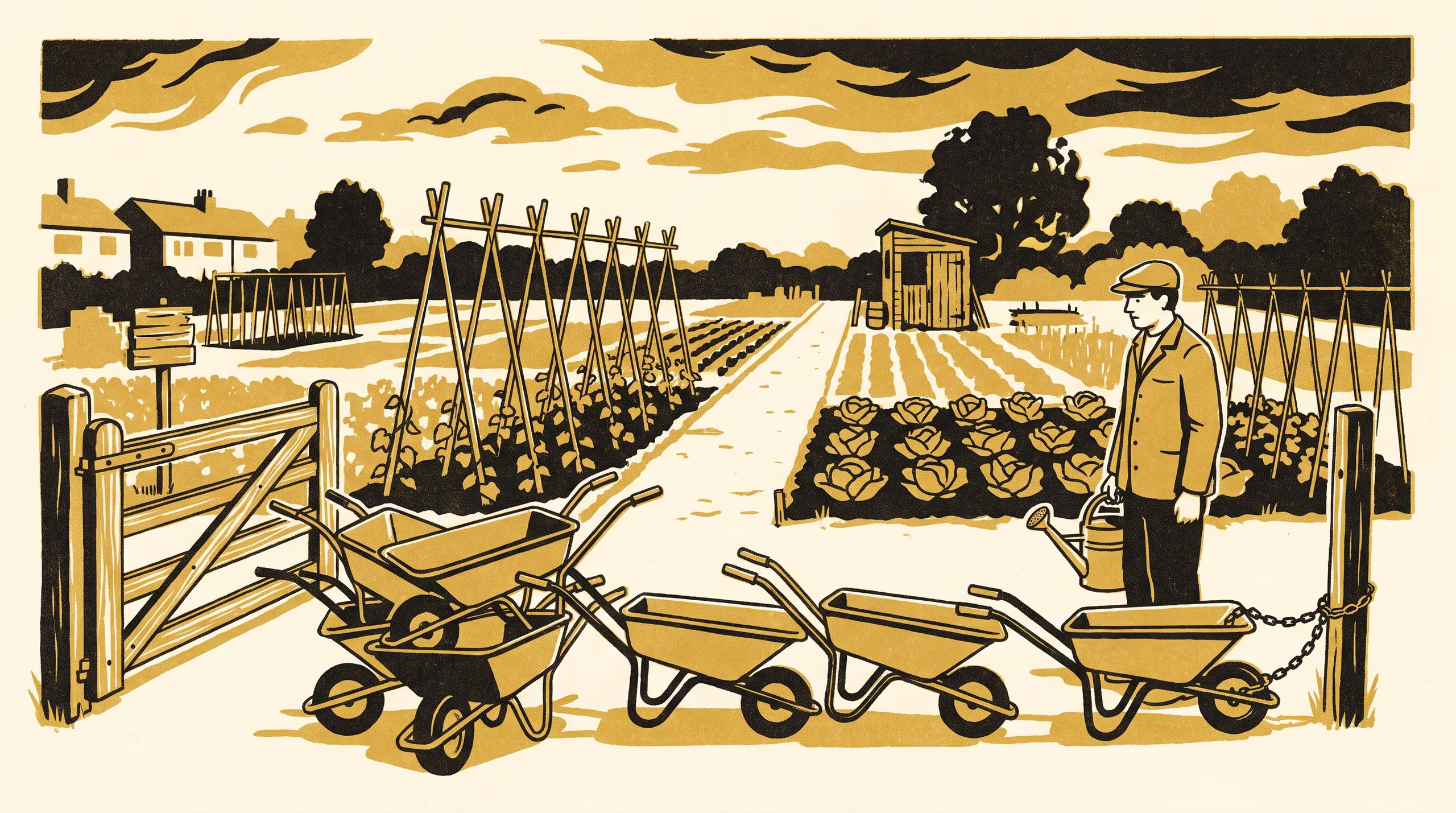
The wheelbarrow at an allotment gate belongs to everyone and, for the length of a trip to the compost, to one person. A new paper from the School of Emergent Priorities gives the arrangement a scale: five levels, from a barrow left wherever the last plot-holder stopped to a barrow booked in fifteen-minute slots, with a chain, a sign-out book and a named custodian in between.
The paper was written by Associate Professor Kwame Lindqvist, Director of the Master of Priority Studies, Lecturer Iben Chikere, and Doctoral Candidate Edda Nwafor of the School of Continuous Improvement. It visits 31 sites in one shire over four quarterly rounds, and reports that the committees took readily to the levels while the loads carried per plot stayed much as they were.
We came away with a good deal of respect for a padlock. A site that has decided who holds the key has decided something, and the scale is a way of saying so out loud.
— Lecturer Iben Chikere, School of Emergent Priorities
The University, which lends the barrows to its partner sites, has since set each site’s fleet by its level. Sites at the lowest level keep six barrows; sites at the highest keep one, and the allowance is reviewed at each round of scoring without a separate route for exceptions.
Associate Professor Lindqvist described the arrangement as “a way of letting a site’s own habits decide how much equipment it needs.” The University is pleased to give allotment committees a common language for what they already do at the gate, and regards the paper as a considered contribution to the way shared tools are kept.
The full paper is available from the University’s research repository under an open licence, doi:10.5555/slop.yerijs.