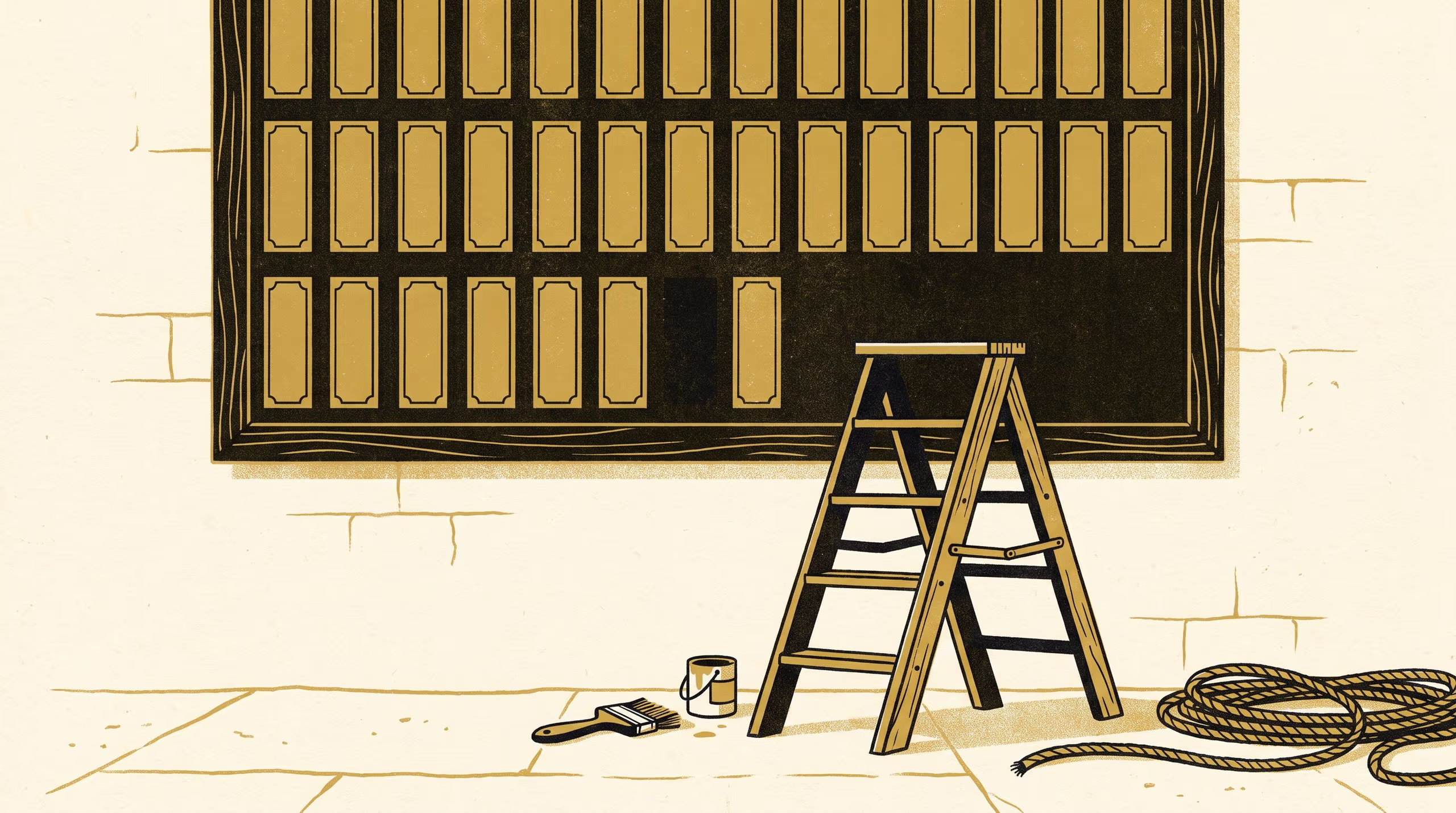
A School of Emergent Priorities poster follows fourteen village towers past the 5,000-change line and records the rest-year rule the ringing society has adopted.
A study of 5,000-change touches finds attendance at practice falls in the quarter a band is painted up
The painted board on a ringing-chamber wall takes a band’s name only when a touch reaches 5,000 changes, and a new research poster from the School of Emergent Priorities asks what the board does to the band once it has done so. Led by Professor Verity Marris, Professor and Director of the Trajectory Analytics Group, with Lecturer Lindiwe Achterberg and Lecturer Iben Chikere, the poster compares touches that reached the line with touches that came down just short of it.
The towers have kept their sign-in sheets with more care than anyone asked of them. We are grateful to every captain who handed a sheet over.
— Professor Verity Marris, Professor and Director, Trajectory Analytics Group
Two hundred and twelve touches were followed across fourteen villages for three years, and the practice-night attendance of each band was read for the quarter after. Bands whose names went up attended 2.5 fewer nights of twelve than bands whose touches collapsed a little short, and the two placebo lines showed no such movement.
The ringing society has responded with a rest-year rule. A band may not be entered on a tower’s board twice within twelve months, a touch rung in a rest year is not recorded, and no dispensation is available, a bicentenary included. Sign-in sheets now serve as the board’s audit record. “The board has always told us who rang,” said Lecturer Iben Chikere. “It is useful to learn what it tells us about who comes back.”
The University is pleased to see the rest-year rule take effect at the first towers to adopt it, and regards the arrangement as a settled feature of the ringing calendar.
The full poster is available from the University’s research repository under an open licence, doi:10.5555/slop.kwodur.