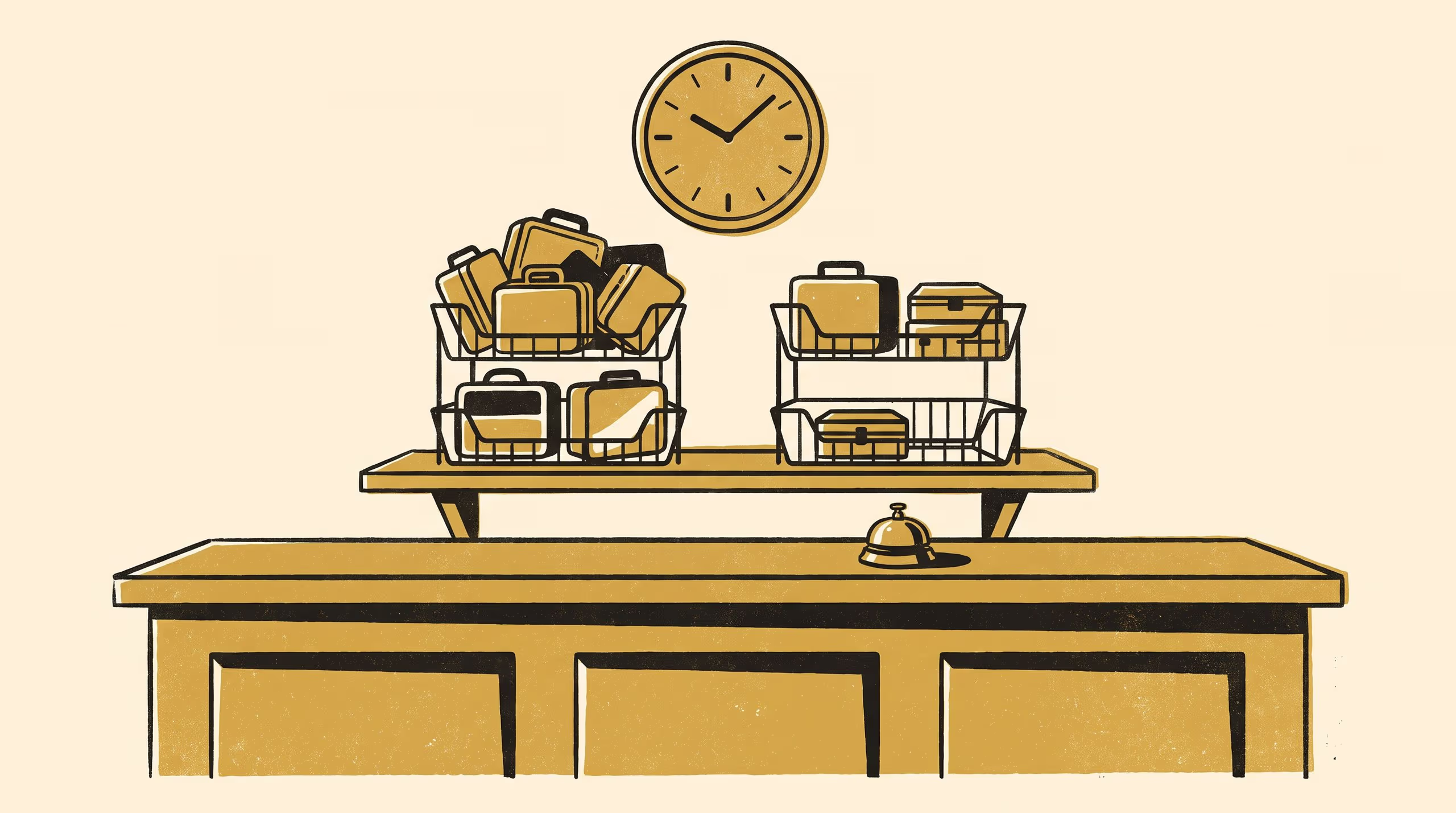
A new Slop University paper follows 3,206 forgotten lunchboxes through 19 primary-school front offices and reports the four-cell counter rule the cluster has adopted from it.
A new paper from the School of Emergent Priorities asks whether a forgotten lunchbox reaches its child before the bell, and what a front-office counter can tell in five seconds.
Nineteen primary-school front offices in one regional cluster now give every handed-in lunchbox a cell name before it leaves the counter. The arrangement follows a new Slop University paper, published today by the School of Emergent Priorities, that asks whether a forgotten lunchbox reaches its child before the lunch bell and which of its features, visible at the counter, decides the answer.
A counter can only ever read what is put in front of it, which is a fair description of most of us.
— Dr Lindiwe Achterberg, Lecturer, School of Emergent Priorities
Over one term, an observation clerk at each office tagged the lunchboxes handed in after the first bell and sorted them, in the time it takes to reach the shelf, by whether the lid carried a child’s name and whether the item arrived before or after morning tea. The paper reports 3,206 items across the four cells and follows each one to the classroom door. Items with a name and an early arrival were delivered in nearly nine cases in ten. Those with neither reached their child in a small fraction of cases.
The cluster’s front-office working group has taken the cells up as a dispatch rule and now reports how faithfully each office follows it. “The School was asked for four words and was glad to supply them,” said Senior Lecturer Dr Ronja Oyelaran, a co-author of the paper. The working group’s round-compliance figure stands at 100 per cent, and the paper sets it beside the delivery figures for the same term.
The release reflects the School’s continuing interest in the small administrative decisions that shape an ordinary school morning.
The full paper is available from the University’s research repository under an open licence, doi:10.5555/slop.l4xnaw.