A Slop University paper alternates a bowls club's raffle table between two clubroom doors for a season, finds a side effect its own lecture-theatre null never showed, and reports the University's doorway-rotation rule extended to the club regardless.
A season alternating a bowls club's raffle table between two doors finds a side effect the University's own lecture-theatre trial never did, and the doorway-rotation rule now covers the club regardless.
A season at the bowls club has settled a question the University’s own lecture theatres left open: whether moving a fixture from one side of a doorway to the other changes anyone’s behaviour.
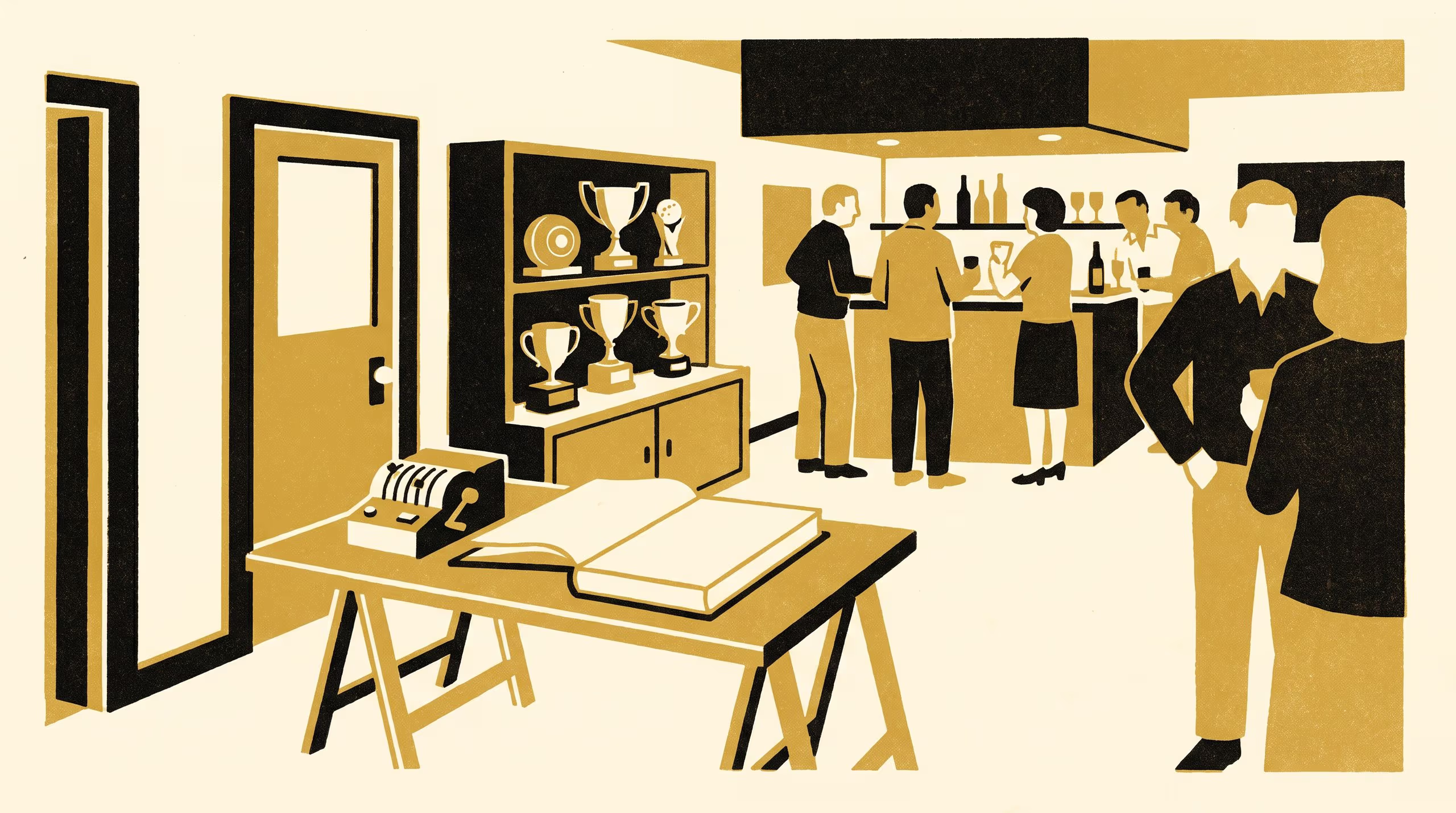
A paper from the School of Emergent Priorities alternated a suburban bowls club’s Friday meat-raffle table between the clubroom’s two entrances for twenty-four nights, tallying entrants against tickets sold at each door. Where the University’s 2026 trial found that moving a hand-sanitiser pump between the two sides of a lecture-theatre doorway changed nothing, the raffle table’s position changed a great deal: the door nearer the members’ bar consistently outsold the door nearer the car park, whichever tray of meat was on offer that week.
A rule built on a single doorway rarely says so out loud, which is exactly how it ends up governing a raffle table it was never tested on.
— Lecturer and Deputy Convenor, Horizon Register, Marek Solheim
The Horizon Register has read the result as confirmation that its existing side-rotation rule for University-supplied fixtures should extend to community partnerships, regardless of what a local measurement finds. “The raffle stall’s own committee weighed the finding and chose consistency with University practice over the extra revenue, a decision our data can describe but not defend,” said Dr Lindiwe Achterberg, Lecturer, School of Emergent Priorities.
The project’s method — a hand-tallied door count set against a raffle book’s numbered stubs, repeated across a full season — leaves the School with what it is calling its first evidence that a University null does not always travel further than the doorway it was measured at.
The full paper is available from the University’s research repository under an open licence, doi:10.5555/slop.buheru.