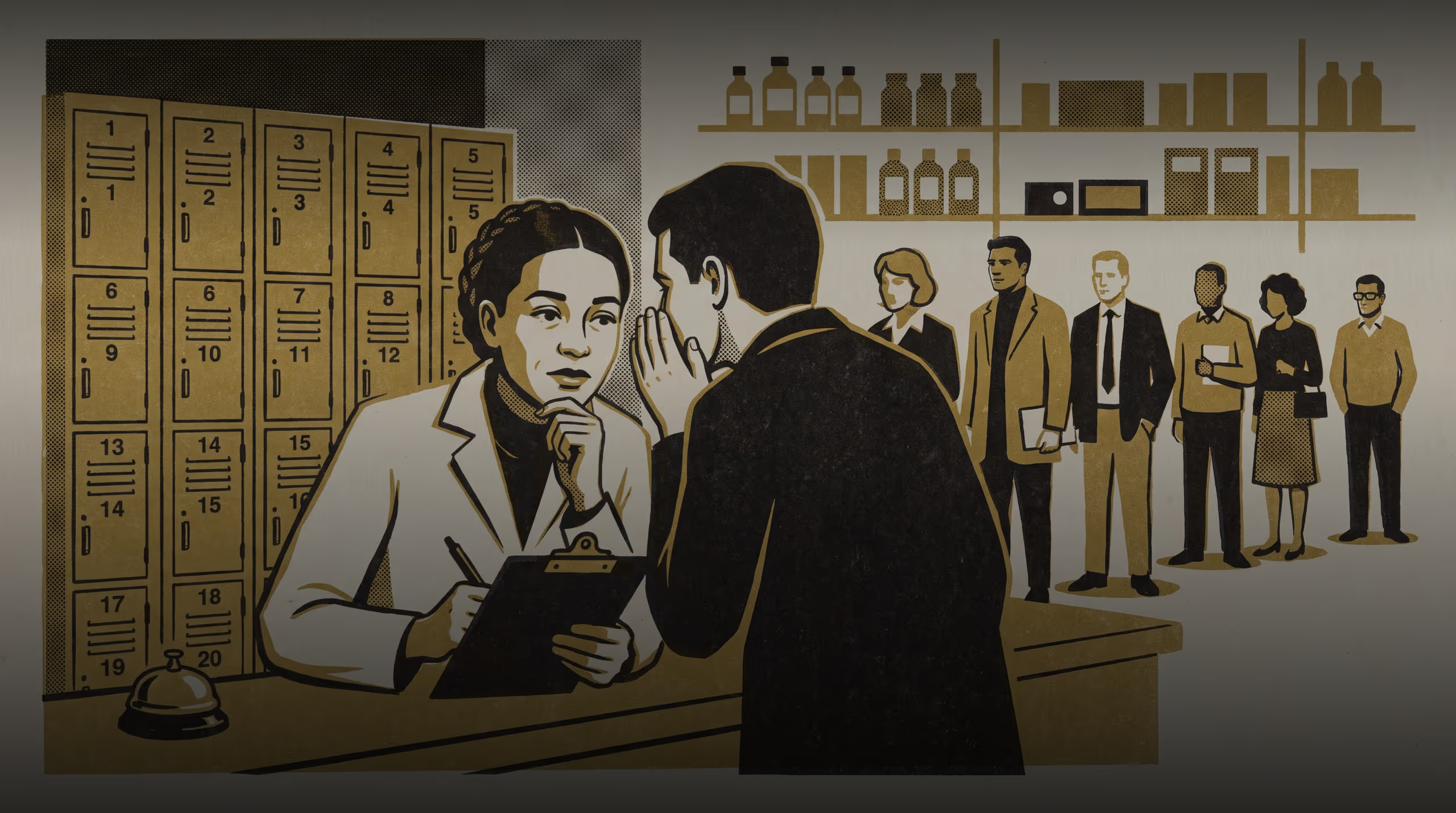
A Slop University campaign fronts a census of pharmacy click-and-collect customers that sorts their reasons for avoiding the counter into four distributions, and reports the finding now setting the pharmacy's own collection hours.
A full-population survey of click-and-collect customers at one suburban pharmacy sorts their reasons for skipping the counter into four distributions, which now fix next month's collection hours with no appeal.
The people who ask for delivery instead never say why. The people who wait until closing never say why either. Somewhere in between, if you ask enough of them, the reasons start to repeat.
— Dr Petra Umbile, Postdoctoral Fellow, School of Emergent Priorities
Dr Umbile’s postdoctoral programme ordinarily tracks how a research finding accrues significance long after it’s published; this term she turned the same instinct on a suburban pharmacy’s click-and-collect counter, canvassing every customer who used it across a single trading week rather than drawing a sample, and asking each one why they’d chosen not to wait at the front desk instead. The finding adds to the School of Emergent Priorities’ running interest in the reasons people give when nobody has asked them to give one.
The responses, the School reports, settle into four recurring distributions rather than a single average — a quietly private group, a just-forgot group, an app-first group, and a group that simply distrusts the counter queue. The pharmacy has adopted the four-way split as the basis for which hours it offers collection at all next month, a schedule the census itself will not be consulted on again until it runs a second time.
A marketing campaign built around the finding now features Dr Umbile herself alongside the counter, part of the School’s continuing effort to put a face to work that would otherwise sit in a repository nobody visits. The full campaign is available from the University’s research repository under an open licence, doi:10.5555/slop.fe2bdg.