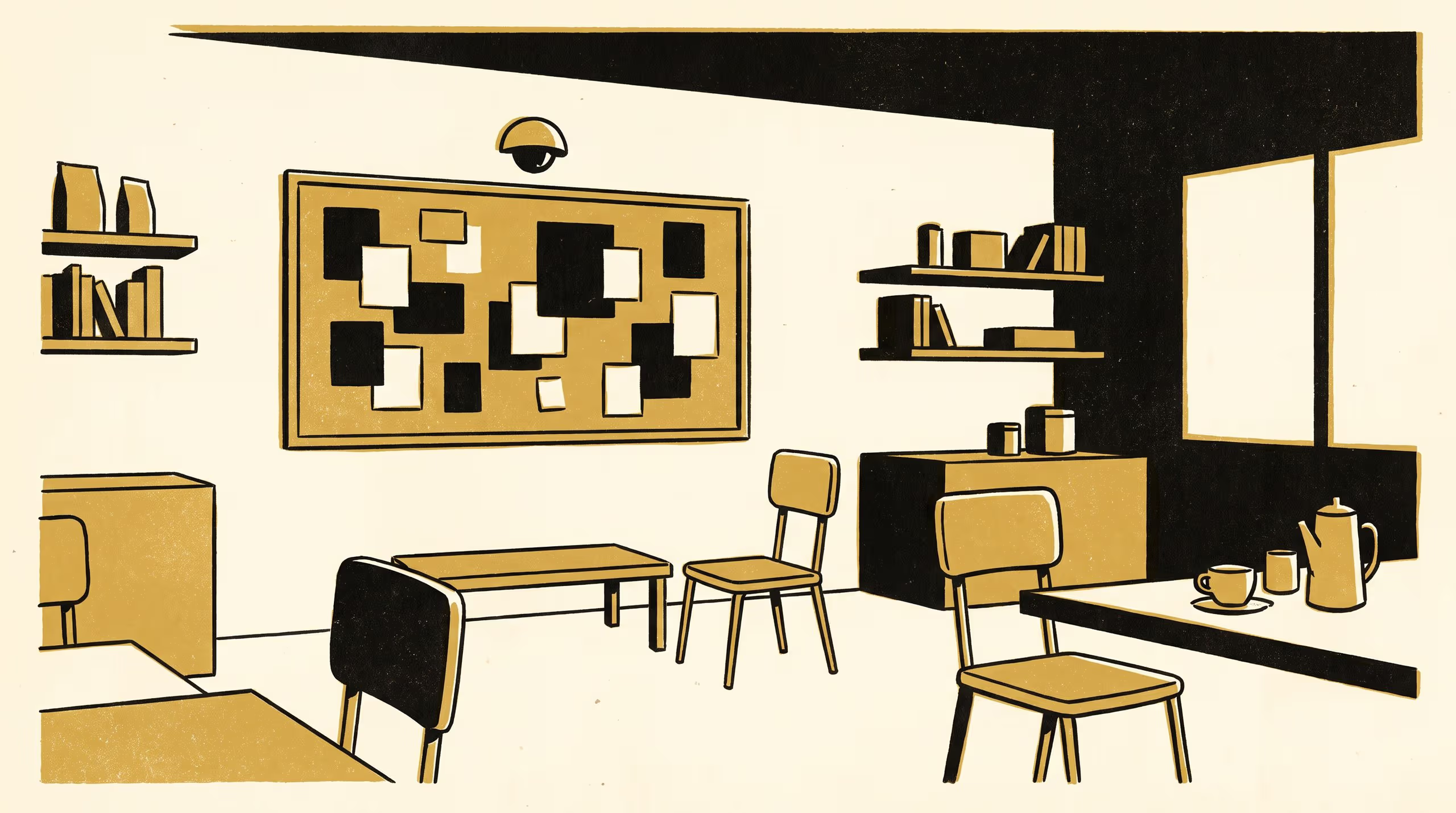
A Slop University impact report follows the Noticeboard Watch, a camera that times how long a notice stays pinned to the tea-room corkboard and auto-archives anything that outstays its published half-life, from a facilities pilot to the School's only sanctioned way to post a notice at all.
The Noticeboard Watch times every notice's stay, and the School has made it the only way anything gets pinned there.
A wall fixture with a drawing pin and decades of institutional memory has joined the School of Continuous Improvement’s dashboard portfolio as an equal member, in keeping with the School’s habit of turning its own fixtures into case studies before anyone else gets to. The School’s Impact Report 2021–2026 details the Noticeboard Watch, a camera mounted above the tea-room corkboard that times how long each pinned notice stays up and archives anything that outlives its published half-life — and confirms that, since a change adopted partway through the report period, it is now the only way a notice may go up there at all.
An instrument that measures how long something has been true is not the same as one that measures whether it still is, and this report is the clearest account yet of what a School does once it notices the gap.
— Dr Marit Osayande, Lecturer and Convenor, Living Dashboard
The report credits the Watch with steadying a corkboard that had, by the School’s own account, become unreadable under the weight of its own paper, while naming plainly the cases where its half-life ceiling worked against the notices it was meant to keep current. “A dashboard earns the right to be trusted the same way anything else does,” said Dr Joost Nwosu, one of the report’s authors, “by being wrong in public and saying so.” The School’s proportionate-assurance framework, also detailed in the report, is now working through a backlog of its own live indicators on the same understanding.
The full report is available from the University’s research repository under an open licence, doi:10.5555/slop.j20izi.