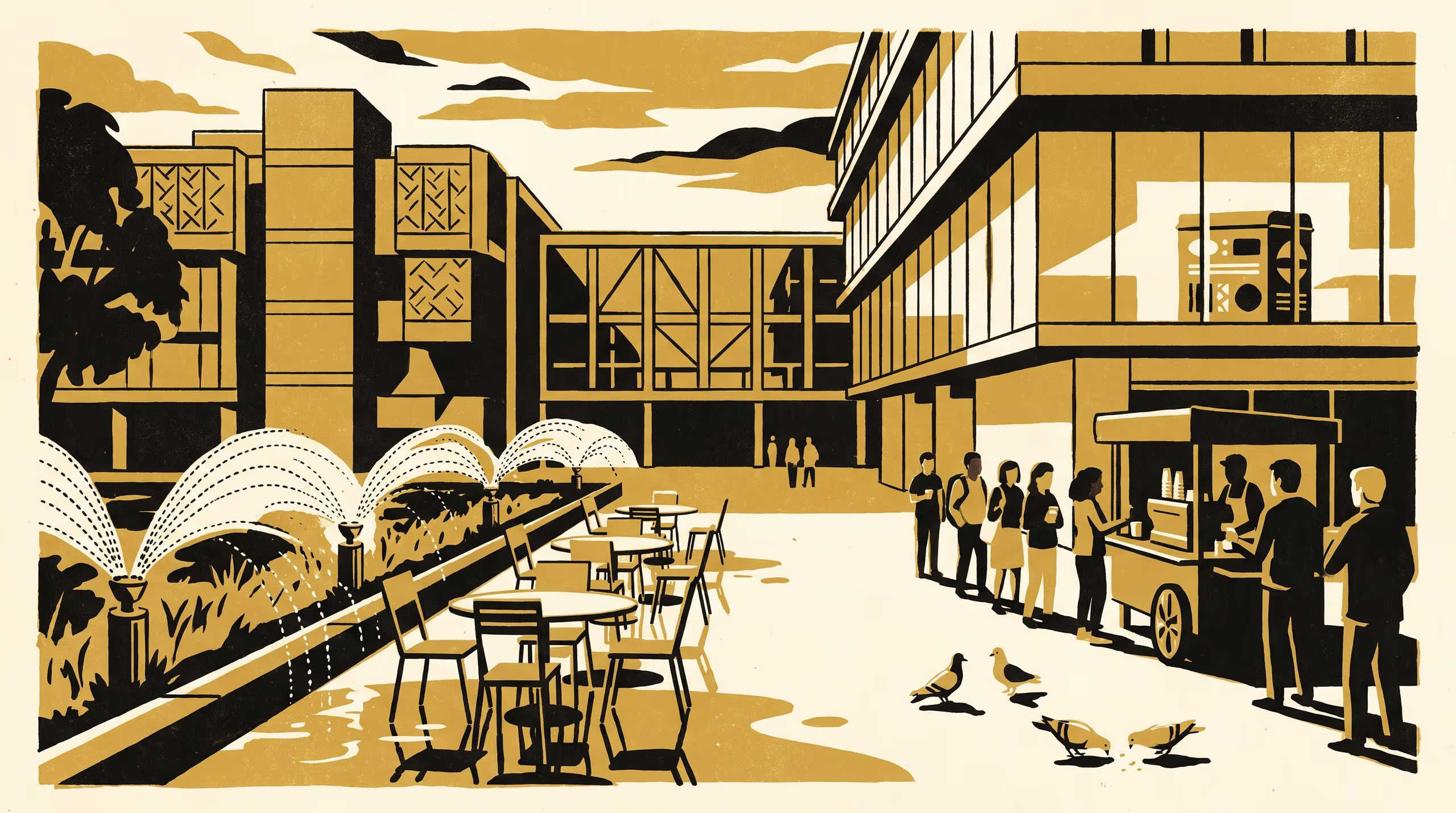
A regression-discontinuity study of the courtyard's irrigation timer has become the University's binding rule for tea-room biscuit rationing.
A courtyard cutoff nobody designed now governs a dry table and how much biscuit follows patrons indoors
Every evening the courtyard sprinklers switch on at the same fixed minute, set months ago by a grounds contract that has never once considered who is drinking coffee nearby. A new paper from the School of Continuous Improvement reports that this accident of horticultural scheduling behaves as cleanly as any threshold the University has ever designed on purpose — and the University has now put it to work governing a second amenity it was never built to touch.
Ingeborg Nwachukwu, Casimir Beng and Joost Nwosu tracked a semester of coffee-queue arrivals either side of the switch-on, finding patrons served just before it keep a dry outdoor table among the courtyard’s resident pigeons, while those served just after are moved inside. The same crossing, the team found, predicts a same-day rise in tea-room biscuit-tin draws two buildings away — enough that the Adaptive Metrics Lab has formalised it as the Outdoor Seating Equity Index and adopted its crossing as the trigger that steps down the tea room’s per-head ration for the rest of the day.
Seating and biscuits have nothing to do with each other. That’s precisely why nobody built a rule connecting them until an irrigation timer did it by accident.
— Associate Professor Casimir Beng, Lead, Adaptive Metrics Lab, School of Continuous Improvement
“Staff held the discretion over the ration before this,” says Ingeborg Nwachukwu, Lecturer and Convenor of Capability Sprints. “The Index doesn’t ask anyone to exercise it any more.” The Lab treats the adoption less as a decision than as what happens whenever a sufficiently clean measurement is left unattended near a decision that needs one.
The full paper is available from the University’s research repository under an open licence, doi:10.5555/slop.x1vurt.