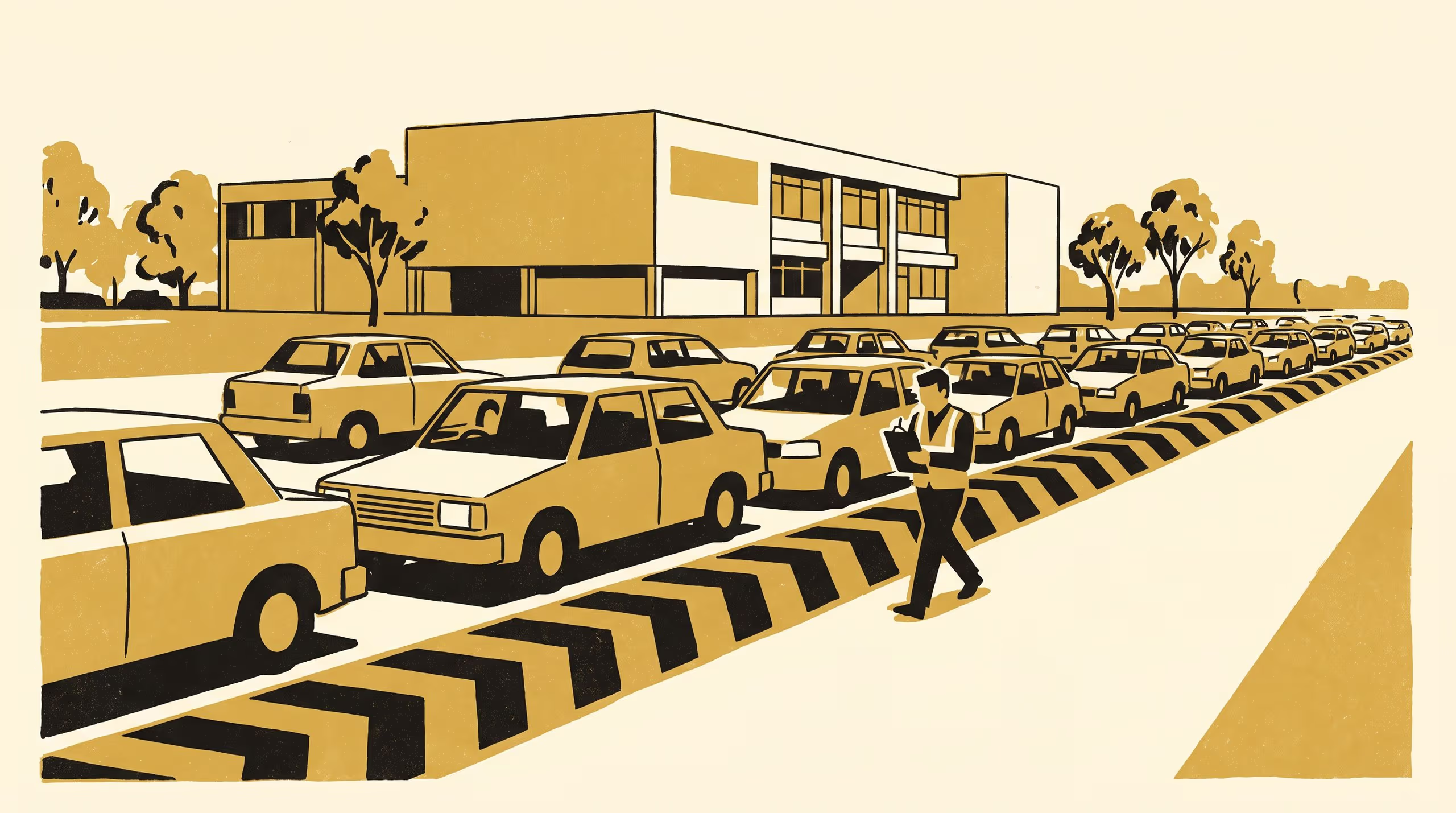
A Slop University research poster reports a randomised trial of kerbside queuing chevrons at seven primary-school gates, finding no effect on double-parking and closing the design to the traffic-calming register.
A fourteen-week trial across seven matched primary-school kerbs finds no measurable change and closes the design to resubmission.
Seven primary-school kerbs spent a full term marked with paint that, it turns out, changed nothing at all. A research poster from the School of Continuous Improvement reports a randomised trial of kerbside queuing chevrons against matched untreated controls, finding double-parking during afternoon pick-up unchanged at every site, in either direction, across fourteen weeks.
A register that only records what worked isn’t tracking anything. We wanted this design to leave a mark either way, and it has — just not the mark the paint was meant to leave.
— Solveig Adeyemi, Lecturer, School of Continuous Improvement
The trial paired seven treated kerbs with seven untreated controls for one school term, with parking wardens counting double-parked vehicles at three fixed pick-up windows each week, blind to which kerb carried the marking. The chevron layout and paint specification were fixed before counting began, with no adjustment permitted once the trial was underway. On the strength of the result, the design has been struck from the Horizon Register’s active traffic-calming list, closed to resubmission in this form.
“Closing an entry is as much a maintenance task as opening one,” said Fenna Okoro, Senior Lecturer and Convenor of the Horizon Register. “A council that proposes the same chevron layout again will now find nothing on the register to cite in its favour.”
The full poster is available from the University’s research repository under an open licence, doi:10.5555/slop.vicb6f.