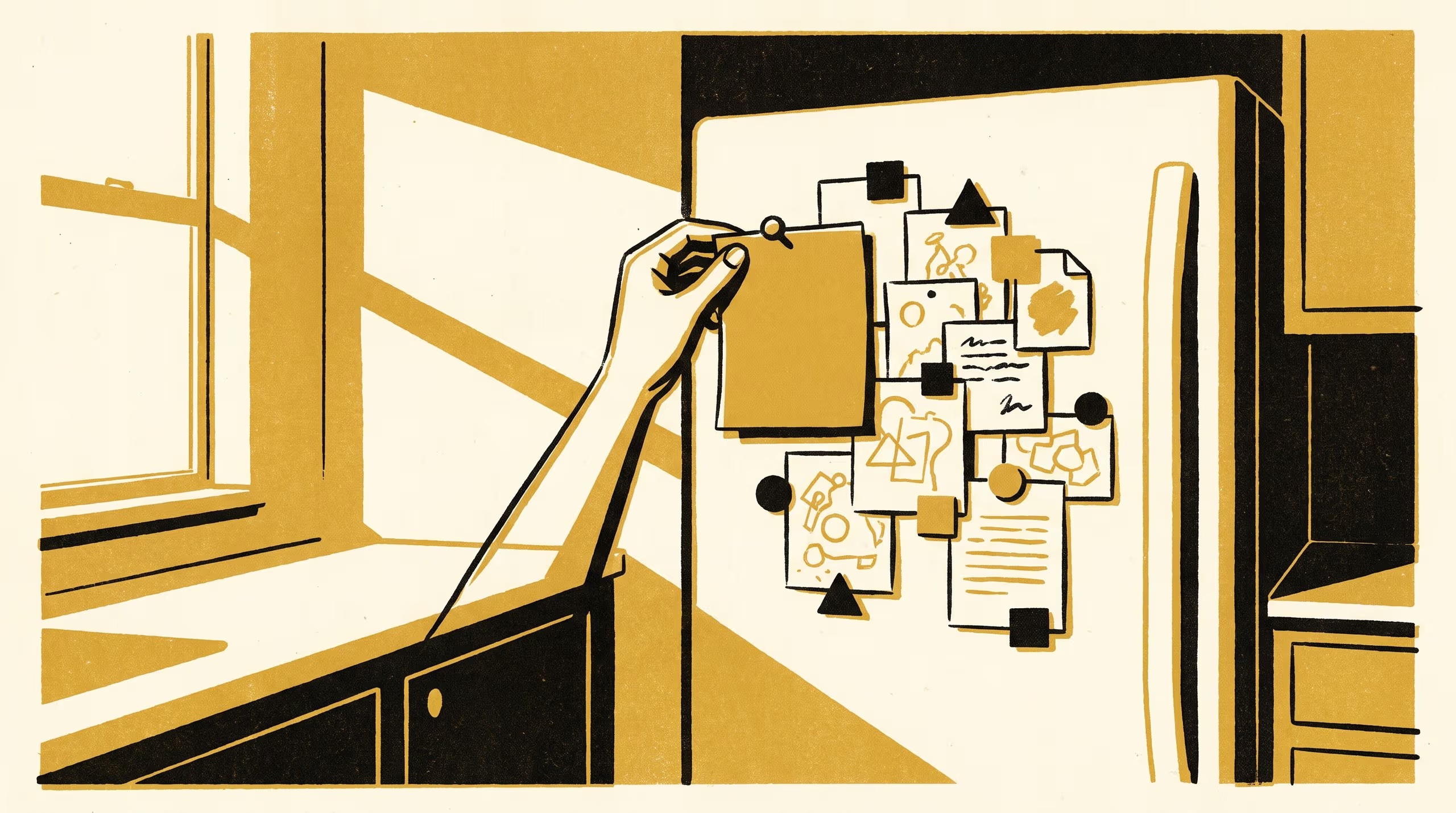
A School of Emergent Priorities research poster sorts fridge-door clutter into five behavioural kinds, and a declutter outreach service now removes anything the taxonomy calls aspirational.
A five-kind sorting scheme for pinned kitchen clutter has become the criterion a declutter outreach service uses to remove items, resident objections notwithstanding.
A magnet holds a torn scrap of paper in place for years after anyone still means to act on it. A new research poster from the School of Emergent Priorities gives that kind of object a name — one of five, in a taxonomy built from fourteen months of fortnightly fridge-door photographs across 58 households — and reports what happened once a declutter outreach service adopted the sorting scheme as its own intake step.
The aspirational cell is the one people fight hardest to keep, which is exactly the signal we built the taxonomy to catch.
— Dr Marek Solheim, Lecturer and Deputy Convenor, Horizon Register
The coding scheme sorts pinned items into aspirational, decorative, functional, provisional, and orphaned kinds. Once the outreach service began applying it directly rather than leaving removal to a visiting coordinator’s judgement, the aspirational cell’s removal rate rose from 12 to 74 per cent within six months, while the other four kinds barely moved. Lecturer Iben Chikere, a co-author on the project, said the finding “confirms something the coordinators already felt in their hands.”
The work extends the School’s ongoing interest in what a household keeps counting long after it has stopped asking why, following earlier taxonomy studies of loyalty-card ledgers and exam sign-out sheets.
The full poster is available from the University’s research repository under an open licence, doi:10.5555/slop.75t0nd.