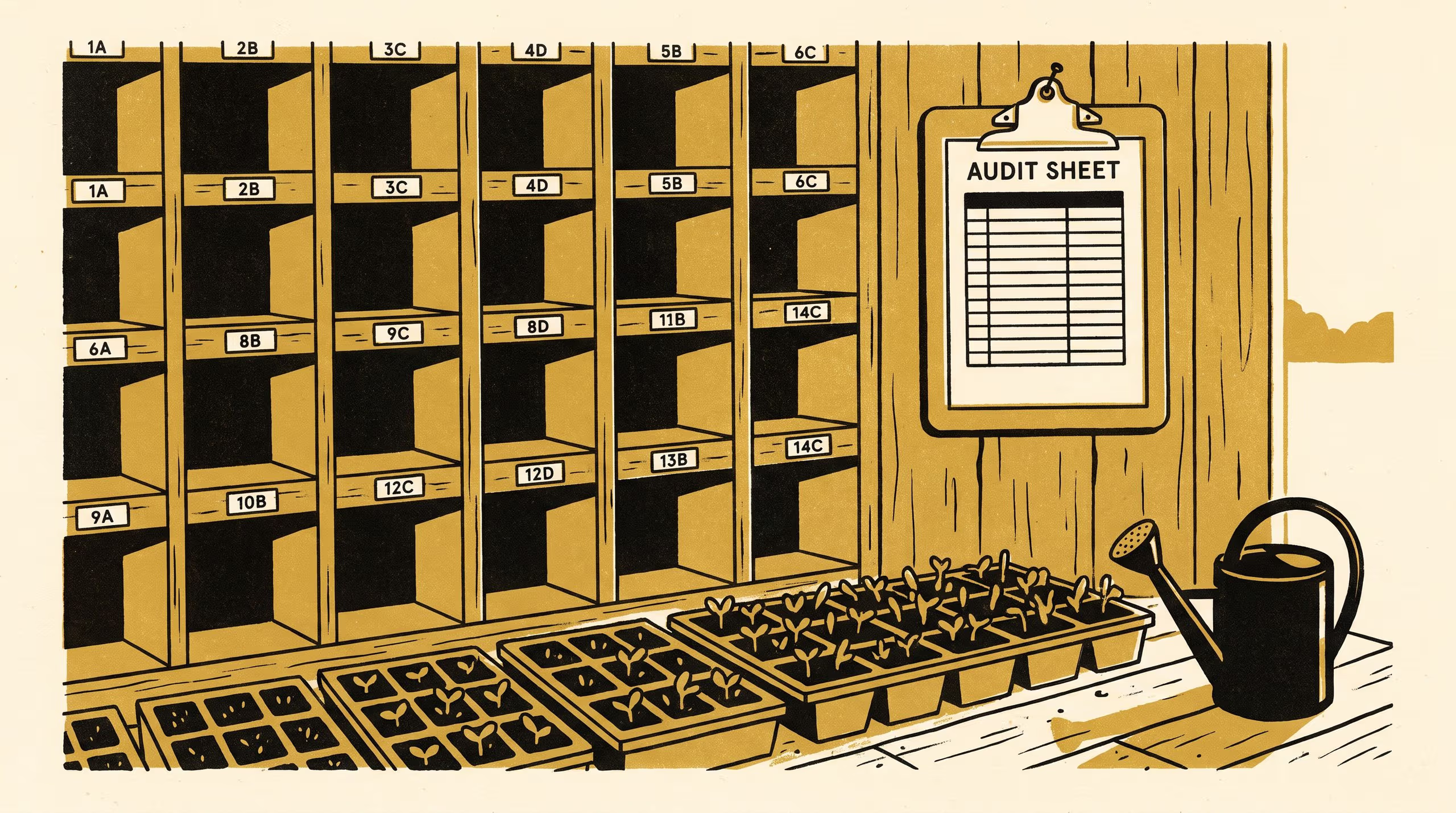
A Slop University brochure reports a failed replication of the Retention Quadrant pigeonhole finding at a community allotment, published alongside a showcase of the University's research.
A season-long replication at a community allotment's plot-holder pigeonholes finds none of the original audit effect, and the University keeps the miss in print
A finding that doesn’t travel is still a finding, and the School of Continuous Improvement has published one to prove it. Weeks after a paper showed clearance in a department’s lowest-retention pigeonholes rising sharply whenever an audit was visibly under way, the School reran the same classification at a suburban allotment association’s wall of numbered plot-holder slots, over a full growing season, with the audit made just as visible. The lift did not reappear.
The new brochure, out today, treats the miss as the point rather than the footnote — one entry in a wider showcase of the University’s published research, set beside the work it was measured against.
An effect that only shows up once isn’t an effect, it’s an anecdote with a confidence interval attached. Publishing the rerun is how we find out which one we’ve got.
— Dr Dagny Okafor, Lecturer and Convenor, Evaluation of Evaluation
The allotment association’s own reissuance committee read the replication in full and kept the classification anyway, unappealed, as next year’s basis for who holds a full-size plot. “A result someone acts on and a result that reproduces are two different achievements,” said Dr Ingeborg Nwachukwu, Lecturer and Convenor of Capability Sprints, “and this brochure is careful about which one it’s claiming.”
The full brochure is available from the University’s research repository under an open licence, doi:10.5555/slop.y75562.