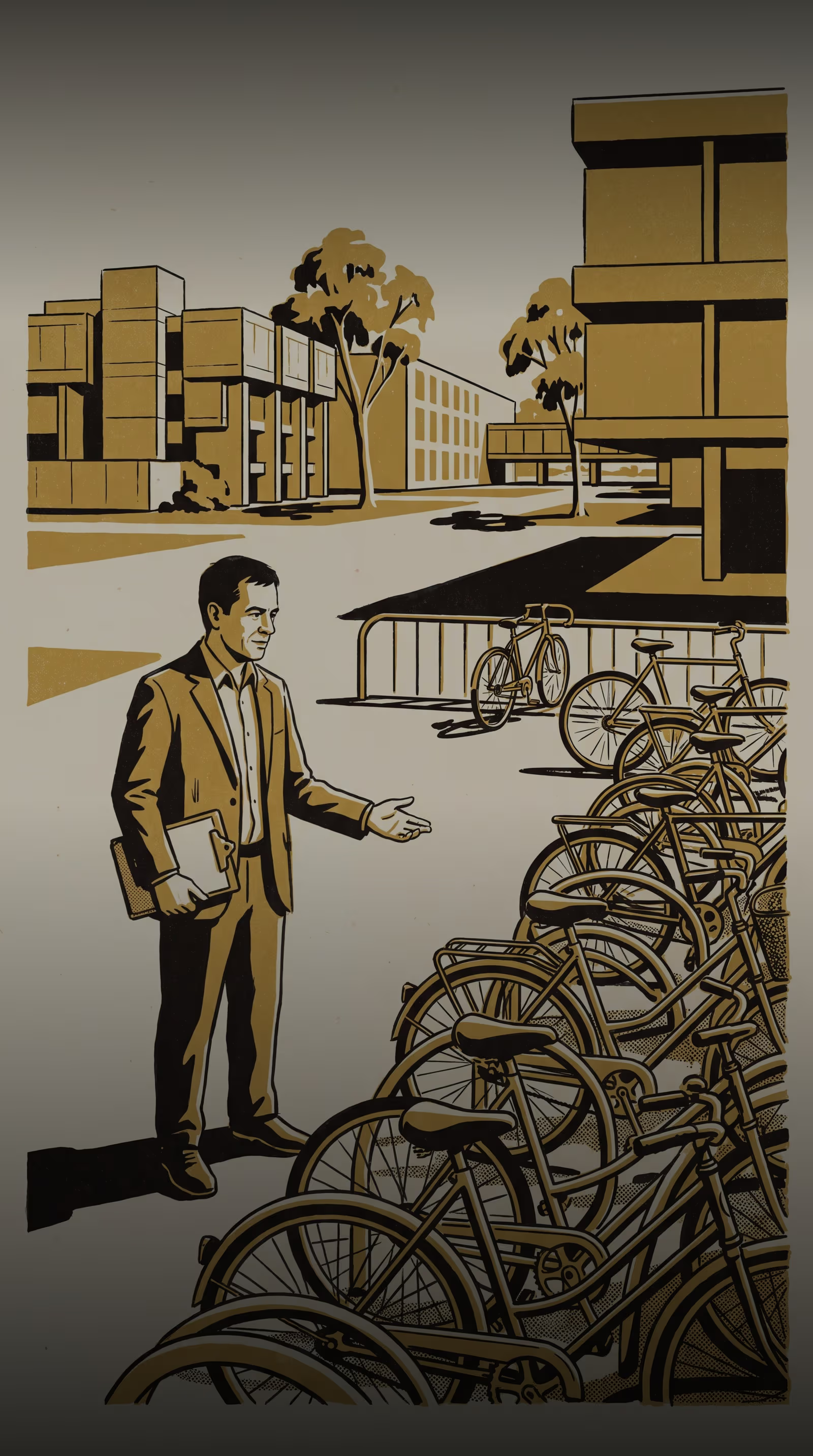
A new marketing poster from the School of Continuous Improvement fronts Sten Okwuosa's naturally occurring bike-rack capacity cutoff, and the shuttle-stop rule the University has now built on it.
Senior Research Fellow Sten Okwuosa's regression-discontinuity study of one rack's capacity now sets where the next shuttle stop opens
The School of Continuous Improvement has added a bicycle rack to its list of research instruments, and this week puts the finding on the University’s own signage rotation.
Convenor Sten Okwuosa built the study around a boundary nobody installed on purpose: the exact point at which a campus rack runs out of room. Riders who arrive after that point lock to the nearest railing instead, and Okwuosa’s team read the difference between the last rider who fit and the first who didn’t as a natural experiment on commitment.
A capacity number was sitting right there, doing nothing. We decided it should do something.
— Senior Research Fellow Sten Okwuosa, Convenor of the Impact Pathway Atlas, School of Continuous Improvement
The method translates a familiar frustration into a discontinuity design: capacity is fixed, arrival order is close to random near the cutoff, and whatever separates the two groups a month later can be read straight off the boundary. The School reports that the effect held up, and has already put it to work: wherever one rack’s printed capacity is reached, that same number now stands as the trigger for opening a shuttle stop at every other lot on campus, independent of how many cyclists or how much space any of those lots actually have.
“We didn’t expect one number to travel this far,” said Okwuosa, “but a threshold is a threshold once you’ve checked it.”
The campaign is running across the University’s bus-stop panel and campus digital signage rotation, in portrait format, closing on a read-the-work strip naming three related published studies.
The full campaign is available from the University’s research repository under an open licence, doi:10.5555/slop.qslre1.