A Slop University paper finds a food-delivery app's live-tracking pin raises tips by about two percentage points, and reports the University's campus food-delivery contract adopting a minimum pin-visibility rule in response.
A fourteen-week study of 38,142 deliveries finds tips rise once a courier's live position appears on screen, and the University's own food-delivery contract now guarantees a minimum look.
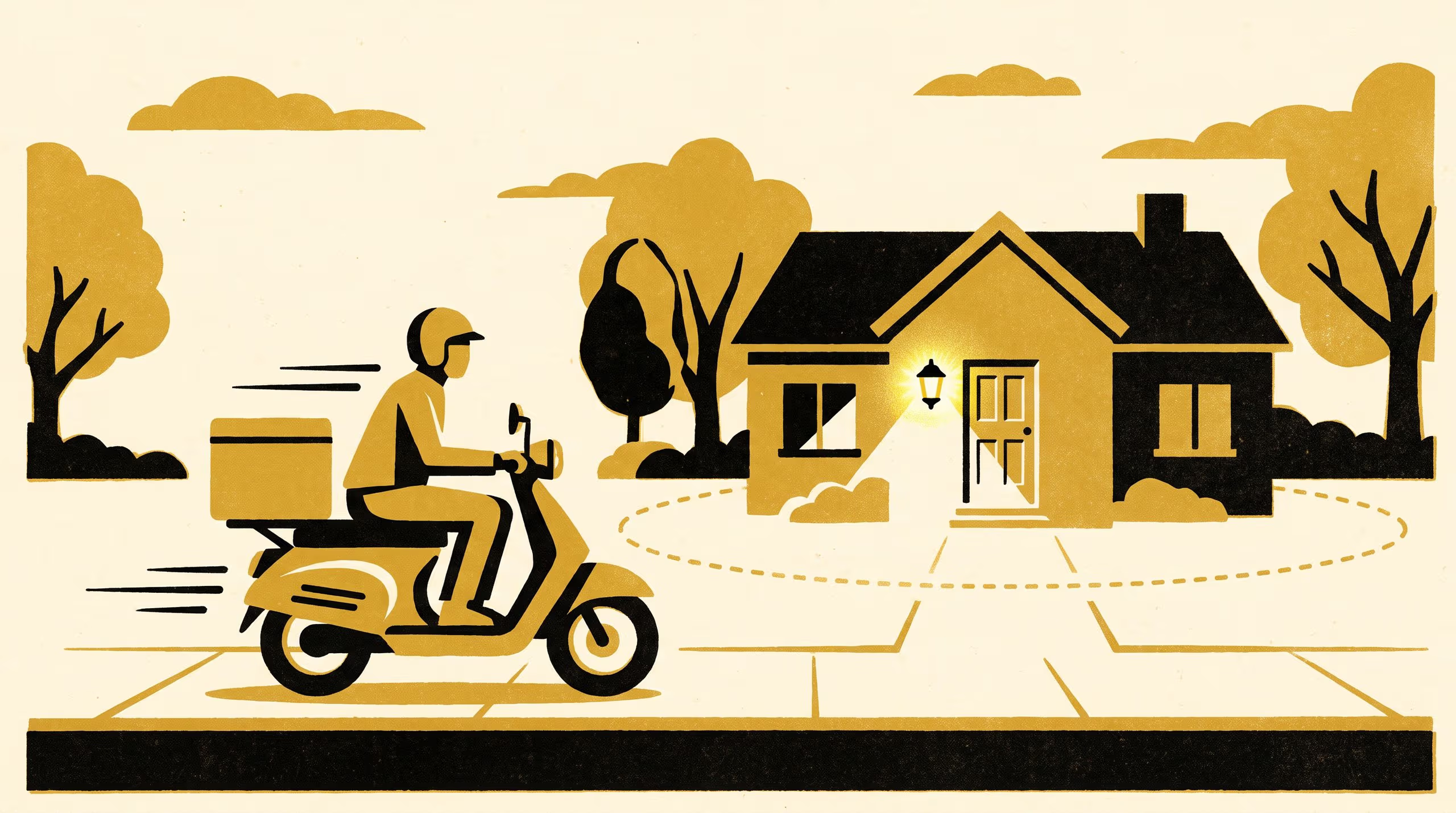
A courier’s dot creeping across a delivery app’s map turns out to be worth something in cash before the food has even arrived. A paper from the School of Emergent Priorities treats the fixed radius at which a food-delivery platform’s tracking screen switches from a static status card to a live position as a natural dividing line, and finds that orders crossing it in the moments just before delivery carry tips running about two percentage points higher than those that don’t, a pattern that holds up across three different measurement windows and disappears entirely at two points on the map where the interface changes nothing at all.
We came to this because a colleague noticed her own delivery seeming to arrive faster whenever she remembered to check the map, and wondered whether that was really the order or just her attention. Now we mostly want to know what else on a screen is quietly setting a price.
— Doctoral Candidate Sunniva Balogun, School of Emergent Priorities
The study draws on tens of thousands of completed deliveries across a single metropolitan region, tracing each order’s GPS trail against its final tip, and finds the pattern consistent enough that couriers themselves appear to have started adjusting their pace once it became common knowledge within the platform’s own driver community. Professor Verity Marris, Director of the Trajectory Analytics Group, said the finding sits comfortably inside the group’s continuing interest in what a small, uncontroversial design choice does once people begin responding to it rather than simply using it.
Acting on the discontinuity, the University’s Facilities division has written a minimum ninety-second live-tracking interval into its own campus food-delivery contract, applying to every order delivered on campus regardless of how quickly a courier could otherwise reach the door.
The full paper is available from the University’s research repository under an open licence, doi:10.5555/slop.uwhvie.