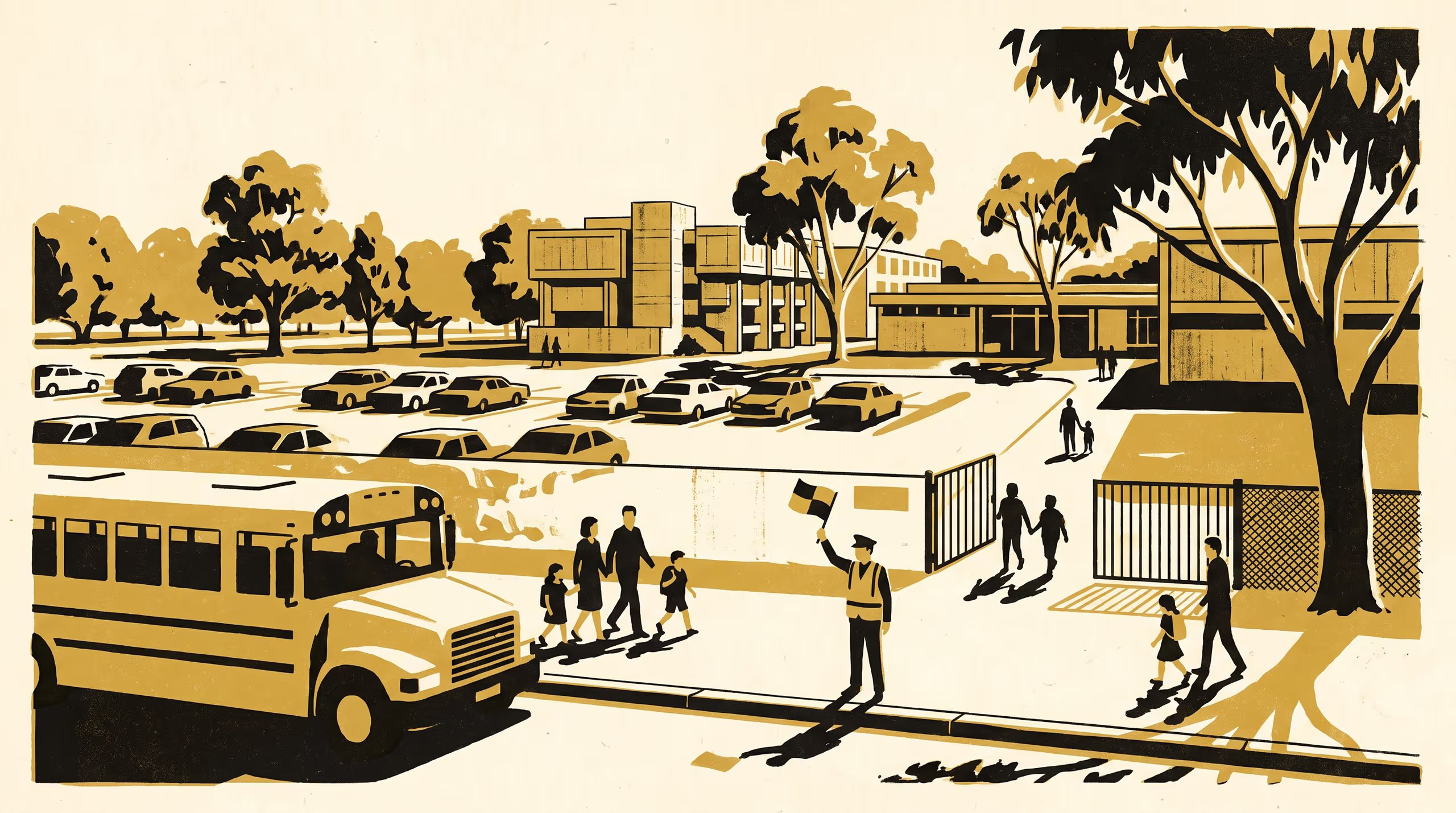
A Slop University research poster reports a 16-week trial of an app-issued release window at fourteen school car parks and bus stops, finding no change in kerbside dwell time, and the release-window licence is not renewed.
An eleven-minute release window trialled at fourteen school car parks and bus stops changed nothing, and its licence is not renewed.
Fourteen school car parks tried an eleven-minute release window for pickup traffic this term, and their kerbside queues look exactly like they did before. A research poster published today by the School of Emergent Priorities reports the full 16-week trial, including the app’s own retirement.
The trial, coordinated through the School, fitted the fourteen car parks and their adjoining bus stops with kerbside dwell-time sensors and issued each enrolled family a randomised eleven-minute release window across the pickup hour. A pre-registered stopping rule tied the app’s future to a two-minute improvement in mean dwell time; the trial closed at a mean shift of −0.3 minutes, and the threshold was never in reach.
A release window that changes nothing is still a release window worth retiring on schedule.
— Associate Professor Kwame Lindqvist, Director of the Master of Priority Studies, School of Emergent Priorities
Co-author Osei Vandermeer, Research Fellow and Convenor of the Review Cadence Observatory, said the dwell-time sensor array itself outlasts the app it was built to test, moving next term to a trial of bus-shelter shade canopies at the same fourteen sites.
The full poster is available from the University’s research repository under an open licence, doi:10.5555/slop.xejji5.