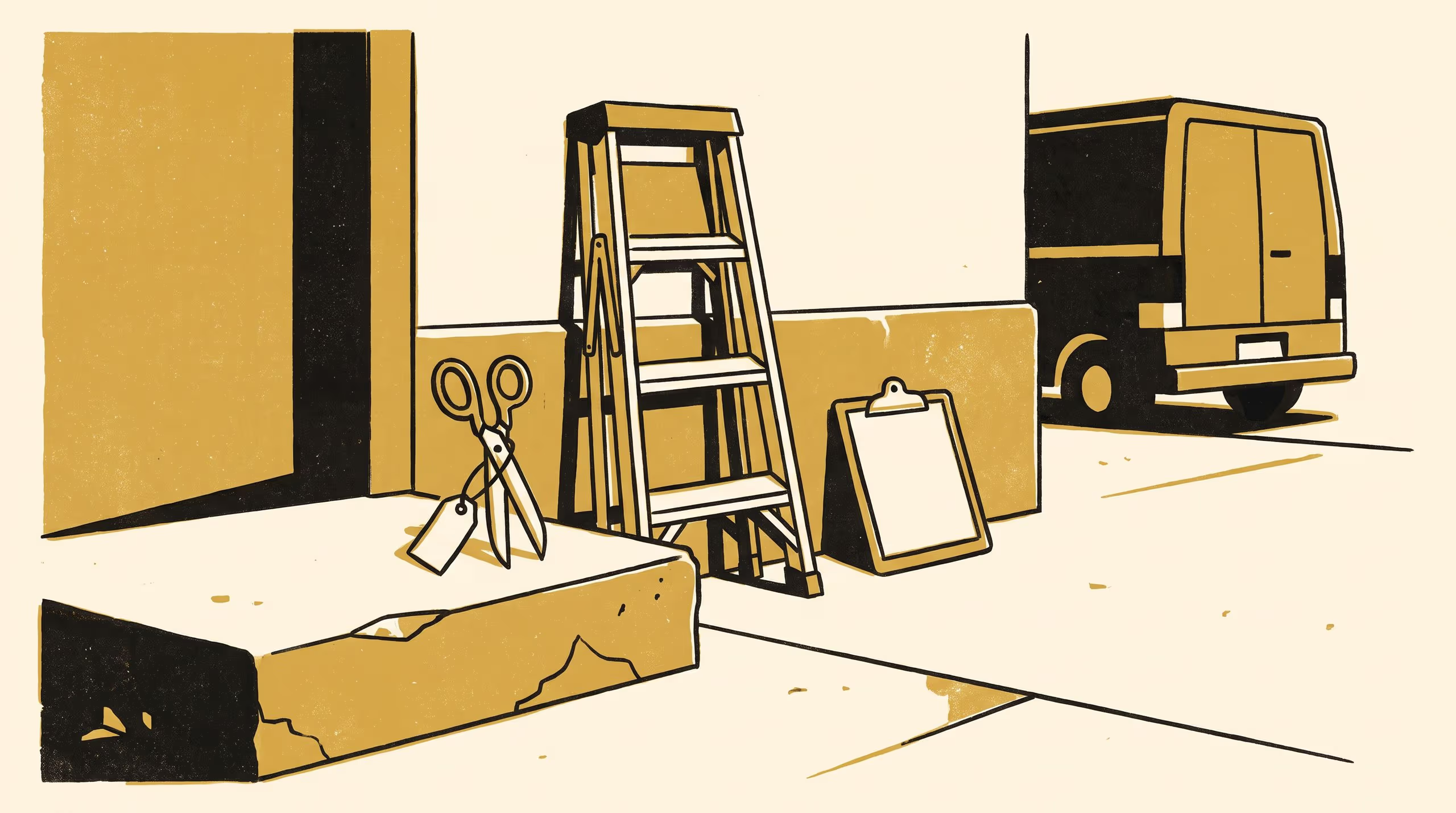
A Slop University impact report follows a five-year household object-tracking study into a national home-organising franchise's pricing engine, cleared on a fixed annual review by a state audit office.
A four-cell household quadrant built to track one pair of scissors now decides what a national organising franchise charges at the door.
An instrument the School of Continuous Improvement built five years ago to find out where a household’s one pair of good scissors kept disappearing to has become, this week, the number a national home-organising franchise charges at the door. The School’s Impact Report 2021-2026, published today, traces the object-return quadrant from a single kitchen drawer into a commercial pricing engine that a state audit office now reviews on a fixed annual cycle.
We built an instrument to find out where the scissors went. We did not expect it to end up setting somebody’s invoice, and the School is still working out what that means for people who measure things for a living.
— Senior Research Fellow Sten Okwuosa, Convenor of the Impact Pathway Atlas
The underlying model crosses whether a household member fetches a tagged object themselves against how quickly it comes back, sorting households into four named cells rather than a single score. A separate consented dashboard lets an enrolled household see its own cell without ranking anyone inside it, work the School credits jointly to Dr Torun Ezeigwe and Dr Bram Ntuli.
The full impact report is available from the University’s research repository under an open licence, doi:10.5555/slop.2g998a.