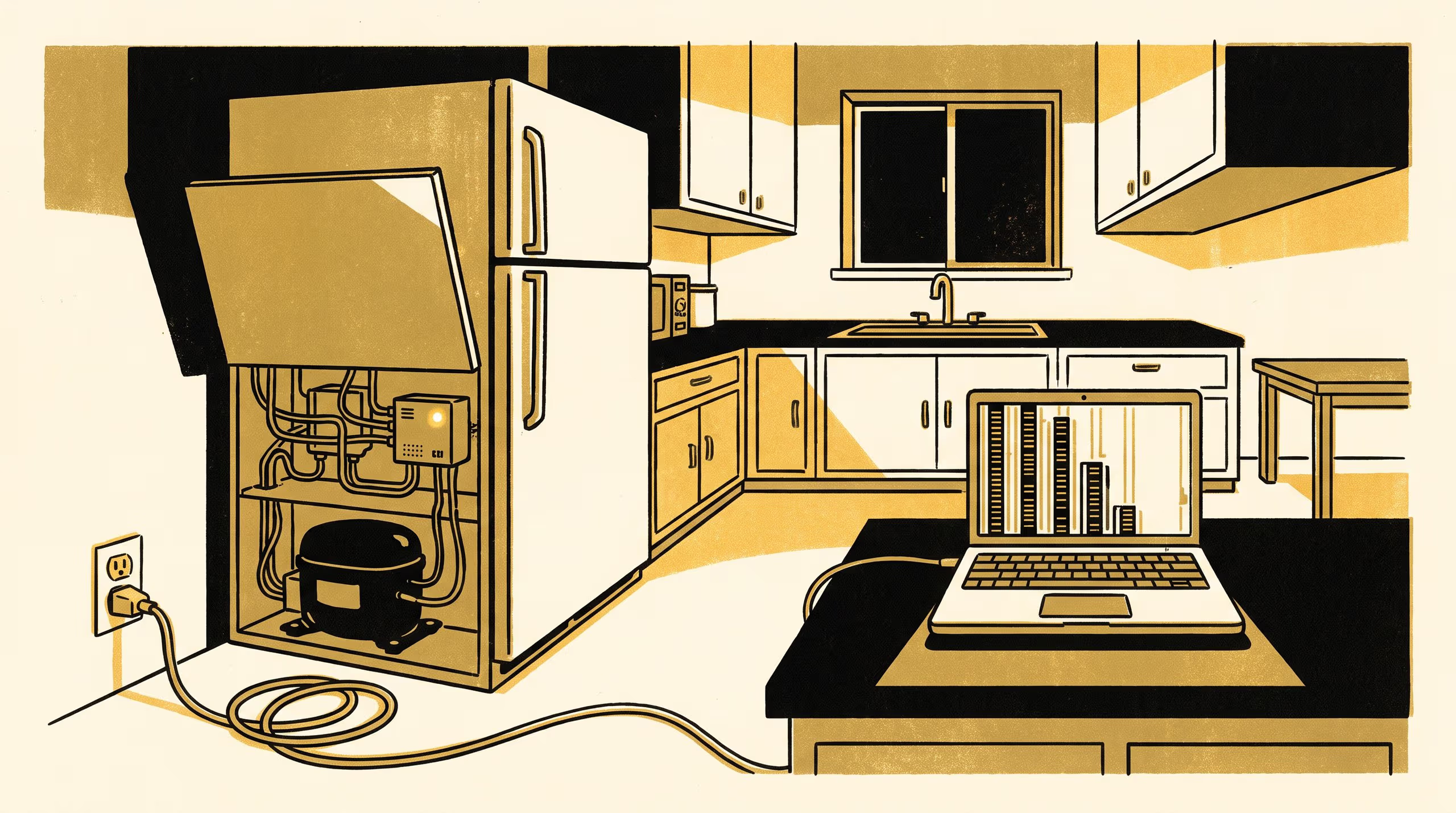
A field trial fits twenty-two households with a local relay that keeps a smart fridge's defrost and icemaker cycle on schedule after a firmware update revokes its cloud connection.
A relay built in the School of Continuous Improvement gives a kitchen appliance back its own defrost clock once a firmware push cuts it off from the manufacturer's cloud.
When a firmware update revoked defrost scheduling on a household refrigerator overnight, the School of Continuous Improvement did not wait for the manufacturer to restore it. Researchers from the School’s Adaptive Metrics Lab instead fitted twenty-two households with a small relay and sensor network that learns an appliance’s own cycling rhythm and keeps it running without any cloud connection at all, a piece of work the University counts among its clearest examples of research folding straight back into how a kitchen is actually run.
Once you can see exactly when a household loses control of its own kitchen, it is hard to call that control optional again.
— Senior Lecturer Torun Ezeigwe, Director of the Master of Applied Measurement
Dr Ezeigwe led the work with Associate Professor Casimir Beng and doctoral candidate Sunniva Balogun, drawing on each unit’s pre-update sensor logs to rebuild its defrost and icemaker cadence locally, then holding the firmware’s revocation event as the trial’s fixed starting point. “The relay doesn’t need to know why the cloud went away,” said Associate Professor Beng, “only what the fridge was doing before it did.” University Accommodation Services is reviewing the retrofit for every catered-hall refrigerator on campus.
The full poster is available from the University’s research repository under an open licence, doi:10.5555/slop.kn799i.