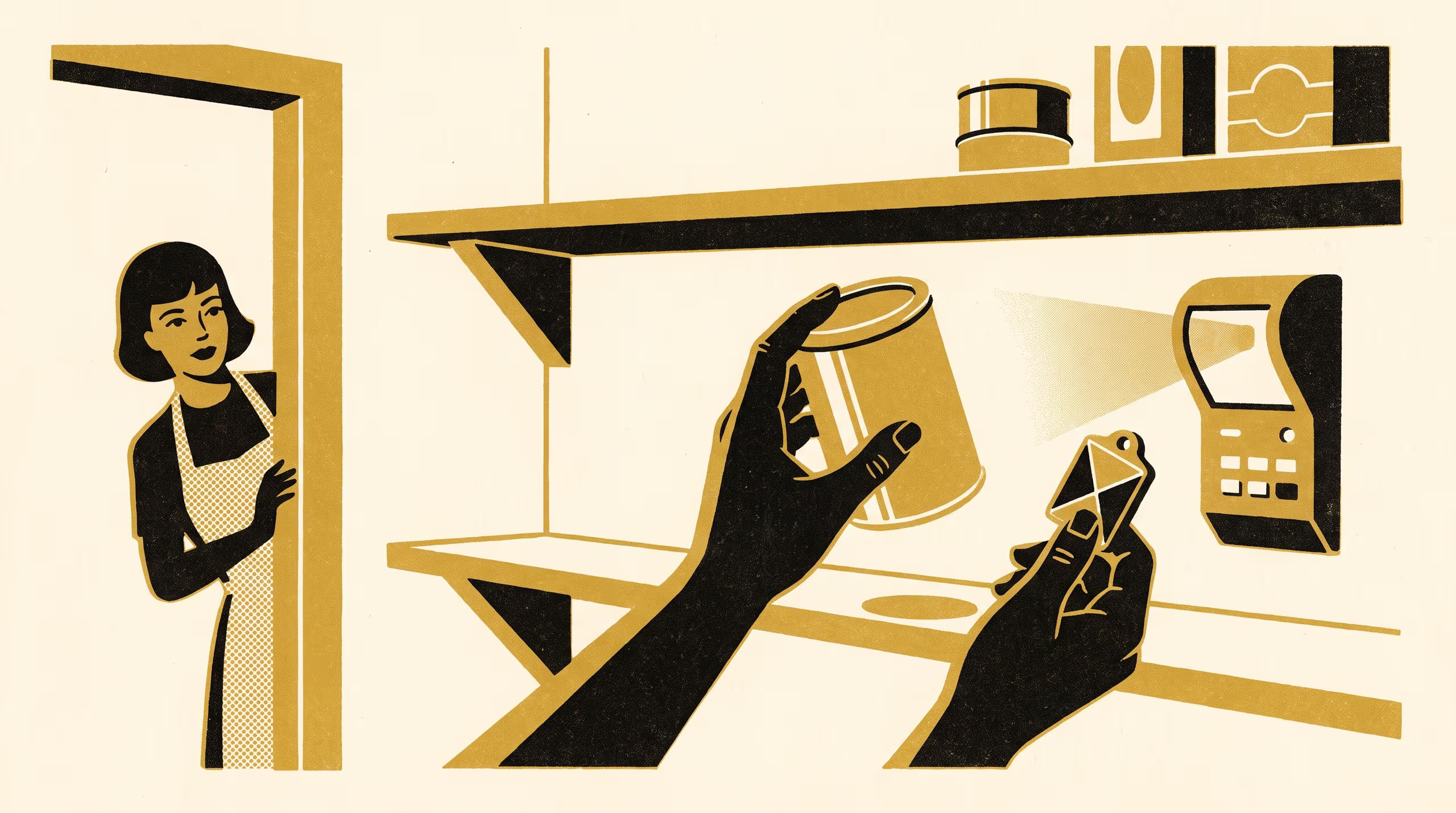
A Slop University paper documents SHELF, a pantry scanner that assigns a household's grocery run from a single scan, and an interview study of the shadow stock households keep to avoid it.
SHELF binds a stock-out scan to next week's shopping with no override, and a new interview study finds a shelf it never sees
A single teabag, kept back on purpose, is now common enough in one outer-suburban estate that Slop University researchers have given it a name.
SHELF, described today in a new paper from the School of Continuous Improvement, is a shelf-edge scanner that turns a pantry item’s last scan into a binding decision: whoever’s tap empties the count is published as that week’s Replenishment Owner, with no committee and no appeal. Dr Torun Ezeigwe, Senior Lecturer and Director of the Master of Applied Measurement, led the ten-week deployment with Associate Professor Casimir Beng, Lead of the Adaptive Metrics Lab, and Dr Joost Nwosu, Postdoctoral Fellow, across 22 households on a single estate.
A shelf tells you the truth about what’s left. It says nothing about who’s quietly holding the rest of it back.
— Dr Torun Ezeigwe, Senior Lecturer and Director of the Master of Applied Measurement
Interviews with all 34 adult participants surfaced a small vocabulary the instrument never logs: a unit left deliberately unfinished, a backup kept on a shelf the scanner cannot see, a last portion steered toward a household member the system does not track. The School reads the pattern as evidence of an instrument doing exactly what it was asked to do, just not quite what anyone expected it to notice.
“The scanner never lied to us,” said Associate Professor Beng. “It just found out, the way most instruments eventually do, that a household is bigger than the shelf it’s watching.”
The estate’s owners corporation has already made SHELF standard kitchen fit-out for every incoming lease.
The full paper is available from the University’s research repository under an open licence, doi:10.5555/slop.pl89mb.