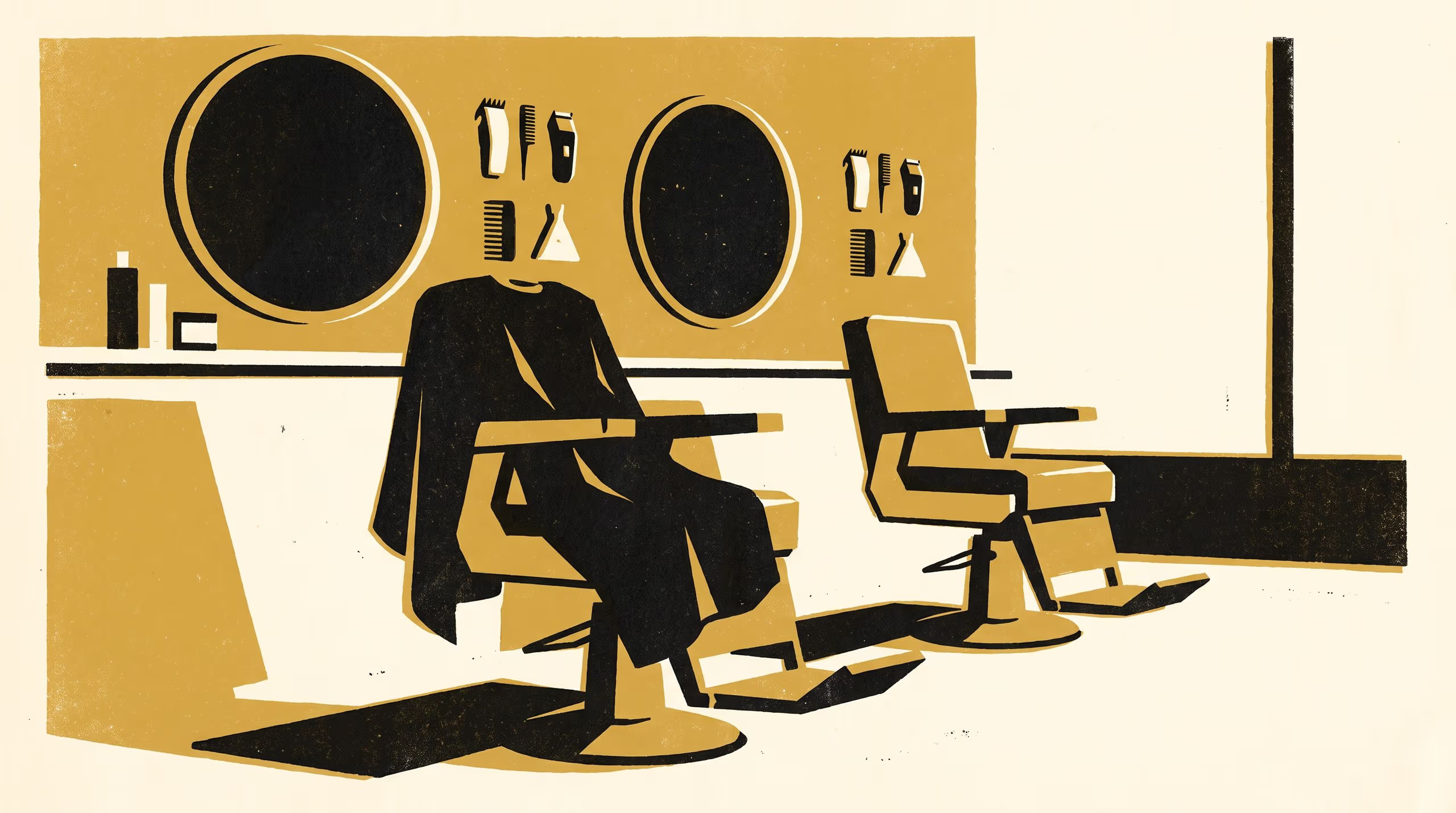
A display poster from the Adaptive Metrics Lab treats a hanging cape as a filled place, and this teaching period's Master of Applied Measurement intake is taught on that rule.
Twenty minutes on one strip-mall barber's empty chair is the first case of the Master of Applied Measurement this teaching period
Twenty minutes is as long as a cape may hang on an empty chair before the chair is occupied. That interval, taken from a single strip-mall barber, is the occupancy rule this teaching period’s Master of Applied Measurement intake will be taught on.
A display poster released today by Associate Professor Casimir Beng, Lead of the Adaptive Metrics Lab, with Dr Torun Ezeigwe, Senior Lecturer and Director of the Master of Applied Measurement, sets the chair as the intake’s first case.
The School of Continuous Improvement now keeps a filled place at the moment a marker is hung.
Occupancy is the cape, not the customer. We will teach the chair that way.
— Associate Professor Casimir Beng, Lead of the Adaptive Metrics Lab
The case sits with one chair through a trading week and notes each hanging, how long the cape stayed, and whether anyone sat. A cape still on the chair at twenty minutes is occupancy; a later arrival is a second booking. The intake adopts that interval as the rule by which a place is counted filled, with no ordinary override for an empty seat.
Dr Ezeigwe said candidates meet the chair before they meet the instrument. “The cohort is full when the cape is hung. That is the sentence the programme is prepared to keep.”
The full poster is available from the University’s research repository under an open licence, doi:10.5555/slop.9oye43.