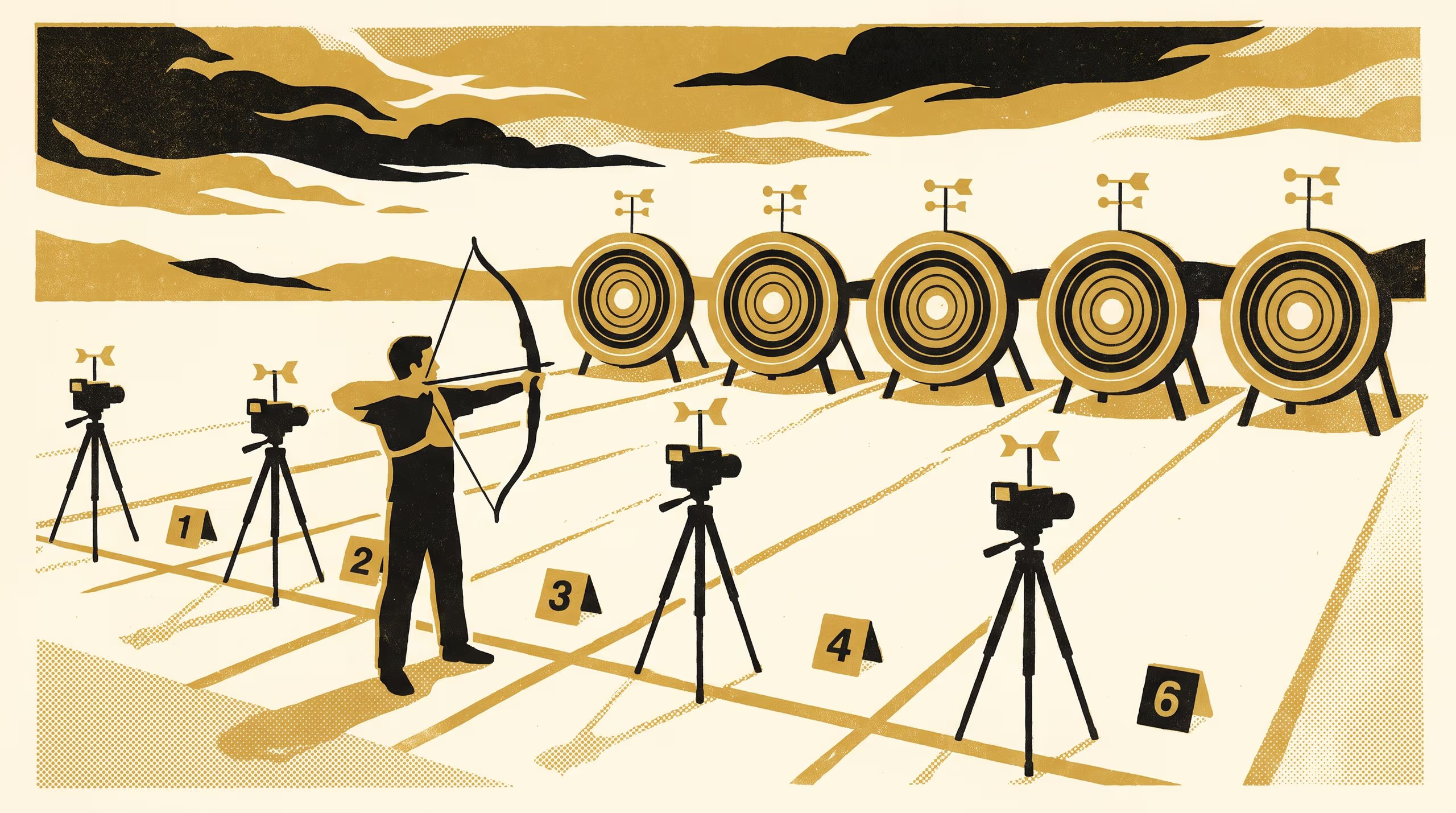
A University field study across six lanes and 22 weeks reports a clean null on target-rotation assignment, and proposes no follow-up trial.
A season of wind, glare and photogrammetry instrumentation turns up nothing the roster needs to change
A season inside a suburban archery club’s target-rotation roster has produced the University’s plainest kind of result: nothing to report, printed as exactly that.
Sunniva Balogun, Doctoral Candidate in the School of Emergent Priorities, with Professor Verity Marris, Director of the Trajectory Analytics Group, instrumented every lane of the club’s outdoor range for a full season — wind vanes, glare-angle sensors and arrow-flight photogrammetry logging each of 748 ends — to test whether the club’s long-standing rotation roster was quietly favouring some archers over others. It wasn’t.
The University treats a finding this unqualified as its own kind of institutional achievement: a result that resolves a question rather than reopening it.
A result this clean rarely survives a second look, and this one has. We are content to leave the roster exactly as we found it.
— Professor Verity Marris, Director of the Trajectory Analytics Group
Ms Balogun said the instrumentation would stay bolted to the lanes regardless of the finding: “the rig answers a question the roster keeps asking, whatever this particular season said back.”
The full poster is available from the University’s research repository under an open licence, doi:10.5555/slop.38psne.