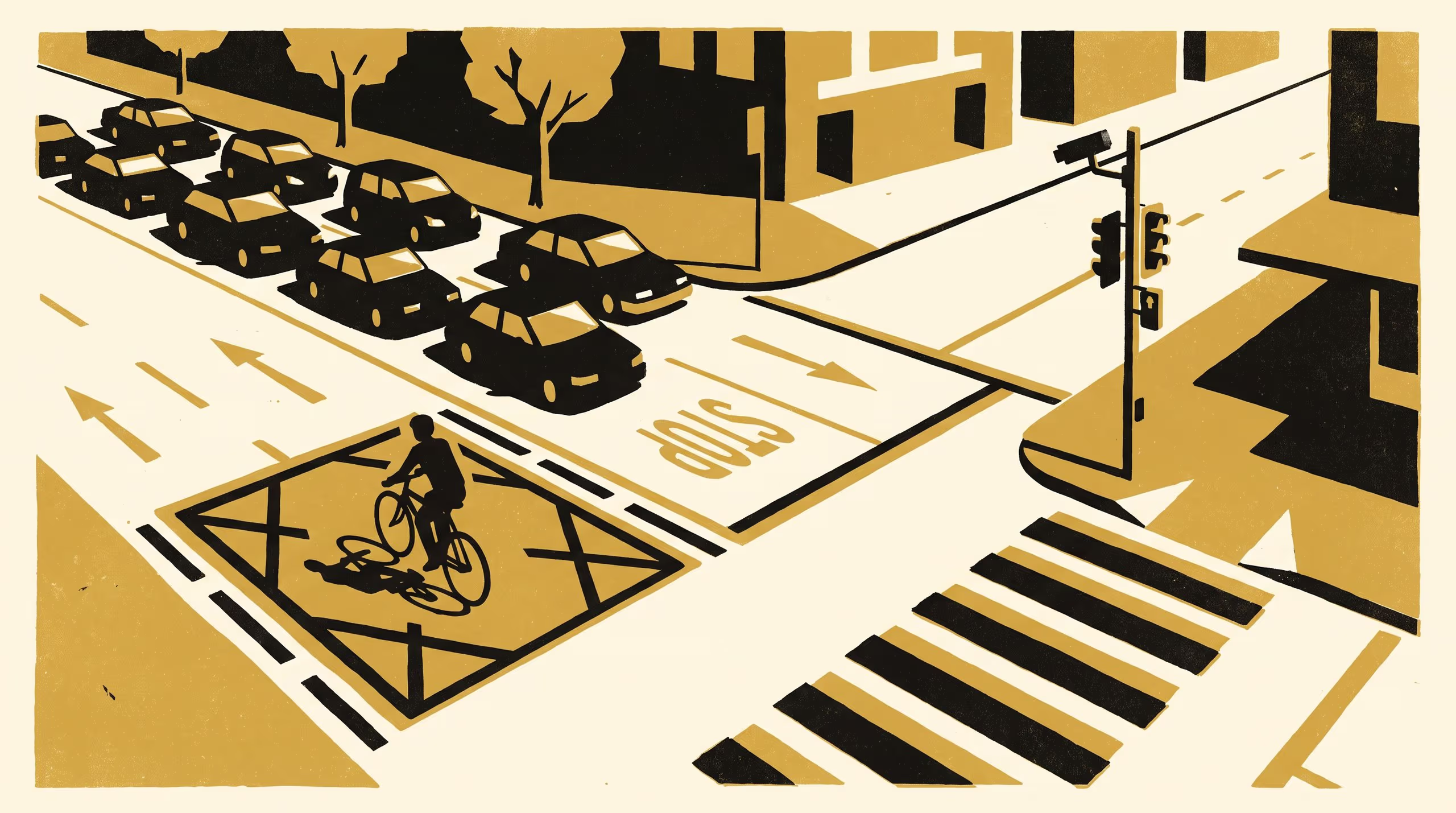
A Slop University research poster scores fourteen intersections' bike-box compliance on a five-level model, and finds the road authority's infrastructure funding reaches only the middle band.
A five-level maturity score ties a road authority's upgrade budget to the middle band alone, at fourteen signalised intersections
A measurement built to certify progress is, on one regional cycling corridor, also the reason progress stops early.
A research poster released today by Dr Renke Sabel, Senior Lecturer and Convenor of the Indicator Commons, with Sunniva Balogun and Tove Ilesanmi, Doctoral Candidates in the School of Continuous Improvement, reports twelve months of roadside dashcam coding at fourteen signalised intersections. Each intersection’s advanced stop line, its bike box, was scored monthly against CLEAR, a five-level maturity model running from Ignored to Self-Enforcing.
The road authority’s infrastructure-upgrade budget, the School reports, reaches only intersections scored Marked to Patrolled. A site judged Self-Enforcing is dropped from the funding round the same audit that certifies it, and a site still at Ignored is judged too far behind to fund. Eight of the corridor’s fourteen intersections currently qualify.
A line that holds itself doesn’t need our budget line anymore. That was always going to be the rule’s own logic, once we wrote it down.
— Dr Renke Sabel, Senior Lecturer and Convenor, Indicator Commons, School of Continuous Improvement
The release sits inside the School’s continuing interest in what a compliance score does to the thing underneath it, once an allocation is written to follow the number rather than the intersection. “The corridor doesn’t need every box perfect,” said Ms Balogun, Doctoral Candidate in the School of Continuous Improvement. “It needs enough of them sitting where the rule can still see them.”
The full poster is available from the University’s research repository under an open licence, doi:10.5555/slop.srz6dx.